Published on PetSupplyGo.com | Affiliate Disclosure: As an Amazon Associate we earn from qualifying purchases. This costs you nothing extra and helps us keep these guides free.
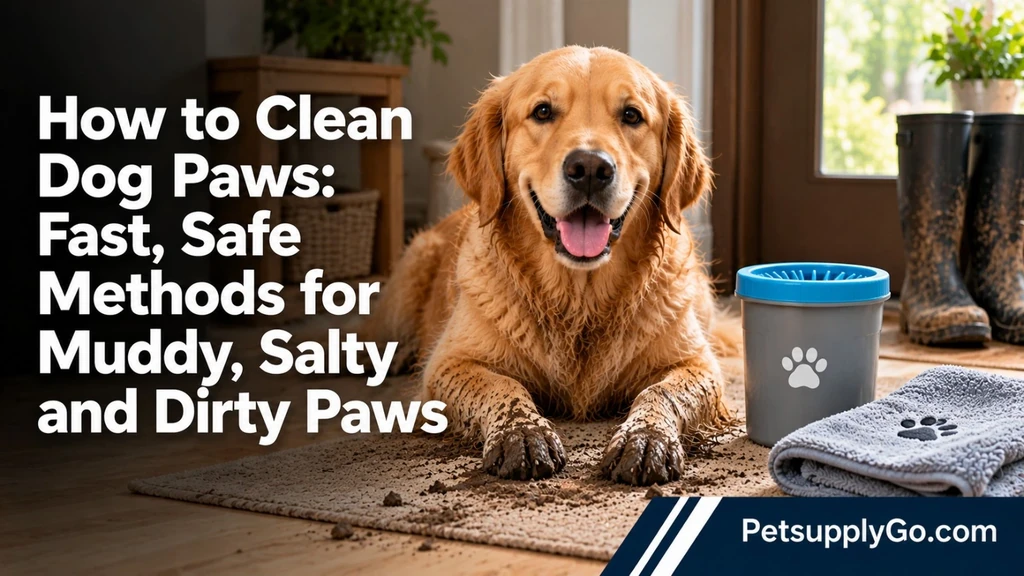
It rained all morning. Your dog charged through every puddle on the walk, and now four brown paws are heading for your white couch.
If you own a dog, you know this moment. Muddy paws are one of the most common household headaches in dog ownership, and “dirty paws” isn’t only about mud. Dog feet pick up salt, de-icer, lawn chemicals, pollen, pesticides, bacteria, dust and whatever else is lying on the ground. Then they carry it all inside, track it across your floor and spread it on your bed, your sofa and your sheets. Many dogs also lick their paws afterward and swallow some of it.
The good news is that cleaning dog paws doesn’t need to be a battle. The best way to clean dog paws depends on how dirty they are. For a quick daily cleanup, a damp microfiber towel or a pet-safe wipe works well. For heavy mud, a portable paw washer cup or a short rinse with lukewarm water gets the job done fast. For salty winter walks, a rinse or wipe right after coming inside matters more than anything else. And whatever method you choose, drying between the toes is a step you shouldn’t skip.
This guide covers why clean paws matter, what’s actually on your dog’s feet, every common cleaning method, step-by-step routines for quick cleanups and deep cleans, how to handle mud, salt and allergies, what to use and avoid, helpful products, how to train a dog who hates paw handling, how to set up a paw station by your door and when messy paws signal a health problem.
Quick Answer: What’s the Best Way to Clean Dog Paws?
| Situation | Best method | Why |
|---|---|---|
| Quick daily cleanup | Damp microfiber towel or pet-safe paw wipe | Fast and easy |
| Heavy mud | Paw washer cup or lukewarm rinse | Gets mud off between toes |
| Dried mud | Let it dry, brush off, then wipe | Easier than smearing wet mud |
| Salt and de-icer | Rinse or wipe immediately | Removes irritants before licking |
| Allergy season | Wipe or rinse after every walk | Removes pollen |
| Small dog | Wipes or a small paw washer | Simple and gentle |
| Large dog | Towel, hose or tub rinse | Faster for big paws |
| Dog who hates handling | Training plus wipes and treats | Builds tolerance |
| Dog with sensitive skin | Plain lukewarm water, then pat dry | Avoids irritants |
| Daily walks in wet climates | Paw station by the door | Makes it a habit |
| Dog with paw injury | Vet advice first | Don’t make it worse |
If you want one simple routine, keep a towel and a bowl of lukewarm water by the door, wipe or dip each paw, dry between the toes, and finish with a treat. It takes about two minutes once your dog gets used to it.
Why Cleaning Your Dog’s Paws Matters
It’s not only about floors. Clean paws are part of good dog care.
Salt and de-icer. Winter chemicals can irritate pads, dry them out and crack the skin. When dogs lick their paws, they can swallow what’s on them, which may upset the stomach.
Lawn and garden chemicals. Fertilizers, pesticides and herbicides can stay on grass and sidewalks. Dogs pick them up on their feet and may lick them off.
Allergens. Pollen, mold spores and dust cling to paws and fur. Dogs with environmental allergies often itch and lick their feet more after walks. Wiping paws can reduce how much allergen they carry inside.
Bacteria and dirt. Dogs walk where other animals have been. Wiping paws helps limit what they bring into your home.
Stuck debris. Burrs, grass seeds, small stones and bits of glass can lodge between toes and pads. Cleaning gives you a chance to spot them early.
Early warning. Regular paw checks help you notice cracks, cuts, redness, swelling, odor and overgrown nails.
Cleaner home. Less mud, fewer germs and less odor on your floors, furniture and bed.
Less licking. Dirty or irritated paws can lead to excessive licking. Cleaning can reduce the urge, although persistent licking needs a vet check.
Comfort. Many dogs feel better with clean, dry feet, especially if they’ve been in wet or salty conditions.
What’s Really on Your Dog’s Paws?
It depends on the season and where you walk.
Winter
- Road salt and ice melt
- Antifreeze drips in driveways and parking lots, which are toxic if swallowed
- Slush, dirt and grit
- Ice balls between the toes
Spring
- Mud and wet soil
- Pollen and mold spores
- Fertilizers and lawn treatments
- Fresh grass seeds
Summer
- Hot pavement residue and dust
- Pollen and grass
- Pesticides and weed killers
- Burrs and foxtails
- Pool chemicals and pond water
Fall
- Wet leaves and mold
- Mud and moisture
- Acorns, sticks and sharp debris
- Fallen fruit and its insects
All Year
- Dog park dirt and urine
- Sidewalk germs
- Parking lot oil and grease
- City grime
You can’t remove every germ, and you don’t need to. Your goal is to remove the heavy mess, irritants and allergens, and to keep the skin healthy.
What Healthy Dog Paws Look Like
Knowing what’s normal helps you spot problems.
Pads: Firm, slightly rough but not cracked. Color varies, from pink to black, and some are spotted.
Between the toes: Clean skin, no redness, odor or moisture. A little fur is normal.
Nails: Short enough that they don’t click loudly on hard floors. Not cracked or split.
Skin around the paw: No swelling, bumps or hair loss.
Odor: Mild. Some dogs’ paws smell like corn chips because of normal bacteria and yeast, but a strong, sour or musty odor can signal an infection.
Behavior: Normal walking without limping, licking or chewing.
Check these areas whenever you clean. It takes seconds.
Ways to Clean Dog Paws: Methods Compared
1. Damp Towel or Cloth
Wet a microfiber towel or washcloth with lukewarm water, and wipe each paw from the top to the pad, including between the toes. Rinse the cloth as it gets dirty.
Best for: Light dirt, daily cleanup, small to medium dogs.
Watch out for: Dirty towels spread bacteria. Wash cloths often, and use clean sections.
2. Pet-Safe Paw Wipes
Pre-moistened wipes designed for dogs. They’re quick and portable.
Best for: Walks, travel, car trips, quick cleanups.
Watch out for: Check ingredients. Avoid alcohol, strong fragrance and anything that isn’t pet-safe, since dogs lick their feet. Many baby wipes contain ingredients not meant to be swallowed by pets.
3. Portable Paw Washer Cup
A cup with soft silicone bristles inside. Fill it with a little lukewarm water, push your dog’s paw in, twist and lift. The bristles scrub mud from between toes and pads.
Best for: Muddy paws, small and medium dogs, quick cleaning without a bath.
Watch out for: Large paws may not fit. Some dogs dislike the feeling. The water gets dirty quickly, so refill often.
4. Foot Soak or Basin
Fill a shallow tub or basin with lukewarm water, and let your dog stand in it for a few seconds. Gently rub paws, then dry.
Best for: Large dogs, very muddy paws, dogs who accept standing in water.
Watch out for: Dogs may refuse to stand still. Use a non-slip mat, and keep water shallow.
5. Rinse With a Hose or Shower
Use lukewarm water from a hose, a handheld shower or a spray bottle to rinse paws, belly and legs.
Best for: Heavy mud, salty winter paws, large dogs, post-hike cleanup.
Watch out for: Cold water makes dogs miserable. In winter, rinse indoors with lukewarm water. Dry thoroughly afterward.
6. Grooming Mitt or Shammy Towel
A mitt-style towel lets you dry and clean as you pet. Microfiber shammy towels absorb water quickly.
Best for: Drying after rinsing, quick cleanups, dogs who like to be petted.
Watch out for: Not enough on its own for thick mud.
7. Dry Brush for Dried Mud
Let mud dry on the paws, then brush it off with a soft brush or your fingers, and finish with a damp cloth.
Best for: Dried mud on dogs who hate being wet, long-haired dogs.
Watch out for: Don’t pull on tangled fur. A brush that’s too stiff can irritate skin.
8. Full Bath
Sometimes your dog is covered in mud, and a bath is the practical answer. Use a gentle dog shampoo, rinse well and dry. For sensitive skin, see our Dog Grooming section.
Best for: Very dirty dogs, after swimming in ponds or muddy water.
Watch out for: Don’t bathe too often. Over-bathing can dry out the skin.
9. Doormats and Paw Station
A super-absorbent doormat and a cleaning station by the door catch much of the mess before it spreads.
Best for: Daily routines, homes with muddy yards or wet climates.
Watch out for: Mats need regular washing.
Step-by-Step: A Quick Cleanup After Every Walk
This is the two-minute routine most dogs can learn.
Step 1: Stop at the door. Keep your dog on the leash or harness so they don’t run through the house.
Step 2: Check the paws. Look at the pads and between the toes for stuck debris, cuts or redness.
Step 3: Brush off dried dirt. Use your fingers or a soft brush.
Step 4: Wipe or dip each paw. Use a damp towel, a wipe or a paw washer. Wipe the top, the pads and between the toes.
Step 5: Clean the lower legs and belly if needed. Mud splashes up fast.
Step 6: Dry thoroughly. Use a dry towel. Press gently between the toes.
Step 7: Reward your dog. A treat and praise make this a routine they accept.
Step 8: Let your dog inside. Wash or hang the towel.
Time: About two minutes for a calm dog, a little longer for large dogs or very muddy walks.
Step-by-Step: A Deep Clean for Very Muddy or Salty Paws
Step 1: Prepare. Gather towels, lukewarm water, a basin or paw washer, treats and a non-slip mat.
Step 2: Remove loose mud. Let it dry and brush off, or rinse with a gentle stream of lukewarm water.
Step 3: Wet the paw. Use a cup of lukewarm water, a shower or a basin.
Step 4: Gently massage. Use your fingers to loosen dirt between the toes and around the pads. If needed, use a small amount of dog-safe shampoo.
Step 5: Rinse well. Soap residue irritates skin, so rinse until the water runs clear.
Step 6: Check carefully. Look for cuts, cracks, burrs or irritation.
Step 7: Dry thoroughly. Pat with a towel, and dry between each toe.
Step 8: Apply paw balm if needed. Use a dog-safe balm if pads are dry or cracked.
Step 9: Reward and let your dog rest. A warm, dry bed helps. Our guide to dog beds for large dogs covers supportive options.
How to Handle Muddy Paws Specifically
Muddy paws are the number one complaint.
Wet mud: Don’t smear it. Use a paw washer or rinse, then dry.
Dried mud: Let it dry for a few minutes, then rub or brush it off. Most mud flakes away easily when dry, which saves a lot of towels.
Long fur: Mud clumps in feathering and between the toes. Trim hair between pads to make cleaning easier, and keep the hair around the paws neat. Ask a groomer to show you how.
Belly and legs: Mud splashes onto legs and belly. A rinse or damp towel handles it. A drying coat can absorb the rest.
Boots: If your dog tolerates them, boots keep paws cleaner on muddy trails.
Car trips: Keep a towel and a bottle of water in the car. A seat cover helps. guide here]
Prevention: Choose dry routes when you can, and keep fur trimmed.
How to Handle Salt and De-Icer
Winter paws need extra care.
Wipe or rinse right away. Don’t wait. The longer salt sits, the more it irritates, and the more likely your dog is to lick it off.
Use lukewarm water. Cold water is unpleasant, and hot water can burn.
Dry completely. Moisture plus salt makes cracking worse.
Use balm before and after. A dog-safe paw wax before walks creates a barrier. A balm afterward helps heal dry pads.
Check between toes. Salt crystals and ice build up there.
Watch for licking. Heavy licking after walks can mean irritation.
Antifreeze caution. Antifreeze is toxic. If you think your dog licked or swallowed it, contact your vet or an animal poison hotline immediately.
Consider boots or pet-safe melt at home. Check labels, and remember that “pet safe” doesn’t mean risk-free.
How to Handle Pollen and Allergy Paws
Many dogs itch in spring and fall, and their paws show it.
Clean paws after every walk during allergy season. A wipe or rinse removes pollen and mold.
Wipe the belly and face as well. Allergens collect there.
Dry thoroughly. Moisture between the toes can lead to yeast overgrowth.
Notice the signs. Red, itchy, brown-stained or smelly paws, constant licking and chewing can signal allergies or infection.
Ask your vet. Persistent paw licking needs an exam. Your vet may suggest medication, a special shampoo or a diet or allergy plan.
Don’t self-treat with human products. Many human creams and sprays aren’t safe if licked.
What to Use (and What to Avoid) on Dog Paws
Safe Options
- Plain lukewarm water. Often all you need.
- A mild dog shampoo. For heavy dirt, with thorough rinsing.
- Pet-safe paw wipes. Fragrance-free is usually best.
- A clean, damp microfiber towel.
- A veterinary-recommended cleanser or soak. If your dog has skin problems, your vet may recommend a specific product, such as a dilute antiseptic, and tell you how to use it.
- A dog-safe paw balm. Made for pets, with ingredients that are safe if licked.
Use Caution or Skip
- Baby wipes. Many contain fragrance and ingredients you don’t want your dog to swallow. Check labels.
- Human soap and body wash. Can dry out or irritate dog skin.
- Hand sanitizer and alcohol wipes. Alcohol dries and burns skin, and some products contain xylitol, which is toxic to dogs.
- Essential oils, especially tea tree oil. Some are toxic to dogs, even in small amounts. Don’t use them unless a vet advises it.
- Strong disinfectants and bleach. Burn skin and are dangerous if licked.
- Undiluted vinegar. Can irritate. Ask your vet before using any vinegar rinse.
- Hot water. Can scald.
- Human lotions and creams. Many aren’t meant to be licked.
- Products with xylitol. Never use.
Rule of thumb: If you wouldn’t want your dog to lick it, don’t put it on their paws.
Top Paw Cleaning Products to Consider
Prices are approximate and change often. Check ingredients, sizes and current listings before you buy. I’ve grouped these by use rather than ranking them, because the best choice depends on your dog.
Best Portable Paw Washer: Dexas MudBuster Portable Dog Paw Cleaner
A well-known paw washer cup with soft silicone bristles inside. You add a little water, push your dog’s paw in and twist. It’s popular for small and medium dogs, and it comes in a few sizes.
Good for: Muddy paws, quick cleaning at the door, small to medium dogs.
Pros: Fast, portable, keeps water contained, easy to use.
Cons: Large paws may not fit. Water gets dirty quickly. Some dogs dislike the feel. Check sizing.
Another Paw Washer Option: Paw Plunger
A similar paw cleaner with bristles that scrub as you twist. Often sold in several sizes.
Good for: Owners who want a cup-style cleaner, dogs who accept paw handling.
Pros: Simple, quick, available in sizes for small to large paws.
Cons: Needs refills, and the lid or cup can leak if overfilled.
Best Gentle Wipes: Earthbath Grooming Wipes
A widely sold line of pet wipes, often fragrance-free or lightly scented, designed for quick cleaning of paws, face and coat.
Good for: Everyday wipe-downs, travel, dogs with sensitive skin who tolerate wipes.
Pros: Convenient, pet-formulated, easy to store.
Cons: Wipes cost more over time than a towel. Check the specific product’s ingredient list.
Another Popular Wipe: Pogi’s Pet Supplies Grooming Wipes
Large, thick wipes that owners like for paws, bellies and quick cleanups.
Good for: Larger dogs, bigger messes, car trips.
Pros: Large size, widely available, pet-formulated.
Cons: Same cautions about ingredients and cost.
Best Absorbent Towel: Soggy Doggy Super Shammy
A super-absorbent shammy-style towel that holds a lot of water and dries quickly. Good for paws, legs and bodies.
Good for: Drying paws and coats after rinsing, muddy walks, travel.
Pros: Highly absorbent, quick drying, compact.
Cons: Needs hand drying. Not a washer.
Best Mitt-Style Towel: Dog Gone Smart Dirty Dog Shammy Towel
A microfiber shammy towel with mitt-style pockets, so you can dry your dog’s paws and legs while petting.
Good for: Quick cleanups, wriggly dogs, door-side use.
Pros: Easy to use, great for paws.
Cons: Not enough for a fully soaked dog.
Best Paw Wax for Prevention: Musher’s Secret Paw Protection Wax
A paw wax made to create a barrier on pads against salt, ice and hot surfaces. It’s a long-time favorite among owners of active dogs and working dogs.
Good for: Winter and summer protection, dry pads, dogs who dislike boots.
Pros: Easy to apply, protects against some irritants.
Cons: Needs reapplication. Dogs may lick it off, so use a pet-safe product as directed. Still wipe paws afterward.
Best Paw Soother: Natural Dog Company Paw Soother
A balm designed to moisturize dry, cracked paws and noses, with a stick-style applicator.
Good for: Dry or cracked pads, regular maintenance.
Pros: Easy to apply, pet-formulated.
Cons: May not be enough for injuries. Ask your vet about serious cracks.
Best Doormat for Dog Paws: Soggy Doggy Doormat or Similar Super-Absorbent Mat
Absorbent, quick-drying mats made to soak up water and mud at the door.
Good for: Entryways, rainy climates, homes with large dogs.
Pros: Catches mud, protects floors, easy to wash.
Cons: Needs frequent washing. Size and placement matter.
A Note on Brands
Dog paw products come and go. Check the ingredient list, not only the front label. Skip products with strong fragrance, alcohol or unclear ingredients. If a product causes redness, itching or licking, stop using it.
How to Get a Dog Who Hates Paw Cleaning to Accept It
Many dogs dislike having their feet touched. Paws are sensitive, and dogs often protect them. Training turns a battle into a routine.
Step 1: Start With Short, Gentle Touch
Pet your dog’s legs, then touch a paw for a second. Give a treat. Repeat.
Step 2: Hold the Paw
Hold a paw gently for a few seconds, then release and treat. Gradually increase the time.
Step 3: Touch Each Toe
Gently press each toe and the pads. Treat after each paw.
Step 4: Introduce the Towel
Let your dog sniff the towel. Touch the paw with it. Treat.
Step 5: Add Water Slowly
Use a barely damp cloth first, then a wetter one. Treat each step.
Step 6: Introduce the Cleaner
Let your dog see and sniff the paw washer or wipes before you use them. Reward calm behavior.
Step 7: Build a Routine
Use the same spot and steps every time. Dogs thrive on predictability.
Step 8: Use a Lick Mat or Treat Distraction
A lick mat with a safe filler can keep your dog busy while you clean.
Step 9: Keep Sessions Short and Positive
Stop before your dog gets upset. Finish with praise.
Tips
- Use high-value treats. Check for xylitol.
- Be patient. It can take a couple of weeks.
- Stay calm. Dogs read your mood.
- Trim nails so paws feel less awkward.
- If your dog growls, snaps or shows signs of pain, stop and ask your vet. Pain can make a dog protective.
Trimming Paw Fur and Drying Between the Toes
Moisture and fur make a perfect home for dirt and yeast.
Dry between each toe. A damp towel isn’t enough. Press a dry towel between the toes and around the pads.
Trim the fur around the pads. Long fur between the toes holds mud, snow and moisture. Trim it so it’s level with the pads. Use blunt-tipped scissors or a small trimmer, and be careful. If you’re unsure, ask a groomer to show you.
Trim top-of-foot fur if it tangles. Keep it neat.
Check for mats. Mats between the toes are painful.
Use a hair dryer on low or cool settings if needed. Keep it moving, and don’t aim hot air at the skin.
Watch for redness, odor or moisture. These signs mean yeast or infection may be starting.
Moisturizing and Protecting Paw Pads
Healthy pads are tough but not indestructible.
When to use balm: After walks on salt, in dry winter air or hot summer pavement, and when pads look dry or cracked.
How to apply: Clean and dry the paws first. Use a small amount, and rub it into the pads. Distract your dog for a few minutes so they don’t lick it off.
Choose pet-safe products. Look for simple, natural ingredients made for dogs.
Avoid heavy products on slippery floors. Greasy balm can make your dog slip.
Don’t overdo it. Too much moisturizing can soften pads and make them more prone to injury.
Protect in extreme conditions. Boots or wax can help in snow, salt and heat.
Keep nails trimmed. Long nails change how a dog walks and stress the pads.
Talk to your vet about deep cracks, bleeding or limping. That’s beyond home care.
Setting Up a Paw Cleaning Station by Your Door
A little setup saves a lot of time.
What you need:
- A super-absorbent doormat
- A towel or two, plus a mitt
- Paw wipes or a paw washer
- A small bowl or basin and a pitcher for lukewarm water
- Paw balm or wax
- Treats in a jar
- A hook for the leash and towel
- A small brush for dried mud
- A hamper or basket for dirty towels
- A tray or mat for boots, if you use them
Where to put it: Near the door your dog uses most, in a spot where you can stand comfortably. Garages, mudrooms and entryways work well.
Tips:
- Keep everything in one place.
- Keep a spare towel in the car.
- Wash towels and mats often.
- Teach your dog to wait at the door until you clean their paws.
- Make it a routine: walk, door, paws, treat.
Paw Cleaning for Different Dogs
Small Dogs
Use wipes, a small paw washer or a damp cloth. Support the dog on your lap or a counter. Be gentle, and keep sessions short.
Large Dogs
Use a basin, a hose or shower, and a large towel. Larger paws need a larger cleaner. Teach your dog to stand calmly. A non-slip mat helps.
Puppies
Start early with gentle touch and treats. Keep sessions very short. Puppies who learn paw handling early are much easier to groom later.
Senior Dogs
Older dogs may have stiff joints, so support them gently. Use warm water, soft towels and short sessions. Check pads for dryness and cracks.
Dogs With Anxiety
Go slowly, use treats and keep sessions calm. A lick mat can help. Ask your vet or trainer if your dog shows strong fear.
Flat-Faced Dogs
Pugs, Bulldogs and French Bulldogs can have trouble lying on their back or in awkward positions. Clean paws while they stand or sit comfortably, and watch their breathing.
Long-Haired Dogs
Trim paw fur, and dry carefully. Mud and snow cling to long hair.
Dogs With Allergies
Clean paws after every walk, and ask your vet about a plan.
Signs Your Dog’s Paws Need a Vet
Contact your vet if you see:
- Limping or refusing to walk
- Bleeding, deep cuts or deep cracks
- Swelling, redness or heat
- Pus, discharge or a bad smell
- Constant licking, chewing or biting at the paws
- Dark red or brown staining of fur between the toes, which can signal yeast or allergies
- Cysts or bumps between the toes
- Broken, torn or ingrown nails
- Blisters or burns
- A foreign object, such as a thorn, grass seed or glass
- Hair loss around the feet
- Pads that are peeling, discolored or unusually soft
- Sudden changes in how your dog walks
Emergency: If you think your dog has swallowed antifreeze, a toxic chemical or a large amount of de-icer, contact your vet or an animal poison hotline immediately.
Common Mistakes to Avoid
Using hot or cold water. Lukewarm is best.
Skipping the drying. Moisture between toes can lead to yeast and infection.
Smearing wet mud. Let it dry when you can, then brush it off.
Using human products. Many aren’t safe for dogs to lick.
Using strong cleaners or essential oils. They can irritate or poison.
Forgetting to rinse soap. Residue irritates skin.
Over-bathing. Too many baths dry out skin.
Ignoring salt. Wipe or rinse after every winter walk.
Skipping paw checks. You may miss cuts and debris.
Forcing a scared dog. It makes things worse.
Not trimming fur. Long paw fur traps dirt and moisture.
Not washing towels and mats. They spread germs and odor.
Using too much balm. It can soften pads and attract dirt.
Ignoring persistent licking. It can signal allergies, pain or infection.
Relying on one method. A mix of wipes, rinses and mats usually works best.
How Often Should You Clean Your Dog’s Paws?
After every muddy, salty or wet walk: Wipe or rinse.
During allergy season: After every walk.
On dry, clean days: A quick wipe or a weekly check may be enough.
After swimming or pond visits: Rinse paws and coat.
After hikes: Check for burrs and debris, then wipe or rinse.
Weekly: A closer look at pads, nails and fur.
Monthly: Trim paw fur and check nails.
Your dog’s habits, your climate and your floors will set the real schedule.
How Much Does Paw Care Cost?
Basic setup (roughly $10 to $25): A couple of microfiber towels, a pack of wipes and a small brush.
Mid-range setup (roughly $25 to $60): A paw washer, a super-absorbent doormat, paw balm and a mitt.
Full station (roughly $60 to $120 or more): Add multiple towels, boots, wax, a basin and a good mat.
Ongoing costs: Wipes and balm cost more over time than towels and water. Many owners use towels at home and wipes for travel.
Grooming help: Many groomers will clean and trim paws as part of a visit.
A little spending here saves on floor cleaning, laundry and vet visits.
Final Thoughts: Two Minutes at the Door Beats Two Hours of Cleanup
Clean paws are good for your dog’s health and for your home. You don’t need fancy gear or a long routine. A towel, lukewarm water and a treat will carry you a long way. Add a paw washer for muddy days, wipes for travel, a good mat at the door and a balm in winter, and you have a system that works.
Check your dog’s paws as you clean them. Catching a thorn, a crack or a patch of redness early makes treatment easier. If your dog licks constantly, limps or has smelly, red paws, talk to your vet.
With a little practice, most dogs learn that coming home means a quick wipe and a treat. That’s a small routine for a big payoff: a clean floor, a comfortable dog and one less thing to dread when it rains.
Browse more helpful guides in our Dog Grooming section.
Frequently Asked Questions (30 FAQs)
1. How do I clean my dog’s paws?
Wipe or rinse each paw with lukewarm water, a damp microfiber towel or a pet-safe wipe, clean between the toes and around the pads, then dry thoroughly. For heavy mud, use a paw washer cup or a short rinse.
2. What is the best way to clean muddy dog paws?
Let thick mud dry, then brush or rub it off, and finish with a damp cloth or paw washer. For wet mud, use a paw washer or lukewarm rinse. Always dry between the toes afterward.
3. What should I wipe my dog’s paws with?
Use plain lukewarm water on a clean microfiber towel, or pet-safe, fragrance-free wipes. Avoid alcohol, strong fragrance and human products your dog shouldn’t lick.
4. Can I use baby wipes on my dog’s paws?
It’s not ideal. Many baby wipes contain fragrances and ingredients that aren’t meant to be swallowed, and dogs lick their paws. Choose wipes made for pets, and check the ingredient list.
5. Is it safe to wash dog paws with soap?
A small amount of mild dog shampoo is fine for heavy dirt, if you rinse well. Human soap can dry out dog skin. Don’t use soap on every walk, since plain water is usually enough.
6. How often should I clean my dog’s paws?
Clean paws after muddy, wet or salty walks and during allergy season. On clean, dry days, a quick wipe or weekly check may be enough.
7. Do I need to clean my dog’s paws after every walk?
Not always, but it helps in winter, in wet weather and during pollen season. It removes salt, chemicals, allergens and mud, and gives you a chance to check for problems.
8. How do I clean dog paws without a bath?
Use a damp towel, pet-safe wipes, a paw washer cup or a quick rinse with lukewarm water. Dry thoroughly. You don’t need a full bath for dirty paws.
9. What is a dog paw washer?
It’s a cup with soft silicone bristles. You add a little lukewarm water, push your dog’s paw in and twist, and the bristles scrub away mud. It’s popular for small and medium dogs.
10. Are dog paw washers worth it?
For muddy dogs, many owners say yes. They’re quick and tidy, and keep water contained. They don’t suit every paw size or every dog, so check sizes and your dog’s tolerance.
11. How do I clean between my dog’s toes?
Use a damp cloth or wipe, and gently spread the toes to clean the skin between them. Rinse if needed, then dry thoroughly with a towel. Check for redness, odor and debris.
12. Why should I dry between my dog’s toes?
Moisture between the toes can lead to yeast and bacterial overgrowth, odor and irritation. Drying thoroughly after cleaning helps prevent problems.
13. How do I clean salt off my dog’s paws?
Rinse or wipe with lukewarm water as soon as you come inside, then dry thoroughly. Check between the toes and the pads. Use balm if pads look dry, and watch for licking or redness.
14. Is road salt dangerous for dogs?
It can irritate paws and cause dryness and cracking. If dogs lick it off, they can get an upset stomach. Rinsing or wiping after walks reduces the risk. Antifreeze is a separate and serious toxic risk.
15. What should I do if my dog licked antifreeze?
Treat it as an emergency. Contact your vet or an animal poison hotline immediately, even if your dog seems fine. Antifreeze is highly toxic, and early treatment matters.
16. Why does my dog lick their paws after a walk?
Dogs lick for many reasons, including irritation from salt or allergens, boredom, itching, pain or a stuck object. Cleaning paws can help. If licking is constant or the paws look red, see your vet.
17. Why do my dog’s paws smell like corn chips?
Many dogs’ paws smell like corn chips because of normal bacteria and yeast on the skin. A mild smell is common. A strong, sour or musty odor, along with redness or licking, can signal infection, so check with your vet.
18. Can allergies cause itchy or dirty paws?
Yes. Environmental allergens like pollen and mold can make dogs itchy, especially on their feet. Wiping paws after walks can help, and your vet can suggest further treatment.
19. How do I stop my dog from tracking mud inside?
Use a super-absorbent doormat, wipe or rinse paws at the door, trim paw fur and keep a cleaning station ready. A towel by the door and a treat jar make it easier.
20. How do I clean a large dog’s paws?
Use a towel, a basin or a hose, and a non-slip mat. Larger paws may not fit in a paw washer. Clean one paw at a time, and reward your dog. A drying mitt helps.
21. How do I clean a small dog’s paws?
Use wipes, a damp cloth or a small paw washer. Hold your dog gently on your lap or a counter, and keep sessions short. Dry carefully between the toes.
22. What if my dog hates having their paws touched?
Go slowly with training. Touch gently, treat, build up to holding paws and add the towel or cleaner gradually. Keep sessions short, use high-value treats and never force it. Ask your vet or a trainer if your dog reacts strongly.
23. Can I use apple cider vinegar to clean my dog’s paws?
Some owners do, but undiluted vinegar can irritate skin, and it isn’t right for broken or sore skin. Ask your vet before using any vinegar rinse, and never use it on cuts or raw skin.
24. Can I use essential oils on my dog’s paws?
Not without veterinary advice. Some essential oils, including tea tree oil, can be toxic to dogs, and dogs lick their paws. Choose pet-safe products instead.
25. Should I trim the fur between my dog’s pads?
Yes, in many dogs. Long fur traps mud, snow and moisture. Trim it level with the pads using blunt-tipped scissors or a small trimmer, or ask a groomer. Be careful not to cut the skin.
26. Is paw balm necessary?
Not for every dog, but it helps with dry or cracked pads and as protection in salt, ice and hot weather. Choose a pet-safe product, and apply a small amount to clean, dry paws.
27. Can paw balm make my dog slip?
Greasy balm can make floors slippery, especially for older dogs. Use a small amount, rub it in and distract your dog for a few minutes. Wipe excess off hard floors.
28. How do I clean my dog’s paws after swimming in a pond or lake?
Rinse paws and coat with fresh lukewarm water, then dry thoroughly. Check for debris between the toes. If your dog swam in stagnant or algae-filled water, watch for illness and call your vet if you’re concerned.
29. Can boots keep paws clean?
Yes, if your dog tolerates them. Boots protect against mud, salt and rough surfaces, but you still need to clean paws and check for debris. Dry the inside of the boots after use.
30. When should I see a vet about my dog’s paws?
Call your vet for limping, bleeding, swelling, deep cracks, pus, a strong odor, constant licking or chewing, cysts, torn nails or any sign of pain. Also see your vet if your dog may have licked antifreeze or another toxic substance.
Disclaimer: This guide is for general information and isn’t veterinary advice. If your dog has an injured paw, persistent licking, signs of infection or may have swallowed antifreeze or another harmful substance, please contact your veterinarian or an animal poison hotline right away.
AFFILIATE DISCLOSURE
Petsupplygo.com is a participant in the Amazon Services LLC As an Amazon associate program, I earn from qualifying purchases.This costs you nothing extra and help us keep our guide free
Add a Comment