Why Slowing Down Your Dog’s Meals Matters More
Dogs that eat their food in under a minute are not just enthusiastic about mealtime. Rapid eating is one of the most common behavioral feeding problems in dogs, and it carries real health risks that go well beyond the mild discomfort of an overfull stomach. When a dog gulps food without chewing, they swallow large amounts of air along with the food. This swallowed air accumulates in the stomach and digestive tract, causing bloating, excessive gas, and in some cases contributing to a potentially life-threatening condition called gastric dilatation-volvulus, commonly known as bloat. Bloat is significantly more common in large, deep-chested breeds, and while a slow feeder bowl cannot eliminate the risk entirely, it is one of the simplest and most accessible tools for reducing how fast a dog consumes each meal.
Beyond the serious health concerns, fast eating also reduces the enjoyment and digestion quality of each meal. Dogs that finish their food in thirty seconds do not taste or chew their food, which means they miss the sensory satisfaction of eating and they also digest their food less efficiently. Unchewed food passes through the digestive system in larger particles that are harder for the stomach and intestines to break down, which can lead to softer stools, nutrient malabsorption, and the kind of persistent hunger that causes dogs to beg for more food shortly after eating a full portion.
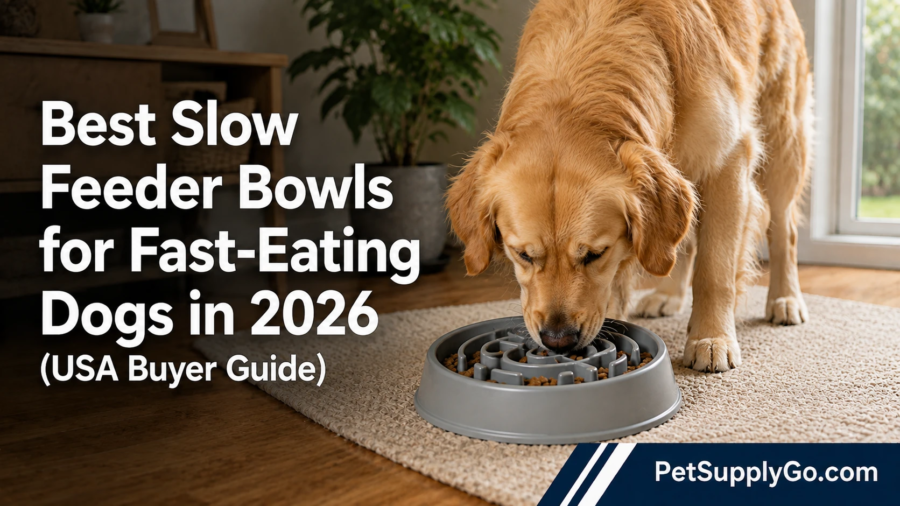
A slow feeder bowl addresses the problem mechanically rather than behaviorally. The ridges, maze patterns, and obstacles molded into the bowl force the dog to navigate around barriers to reach each piece of kibble, which naturally extends the eating time from seconds to several minutes. Most dogs adapt to a slow feeder within a few meals, and the behavioral benefit is immediate. The question is which design works best for your dog’s size, eating style, and persistence level.
This guide covers the seven best slow feeder bowls available in 2026, evaluated based on how effectively they slow down eating, how easy they are to clean, how durable they are under daily use, and how well they work for different dog sizes and muzzle shapes.
Quick Answer: Best Slow Feeder Bowls at a Glance
If you are short on time, here are the top picks based on the comparison factors used throughout this guide:
Pick | Product | Best For | Price Range | Our Rating | Best Overall | Outward Hound Fun Feeder Slo Bowl | Most dogs needing reliable slowing | $12 to $20 | 9.3/10 | Best Interactive | Mr. Peanut’s Interactive Slow Feed Dog Bowl | Dogs that need mental stimulation | $15 to $25 | 9.0/10 | Best Lick Mat Style | LickiMat Wobble Slow Feeder | Dogs that prefer licking to chewing | $15 to $22 | 8.8/10 | Best for Large Dogs | Neater Pets Interactive Slow Feed Bowl | Large breeds with deep muzzles | $20 to $35 | 9.1/10 | Best for Flat-Faced | FOUR Paws Magic Coat Slow Feed Bowl | Brachycephalic breeds like Bulldogs | $12 to $18 | 8.7/10 | Best Stainless Steel | YINEYA Slow Feeder Dog Bowl | Owners wanting a durable metal option | $15 to $25 | 8.9/10 | Best for Wet Food | West Paw Design Toppl Slow Feeder | Dogs fed wet food or raw diets | $25 to $40 | 9.2/10 |
Keep reading for the full breakdown of each pick, what actually makes a slow feeder effective, and how to choose the right design for your dog’s eating habits.
What Actually Makes a Slow Feeder Bowl Effective
Not all slow feeder bowls slow dogs down equally, and the difference between an effective design and a decorative one comes down to a few specific construction factors that are easy to miss if you are not sure what to look for.
Maze Depth and Complexity
The depth and complexity of the maze or ridge pattern is the primary factor that determines how much the bowl slows eating. Shallow ridges with wide channels between them allow a dog with a medium or large muzzle to simply lap up kibble in large mouthfuls by working their tongue into the channels. Deeper ridges with narrower channels force the dog to use their tongue more precisely to extract each piece of food, which extends eating time more significantly. The Outward Hound Fun Feeder, for example, offers multiple maze complexity levels specifically because a Labrador can defeat a shallow maze in seconds while the same design genuinely slows down a smaller dog with a shorter tongue reach.
Bowl Size Relative to Dog Size
A slow feeder designed for a 15-pound dog does not work well for an 80-pound dog. The maze channels are too narrow for a large muzzle, the capacity is too small for a large portion, and the dog can often simply flip the bowl over or push food out of the channels with their nose. Conversely, a large slow feeder with wide channels provides no meaningful challenge for a small dog, since their smaller muzzle can navigate the channels without much effort. Match the bowl size to your dog’s weight class and muzzle length, not just their overall size. A long-nosed Collie needs a different bowl design than a same-weight Bulldog with a compressed muzzle.
Material and Safety
Most slow feeder bowls are made from food-grade plastic, silicone, or stainless steel. All three materials are safe when manufactured to food-contact standards, but they differ in durability and cleaning. Plastic is lightweight and affordable but can develop scratches that harbor bacteria over time. Silicone is softer, more flexible, and often easier to clean, but some dogs may chew on silicone edges if they are frustrated by the slow feeding challenge. Stainless steel is the most durable and hygienic option but is limited in the complexity of maze patterns that can be stamped into metal, which means most stainless steel slow feeders are simpler in design than plastic or silicone alternatives. Any bowl you choose should be labeled BPA-free and food-contact safe, which virtually all reputable brands now include in their product specifications.
Stability and Non-Slip Base
A slow feeder that slides across the floor while the dog eats is frustrating for the dog and less effective at slowing eating, since the dog can simply push the bowl around to access food from different angles rather than working through the maze. A non-slip base, typically made from rubber or silicone, keeps the bowl stable during use. Some designs go further by incorporating a weighted base or a suction cup bottom that anchors the bowl to smooth floors. This matters more for large, strong dogs that can easily push a lightweight bowl across a tile or hardwood floor, and less for small dogs eating on a carpeted surface where friction alone keeps the bowl in place.
The 7 Best Slow Feeder Bowls in 2026
1. Outward Hound Fun Feeder Slo Bowl, Best Overall
The Outward Hound Fun Feeder Slo Bowl is the most widely recommended slow feeder on the market, and for good reason. It uses a molded plastic maze with ridges of varying heights that force the dog to navigate around obstacles to reach their food. The bowl comes in multiple maze patterns and sizes, ranging from a mini version for dogs under 15 pounds to a large version for dogs up to about 80 pounds. The plastic is BPA-free, the base has rubberized grips that keep it from sliding on most floor surfaces, and the whole thing is dishwasher safe for easy cleaning. The maze design has been refined over several product generations based on owner feedback, and the current version strikes a balance between slowing eating effectively and not being so challenging that the dog gives up in frustration.
Pros:
- Multiple maze patterns and sizes available, making it easy to match the difficulty level to your dog’s size and persistence
- Rubberized non-slip base keeps the bowl stable on tile, hardwood, and laminate floors
- Affordable price point of $12 to $20, making it easy to try without a significant investment
Cons:
- Plastic material can develop scratches over time that may harbor bacteria, though this is mitigated by dishwasher cleaning
- Determined large-breed dogs with strong muzzles may be able to push kibble out of the channels with their nose, reducing the slowing effect
Best for: most dog owners looking for a reliable, well-tested slow feeder at a reasonable price.
2. Mr. Peanut’s Interactive Slow Feed Dog Bowl, Best Interactive
Mr. Peanut’s slow feeder adds an interactive element to the basic maze concept by incorporating movable components that the dog must manipulate to access food. The bowl includes sliding covers and rotating elements that require the dog to use their nose or paws to move pieces out of the way before reaching the kibble underneath. This adds a mental stimulation component that goes beyond basic slow feeding, which can be valuable for bored or high-energy dogs that benefit from any activity that engages their brain during mealtime. The bowl is made from food-safe ABS plastic and is available in a single size that works well for most medium and large breed dogs.
Pros:
- Movable puzzle elements provide genuine mental stimulation in addition to slowing eating, which benefits bored or anxious dogs
- Sturdy ABS plastic construction holds up well to daily use and repeated manipulation by paws and noses
- Adjustable difficulty by adding or removing the movable covers for different challenge levels
Cons:
- More complex to clean than simple maze bowls, with more crevices where food can get stuck
- Some dogs learn to simply knock the entire bowl over to access food, bypassing the puzzle entirely
Best for: dogs that need both slow feeding and mental engagement during meals, particularly high-energy or easily bored dogs.
3. LickiMat Wobble Slow Feeder, Best Lick Mat Style
The LickiMat Wobble takes a fundamentally different approach to slow feeding. Instead of a bowl with maze ridges, it is a flat textured mat with a wobble base that the owner spreads wet food, peanut butter, yogurt, or soaked kibble onto. The dog licks the food out of the textured surface, which is an inherently slower process than biting or chewing. The wobble base adds an element of movement that further extends the feeding time. Lick mats are particularly effective for dogs that are anxious, since the repetitive licking action has a calming effect that can reduce stress during separation, thunderstorms, or other anxiety-triggering situations. The LickiMat is made from food-grade silicone and is dishwasher safe.
Pros:
- Licking action is naturally slower than chewing or biting, extending meal time significantly for wet food and soft treats
- Repetitive licking has a calming effect on dogs, making this a good dual-purpose tool for anxious dogs
- Silicone construction is flexible, durable, and easy to clean in the dishwasher
Cons:
- Not designed for dry kibble, which will simply sit on the surface without sticking to the mat
- The wobble base can be noisy on hard floors when the dog pushes it around during licking
Best for: dogs fed wet food, raw diets, or soft treats, and anxious dogs that benefit from the calming effect of licking.
4. Neater Pets Interactive Slow Feed Bowl, Best for Large Dogs
The Neater Pets slow feeder is designed specifically with large breeds in mind, offering a wider bowl diameter and deeper maze channels that accommodate larger muzzles without making the feeding challenge too easy. The maze pattern uses a combination of ridges and pillars that force the dog to work around multiple obstacles, and the wider spacing means a large dog’s nose and tongue fit comfortably into the channels without immediately accessing all the food. The bowl holds up to 4 cups of dry food, which covers most large breed portion sizes. It includes a rubberized non-slip base and is made from BPA-free, food-safe plastic.
Pros:
- Larger diameter and deeper channels designed specifically for large breed muzzles and portion sizes
- Holds up to 4 cups of dry food, covering most large breed single-meal portions
- Sturdy construction with a heavy rubberized base resists being pushed around by large, strong dogs
Cons:
- Too large for small dogs or toy breeds, who will struggle to reach food in the outer channels
- The maze pattern, while deeper than standard, may still be defeated by particularly determined large dogs
Best for: large breed dogs that need a slow feeder scaled to their size and portion requirements.
5. FOUR Paws Magic Coat Slow Feed Bowl, Best for Flat-Faced Breeds
Brachycephalic breeds like Bulldogs, Pugs, French Bulldogs, and Shih Tzus have compressed muzzles that change how they interact with food. Standard slow feeder mazes with deep, narrow channels are frustrating for flat-faced dogs because their shorter muzzle cannot reach into the channels effectively. The FOUR Paws Magic Coat slow feeder addresses this by using a shallower maze pattern with wider channels and lower ridges that a flat-faced dog can navigate using their tongue and the front of their mouth. The design still slows eating meaningfully, but it does so in a way that accommodates the physical limitations of a compressed muzzle. The bowl is made from lightweight, BPA-free plastic and is dishwasher safe.
Pros:
- Shallow maze with wide channels designed specifically for flat-faced breeds that struggle with standard slow feeders
- Lightweight and easy to handle, which is helpful for smaller brachycephalic breeds
- Affordable price makes it a low-risk option for owners unsure whether their flat-faced dog will accept a slow feeder
Cons:
- The shallow maze may not slow faster flat-faced eaters as much as owners would like
- Lightweight construction means the bowl can slide on smooth floors without a mat underneath
Best for: Bulldogs, Pugs, French Bulldogs, and other brachycephalic breeds that need gentler slowing than standard maze bowls provide.
6. YINEYA Slow Feeder Dog Bowl, Best Stainless Steel
The YINEYA slow feeder stands out by offering a stainless steel construction with raised maze ridges welded or pressed into the bowl surface. Stainless steel is inherently more hygienic than plastic because it does not develop the microscopic scratches that can harbor bacteria over time, and it is also more resistant to chewing damage for dogs that occasionally gnaw on bowl edges. The maze pattern is simpler than plastic alternatives, since complex three-dimensional mazes are difficult to manufacture in stamped steel, but the raised ridges do slow eating effectively for most dogs. The bowl includes a silicone non-slip base that also protects floors from scratches.
Pros:
- Stainless steel construction is more hygienic and durable than plastic, resisting scratches and bacterial buildup
- Silicone base protects floors from scratches and keeps the bowl from sliding during use
- Resists chewing damage from dogs that occasionally gnaw on bowl edges
Cons:
- Simpler maze pattern than plastic alternatives, which may not slow very determined fast eaters as effectively
- Stainless steel can be noisy if the dog pushes metal kibble against the bowl during eating
Best for: owners who prefer the hygiene and durability of stainless steel and whose dogs do not need the most complex maze pattern.
7. West Paw Design Toppl Slow Feeder, Best for Wet Food
The West Paw Toppl is a rubber-like slow feeder designed to work with wet food, raw diets, and kibble mixed with water or broth. Made from West Paw’s proprietary Zogoflex material, which is a durable, BPA-free, and phthalate-free rubber compound, the Toppl can be filled with soft food and frozen for extended licking sessions. The interior ridges and the bowl’s shape slow the dog’s access to food, and the flexible rubber material makes it difficult for the dog to simply dump the food out by flipping the bowl. The Toppl is also dishwasher safe and available in two sizes, making it suitable for a range of dog sizes. West Paw manufactures in the USA and offers a manufacturer’s guarantee against dog damage.
Pros:
- Zogoflex rubber material works excellently with wet food, raw diets, and frozen mixtures, filling a gap that plastic maze bowls cannot
- Flexible rubber construction resists tipping and dumping, even from determined large dogs
- Made in the USA with a manufacturer’s guarantee against damage, reflecting confidence in the product’s durability
Cons:
- Higher price at $25 to $40 than most plastic slow feeders, though the durability and guarantee partially offset this
- The rubber material can retain odors from strongly scented foods like fish-based wet diets over time
Best for: dogs fed wet food or raw diets, and owners who want a durable, freezer-safe slow feeder backed by a strong guarantee.
How to Choose the Right Slow Feeder for Your Dog
The right slow feeder depends on three main factors: your dog’s size and muzzle shape, the type of food you feed, and how determined your dog is to eat quickly. A small Cavalier King Charles Spaniel eating dry kibble has very different needs than a 90-pound Rottweiler eating a raw diet, and the bowl that works for one may be completely wrong for the other.
For most dogs eating standard dry kibble, a maze-style bowl like the Outward Hound Fun Feeder is the right starting point. Choose the size that matches your dog’s weight class, and opt for a more complex maze pattern if your dog defeats the simpler version too quickly. The Outward Hound line offers multiple maze designs, so you can start with a moderate pattern and upgrade to a more complex one if needed without switching brands.
For flat-faced breeds, the FOUR Paws Magic Coat bowl is the safest bet because it accounts for the physical limitations of a compressed muzzle. Standard maze bowls can be frustrating and even counterproductive for these dogs, since they may give up before finishing their meal. A bowl designed for their mouth shape makes the transition to slow feeding much smoother.
For dogs fed wet food or raw diets, maze bowls with dry channels are less effective since the food sits in the channels rather than on top of the ridges. The West Paw Toppl and the LickiMat Wobble are both designed specifically for soft and wet foods, and they work well for this use case. The Toppl has the advantage of being freezer-safe, which extends the challenge and entertainment value significantly when frozen meals are offered.
For dogs that destroy standard plastic bowls, the YINEYA stainless steel or the West Paw Zogoflex rubber are the most durable options. Both resist damage that would crack or chew through standard plastic, and both are backed by manufacturer guarantees that provide additional confidence in their longevity.
Common Mistakes When Using a Slow Feeder Bowl
- Choosing a slow feeder that is too small for your dog. A bowl designed for a 20-pound dog does not slow a 70-pound dog effectively, because the larger dog can simply push food out of the channels or access multiple channels at once with their wider muzzle. Always match the bowl size to your dog’s current weight and muzzle dimensions.
- Expecting the dog to immediately accept the new bowl without any transition. Some dogs adapt to a slow feeder within a single meal, but others become frustrated, bark at the bowl, or try to flip it over. Introduce the slow feeder by mixing some food in it while leaving a portion in their regular bowl nearby, gradually increasing the proportion in the slow feeder over several meals.
- Overfilling the slow feeder. If food is piled above the maze ridges, the dog can simply lick the top layer off without engaging with the maze at all. Fill the bowl so that food sits in the channels between the ridges, not above them. This forces the dog to work through the maze to access each piece.
- Using a slow feeder as a substitute for portion control. A slow feeder extends eating time but does not change how many calories your dog consumes. If your dog is overweight, the portion size needs to be reduced regardless of whether you use a slow feeder. The slow feeder addresses how fast the dog eats, not how much.
- Not cleaning the slow feeder thoroughly between meals. Slow feeders have more crevices, channels, and textured surfaces than standard bowls, which means more places for food residue and bacteria to accumulate. Most slow feeders are dishwasher safe, and regular dishwasher cleaning is the most effective way to prevent bacterial buildup in the maze channels.
Bloat in Dogs: Understanding the Risk and How Slow Feeders Help
Gastric dilatation-volvulus, commonly called bloat, is one of the most serious emergencies in veterinary medicine. It occurs when the stomach fills with gas and sometimes rotates on its axis, cutting off blood flow and creating a life-threatening situation that requires immediate surgical intervention. Mortality rates for GDV range from 15 to 30 percent even with prompt treatment, making it one of the leading causes of death in large and giant breed dogs.
Rapid eating is one of the identified risk factors for bloat, though it is not the only one. Large or giant breed dogs with deep, narrow chests, dogs that eat a single large meal per day, dogs that exercise vigorously immediately after eating, and dogs with a family history of bloat are all at elevated risk. A slow feeder bowl addresses the eating speed component of this risk profile by forcing the dog to consume food gradually, which reduces the amount of air swallowed during the meal and may help prevent the rapid stomach distension that can precede volvulus.
It is important to understand that a slow feeder reduces one risk factor but does not eliminate the overall risk of bloat. Veterinarians recommend a combination of strategies for at-risk breeds, including feeding two or more smaller meals per day rather than one large meal, restricting vigorous exercise for at least an hour before and after eating, and avoiding elevated food bowls, since some studies have suggested that elevated feeding may actually increase bloat risk rather than reduce it. A slow feeder is a valuable tool within this broader management approach, particularly for dogs that are known rapid eaters.
If you own a large or giant breed, particularly a Great Dane, Weimaraner, St. Bernard, Gordon Setter, or Irish Setter, learning the signs of bloat is as important as taking preventive measures. A distended or hard abdomen, non-productive retching, restlessness, rapid breathing, and excessive drooling are all warning signs that require immediate veterinary attention. Minutes matter in bloat cases, and knowing the signs and having a plan to reach an emergency vet quickly can be the difference between a successful outcome and a fatal one.
Transitioning Your Dog to a Slow Feeder: A Realistic Timeline
Most dogs do not immediately embrace a slow feeder with enthusiasm. The maze ridges are a new obstacle between them and their food, and many dogs initially respond with frustration, pawing at the bowl, barking, or attempting to flip it over to get the food out the easy way. This is normal and does not mean the slow feeder will not work for your dog. It means they need a gradual introduction, just like they would for any new feeding routine.
Start by placing the slow feeder next to your dog’s regular bowl with a small amount of food in each. Let your dog eat from their regular bowl first, then investigate the slow feeder at their own pace. Over the next three to five meals, gradually shift more of the portion into the slow feeder and less into the regular bowl. Most dogs will begin working the maze on their own once they realize the food is accessible, just not as easily as before. The typical adjustment period is three to seven days for most dogs, though particularly food-motivated or frustrated dogs may take up to two weeks before they consistently use the slow feeder without protest.
If your dog persistently flips the slow feeder, try placing it on a non-slip mat or inside a slightly larger shallow tray that makes flipping more difficult. Some owners also have success by holding the bowl steady with one hand for the first few meals while the dog learns to eat from the maze. For dogs that become genuinely distressed, back off and return to the regular bowl for a few days before trying again with a simpler maze pattern. The goal is to make mealtime calmer and healthier, not to create a new source of stress for your dog.
Once your dog is consistently using the slow feeder, you may notice secondary benefits beyond the slower eating. Many owners report that their dogs seem more satisfied after meals, possibly because the longer eating time allows the brain to register fullness more effectively. Some dogs also show reduced food-guarding behavior, since the slow feeder makes the food last longer and reduces the sense of urgency that can trigger guarding in fast eaters.
How We Evaluated These Products
Each slow feeder in this guide was assessed against four core criteria based on verified owner feedback, manufacturer specifications, and general veterinary guidance on safe feeding practices for dogs.
Slowing effectiveness was the primary criterion. We evaluated how much each bowl extended eating time compared to a standard open bowl, based on aggregated owner reports and, where available, manufacturer timing data. Bowls that owners consistently reported reducing a 30-second meal to under a minute scored lower than those extending the same meal to three minutes or more.
Ease of cleaning was the second criterion, since slow feeders with complex mazes and moving parts can trap food in ways that standard bowls do not. Dishwasher-safe designs scored higher than hand-wash-only options, and designs with fewer deep, narrow crevices scored higher than those with hard-to-reach channels.
Durability under daily use was the third criterion, assessed through long-term owner reviews. Bowls that developed cracks, warping, or non-slip base failures within the first few months of daily use were penalized. Stainless steel and rubber designs generally scored higher for long-term durability than plastic.
Value relative to price was the final criterion. Slow feeders range from under $10 to over $40, and the evaluation considered whether each product’s performance justified its price. Given the relatively low price range across the category, most products offered reasonable value, but those combining durability with effective slowing at a moderate price scored highest overall.
Frequently Asked Questions
How much slower should my dog eat with a slow feeder?
A good slow feeder extends a meal that would normally take 30 to 60 seconds to at least 3 to 5 minutes for dry kibble. Some complex maze feeders can extend eating time to 10 minutes or more depending on the dog’s persistence and the maze complexity. The goal is not to make mealtime frustratingly long but to extend it enough that the dog is not gulping air and swallowing large, unchewed mouthfuls.
Can slow feeder bowls cause frustration in dogs?
Yes, if introduced abruptly or if the maze is too complex for the dog. Start with a simpler pattern and gradually increase the difficulty as your dog adapts. If your dog shows signs of significant distress like pacing, whining, or refusing to eat, simplify the approach or try a different maze pattern. The goal is to make mealtime more enjoyable and healthier, not to create a frustrating puzzle that your dog dreads.
Are slow feeders safe for puppies?
Slow feeders are safe for puppies once they are consistently eating solid food, typically around 8 to 12 weeks of age. Choose a size-appropriate bowl with a simple maze pattern, since puppies have smaller muzzles and less patience than adult dogs. Start with a very simple maze and only increase complexity as the puppy grows and adapts. Monitor puppies during the first few meals to make sure they are not chewing on the bowl itself.
Can I use a slow feeder with wet food?
Standard maze-style slow feeders work best with dry kibble. For wet food, raw diets, or soaked kibble, options like the West Paw Toppl or the LickiMat Wobble are better suited because they are designed to hold soft foods in textured surfaces that the dog licks out. Standard maze bowls can work with wet food if the channels are deep enough, but cleaning is more difficult and the food may not stay in the channels as effectively.
Do veterinarians recommend slow feeder bowls?
Many veterinarians recommend slow feeders, particularly for dogs that eat too fast and for breeds at risk of bloat. However, a slow feeder is one tool within a broader approach to safe feeding that also includes portion control, multiple smaller meals per day, and restricted exercise around mealtime. If your dog has a history of digestive issues or belongs to a bloat-prone breed, discuss your feeding approach with your veterinarian for personalized guidance.
How do I clean a slow feeder bowl properly?
Most slow feeders are dishwasher safe, which is the most effective cleaning method. If washing by hand, use warm soapy water and a brush with soft bristles that can reach into the maze channels. Pay particular attention to the corners and intersections of the maze ridges, where food residue tends to accumulate. Rinse thoroughly and allow to air dry completely before the next use. For silicone and rubber feeders, check the manufacturer’s guidelines regarding dishwasher temperature, since excessive heat can damage some silicone products.
Will my dog still eat fast even with a slow feeder?
Most dogs slow down meaningfully with a properly sized and designed slow feeder, but a few exceptionally determined dogs learn to work the maze quickly or find ways to bypass it. If your dog consistently finishes a slow feeder meal in under a minute, try upgrading to a more complex maze pattern, using a puzzle feeder with movable components, or combining the slow feeder with a snuffle mat for additional challenge. Some dogs benefit from splitting the meal between a slow feeder and a puzzle toy to extend the total eating time further.
Final Thoughts
A slow feeder bowl is one of the simplest, most affordable changes you can make to improve your dog’s health and digestion. For a typical investment of $15 to $25, a quality slow feeder reduces air swallowing, extends mealtime to a healthier pace, and in some cases provides mental stimulation that benefits anxious or bored dogs. The key is matching the bowl to your dog’s size, muzzle shape, and food type rather than grabbing whatever has the highest review count. The right slow feeder for a 15-pound Pug eating wet food is different from the right one for an 80-pound Labrador eating dry kibble, and both are different from the right one for a 120-pound Mastiff that destroys every plastic bowl in the house.
At PetSupplyGo, this guide will be updated throughout 2026 as new slow feeder designs enter the market. Check back for updated comparisons as we continue testing new releases for USA dog owners looking for bowls that genuinely slow down fast eaters in real, daily mealtime use.
button-
AFFILIATE DISCLOSURE
Petsupplygo.com is a participant in the Amazon Services LLC As an Amazon associate program, I earn from qualifying purchases.This costs you nothing extra and help us keep our guide free.
- Share On:

Mark Spenser |
Mark Spenser is a local NY resident and an avid geek. When he’s not rediscovering his island state, he enjoys spending time at TechPhlox and review latest tech’s world products and news. You can follow him on Twitter @MarkSpenser
RELATED ARTICLES

7 Best Dog Beds for Large Dogs That Actually Support Their Joints (2025 Guide)
7 Best Dog Beds for Large Dogs That Actually Support Their Joints (2025 Guide)
My 90-pound Labrador, Cooper, used to wake up stiff every sin …

7 Best Automatic Cat Feeders in 2026 That Actually Keep Your Cat’s Schedule on Track
7 Best Automatic Cat Feeders in 2026 That Actually Keep Your Cat’s Schedule on Track
If you have ever come home late and found your cat sit …