
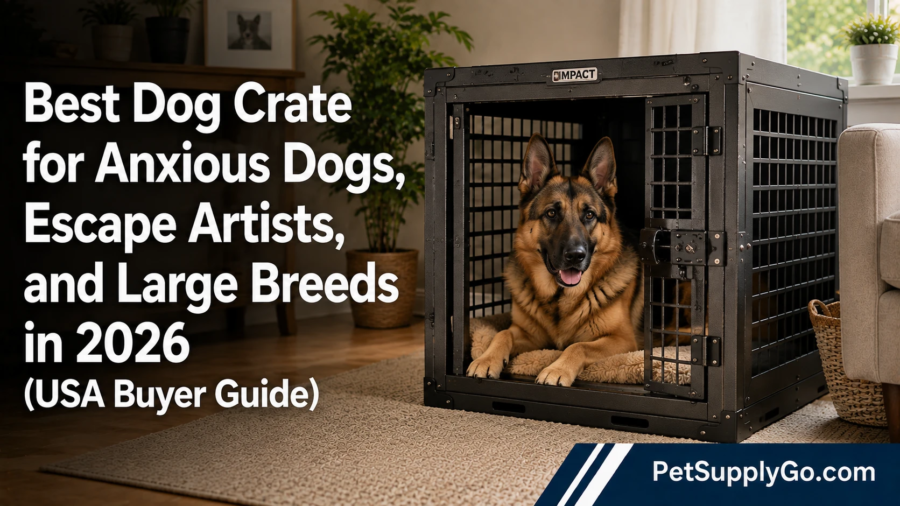
Best
Dog Crate for Anxious Dogs, Escape Artists, and Large Breeds in 2026 (USA Buyer
Guide)
Published on PetSupplyGo.com
| Affiliate Disclosure: As an Amazon Associate we earn from qualifying
purchases. This does not affect our recommendations.
Why the Right Crate Matters More Than Most Owners Expect
A crate is often the first major
purchase a new dog owner makes, and it is also one of the most frequently
mismatched products to a dog’s actual needs, more so than almost any other item
on a new owner’s shopping list. A standard wire crate works perfectly well for
a calm, confident dog, but for a dog dealing with separation anxiety, a rescue
with an unknown history, or a determined escape artist who has already bent
wire bars trying to get out, the wrong crate can actually make anxiety worse
rather than providing the secure, den-like space a crate is supposed to offer.
This mismatch happens more often
than most first time owners expect, largely because crates are frequently
marketed and sold based on price and basic size charts rather than temperament.
Two dogs of the exact same breed and weight can have completely different
reactions to the same crate model, one settling in within days and the other
showing signs of ongoing distress for weeks, simply because of differences in
individual history, sensitivity, and prior experiences with confinement.
Dogs are naturally denning
animals, meaning a properly introduced crate can become a genuine source of
comfort and security rather than a punishment or confinement tool. The
difference between a crate a dog settles into calmly and one that triggers
panic often comes down to a combination of the crate’s design, size, material,
and how it was introduced during training, not simply whether crate training
works for dogs in general.
This guide breaks down the seven
best dog crates available in 2026 for anxious dogs, escape artists, puppies,
and large breeds, what actually makes a crate safe and calming rather than
stressful, and how to choose the right one for your specific dog’s temperament
and size.
Quick Answer: Best Dog Crates at a Glance
If you are short on time, here
are the top picks before we go into detail, based on the same core comparison
factors used throughout this guide:
|
Pick |
Product |
Best For |
Price Range |
Our Rating |
|
Best Overall |
MidWest iCrate Double Door Dog Crate |
All-around reliability and value |
$50 to $90 |
9.4/10 |
|
Best for Anxious Dogs |
Diggs Revol Dog Crate |
Nervous dogs needing a den-like feel |
$250 to $300 |
9.5/10 |
|
Best for Escape Artists |
ProSelect Empire Dog Crate |
Strong, determined escape attempts |
$150 to $400 |
9.3/10 |
|
Best Furniture Style |
New Age Pet Habitat ‘n Home Crate |
Blending crate into home decor |
$150 to $220 |
9.0/10 |
|
Best for Puppies |
MidWest LifeStages Crate with Divider |
Growing puppies needing adjustable space |
$45 to $80 |
8.9/10 |
|
Best Soft Sided |
Petmate Portable Soft Dog Crate |
Calm dogs and travel use |
$35 to $60 |
8.6/10 |
|
Best for Large Breeds |
Frisco Heavy Duty Wire Dog Crate |
Big dogs needing extra room and strength |
$90 to $140 |
9.1/10 |
Keep reading for the full
breakdown of each pick, what actually makes a crate safe and calming, how to
choose based on your dog’s temperament, and answers to the most asked
questions.
What Actually Makes a Crate Right for an Anxious or Escape Prone Dog
Most crate listings on Amazon
emphasize durability and price, but for dogs with anxiety or a strong drive to
escape, several other factors matter just as much, if not more, and these are
rarely highlighted clearly in a typical product listing.
Visibility and Den-Like Enclosure
Traditional wire crates offer
excellent airflow and visibility, but that same open visibility can actually
increase anxiety in some dogs, since they can see everything happening around
them without feeling truly enclosed or hidden. Dogs prone to anxiety often do
better in a crate with more solid paneling, or a wire crate covered with a
breathable cover, that creates a more den-like, partially enclosed feeling
while still allowing adequate airflow.
This is part of why several
premium anxiety-focused crates on the market now use a rounded, more enclosed
design with fewer harsh visual sightlines compared to a traditional boxy wire
crate, since the softer shape and reduced visibility can meaningfully change
how a nervous dog perceives the space.
Latch and Door Security
For dogs that have previously
escaped a crate, latch design is one of the most important factors to check
before purchasing, often more important than overall build strength. Standard
slide bolt latches can sometimes be manipulated by a persistent, clever dog,
particularly medium to large breeds with enough paw dexterity and strength to
work at a simple latch repeatedly. Crates designed specifically for
escape-prone dogs typically use reinforced, multi-point locking systems that
are significantly harder to manipulate from the inside.
Material Strength
Standard wire crates are
sufficient for most dogs, but a determined escape artist with strong jaws or
significant strength can sometimes bend standard gauge wire over repeated
attempts. Heavy duty crates use thicker gauge steel bars and reinforced corner
connections specifically tested against dogs with a history of bending or
breaking standard crates.
Size and Proportions
A crate that is too large can
actually reduce the den-like security effect that helps an anxious dog settle,
since excess space can feel less enclosed and protective. A crate that is too
small causes physical discomfort and can heighten anxiety through restricted
movement. The generally recommended sizing allows a dog to stand up fully, turn
around comfortably, and lie down stretched out, without significant extra space
beyond that.
The 7 Best Dog Crates in 2026
1. MidWest iCrate Double Door Dog Crate, Best Overall
The iCrate has remained one of
the most consistently recommended crates for years due to its reliable build
quality, reasonable price, and practical double door design that allows
flexible placement in different rooms. It includes a removable divider panel
useful for growing puppies, a leak-proof plastic pan, and a folding design for
storage or travel.
●
Pros: reliable construction at a
reasonable price, double door design offers placement flexibility, removable
divider extends usefulness through a puppy’s growth stages
●
Cons: standard slide latches are
not ideal for strong escape artists; open wire design may not suit particularly
anxious dogs without an added cover
Best for: calm to moderately
anxious dogs and puppies without a history of significant escape attempts.
2. Diggs Revol Dog Crate, Best for Anxious Dogs
The Diggs Revol has become a
standout option specifically for anxious dogs due to its rounded, more enclosed
design that reduces the harsh visual openness of a traditional wire crate while
still maintaining good airflow through its diamond mesh paneling. It folds flat
for storage, includes a removable, washable tray, and its softer overall shape
tends to feel less clinical and more genuinely den-like to nervous dogs.
●
Pros: rounded, enclosed design
genuinely helps many anxious dogs settle faster, high quality build materials,
thoughtful design details like a divider panel and garage door style opening
●
Cons: significantly more expensive
than standard wire crates; smaller sizes may not accommodate the largest breeds
Best for: dogs with diagnosed or
suspected anxiety who have struggled to settle in a standard open wire crate.
3. ProSelect Empire Dog Crate, Best for Escape Artists
For dogs that have already bent,
broken, or otherwise escaped from a standard crate, the ProSelect Empire is
built specifically to handle serious, sustained attempts at escape. It uses
heavy gauge steel construction with a reinforced locking mechanism designed to
resist manipulation, and has been a long standing recommendation from trainers
working with particularly strong or determined dogs.
●
Pros: exceptional build strength,
reinforced locking mechanism resists escape attempts, trusted by professional
trainers for difficult cases
●
Cons: significantly heavier and
bulkier than standard crates, making it harder to move or store; premium price
reflects the reinforced construction
Best for: dogs with a confirmed
history of escaping standard crates, particularly larger or unusually strong
breeds.
4. New Age Pet Habitat ‘n Home Crate, Best Furniture Style
For owners who want a crate that
doubles as a functional piece of furniture rather than standing out as an
obvious pet product, the New Age Pet Habitat ‘n Home Crate uses a wood-look
enclosure with a removable top that can double as a side table or TV stand
surface. This can also provide a slightly more enclosed, den-like feel for
moderately anxious dogs compared to an open wire design.
●
Pros: attractive design that
blends into home decor, doubles as usable furniture, more enclosed feel than
standard wire crates
●
Cons: not designed to withstand
serious escape attempts from a determined dog; higher price reflects the
furniture-style construction
Best for: owners of calm,
non-escape-prone dogs who want crate furniture that fits their home’s interior
design.
5. MidWest LifeStages Crate with Divider, Best for Puppies
Puppies grow quickly, and buying
a full sized adult crate from the start can actually work against successful
crate training, since too much open space can encourage a puppy to eliminate in
one corner and sleep in another. The MidWest LifeStages Crate includes an
adjustable divider panel that allows the usable space to grow along with the
puppy, avoiding the need to purchase multiple crates through different growth
stages.
●
Pros: adjustable divider grows
with the puppy, reduces the temptation to eliminate away from the sleeping area
during house training, reasonable price for the functionality provided
●
Cons: standard wire construction
and latch are not designed for a strong adult dog with escape tendencies, so a
larger or more determined adult dog may eventually need a different crate
Best for: new puppy owners
wanting a single crate that adapts through the housetraining and growth
process.
6. Petmate Portable Soft Dog Crate, Best Soft Sided
For calm, non-destructive dogs,
particularly smaller breeds, a soft sided crate offers a lighter, more portable
option well suited to travel, camping trips, or temporary use in a hotel room.
The Petmate Portable Crate folds flat for storage and transport while still
providing a defined, secure space for a well behaved dog.
●
Pros: lightweight and highly
portable, folds flat for easy storage and travel, gentler on floors than metal
wire crates
●
Cons: not suitable for dogs prone
to chewing, scratching, or attempting to escape, since soft sided material
offers minimal resistance to a determined dog
Best for: calm, well behaved
dogs, particularly for travel or temporary use rather than as a primary daily
crate.
7. Frisco Heavy Duty Wire Dog Crate, Best for Large Breeds
Large breed dogs need a crate
with a wider and taller interior along with enough structural strength to
handle a bigger dog’s movement and weight without flexing or wobbling. The
Frisco Heavy Duty Wire Dog Crate offers generous interior dimensions specifically
sized for large breeds, along with a reinforced frame that holds up well to
daily use from bigger, more powerful dogs.
●
Pros: generous interior space
designed specifically for large breeds, sturdy reinforced frame, reasonable
price relative to its size and build quality
●
Cons: significant size and weight
make it difficult to move once assembled; standard latch may need upgrading for
large dogs with strong escape tendencies
Best for: large breed dog owners
needing a crate with genuine size and structural strength without paying
premium reinforced-crate pricing.
How to Choose the Right Crate for Your Dog’s Temperament
Start by honestly assessing your
dog’s specific behavior pattern rather than choosing based on price or general
popularity alone, since the single biggest factor in crate training success is
fit between the product and the individual dog rather than the crate’s star
rating. A calm, confident dog with no history of anxiety or escape attempts
generally does well in a standard wire crate like the MidWest iCrate, which
offers good value and practical features without unnecessary extra cost.
For a dog showing clear signs of
anxiety, such as excessive panting, drooling, or distress specifically around
confinement, a more enclosed, den-like design like the Diggs Revol often
produces noticeably better results than a standard open wire crate. For dogs
with a documented history of escaping, prioritize reinforced locking mechanisms
and heavy gauge construction over price or appearance, since a crate that fails
to contain an anxious, escaping dog can lead to genuine safety risks, including
injury during the escape attempt itself.
Puppies benefit most from an
adjustable divider crate that grows with them through housetraining, while
large breeds need enough interior space and structural strength to remain both
comfortable and structurally sound over years of daily use.
Common Mistakes When Crate Training an Anxious Dog
Even the right crate will not
solve anxiety on its own if paired with the wrong introduction process, and
most of the frustration owners report with crate training traces back to one of
the following avoidable patterns rather than a flaw in the crate itself.
●
Forcing a dog into a crate before
it has had positive, gradual exposure to the space, which can create a lasting
negative association that undermines crate training long term
●
Using the crate as a punishment
tool, which teaches a dog to associate the crate with negative experiences
rather than safety and comfort
●
Leaving an anxious dog crated for
excessively long periods without adequate exercise or bathroom breaks
beforehand, which can heighten distress rather than provide the calming effect
a crate is meant to offer
●
Choosing a crate that is too
large, assuming bigger automatically means more comfortable, when in fact
excess space can reduce the secure, den-like feeling that helps many anxious
dogs settle
●
Skipping a gradual desensitization
process for dogs with a documented negative history around confinement, such as
rescues who may have experienced neglect or improper crating in the past
A Gradual Approach to Crate Training an Anxious Dog
Rushing crate introduction is
one of the most common reasons crate training fails, particularly for dogs with
existing anxiety. Start by leaving the crate door open in a common area of the
home, allowing your dog to investigate it freely without any pressure to enter.
Placing treats, a favorite blanket, or a worn piece of your clothing inside can
help build a positive association during this exploration phase.
Once your dog voluntarily enters
the crate to retrieve treats or rest, begin closing the door for very short
periods while remaining in the room, gradually extending the duration over
several days or weeks depending on your individual dog’s comfort level. Avoid
the instinct to comfort a distressed dog through the crate door with excessive
attention, since this can inadvertently reinforce anxious vocalizing; instead,
wait for a calm moment before offering praise or a reward.
It also helps to practice short
absences before attempting longer ones. Once your dog can settle calmly with
the door closed while you remain nearby, try leaving the room for thirty
seconds, then a few minutes, gradually building toward the length of absence
you actually need for work or errands. Skipping this incremental step and
jumping straight to a full workday absence is one of the most common reasons a
seemingly successful crate introduction suddenly appears to fail.
For particularly anxious dogs,
working with a certified trainer or veterinary behaviorist can meaningfully
speed up this process and help identify whether additional support, such as
anxiety wraps, calming supplements, or in some cases veterinary guidance on
anti-anxiety medication, would benefit your dog’s overall crate training
progress.
Wire Versus Plastic Versus Soft Sided Crates
Each crate material offers
different tradeoffs worth understanding before purchase. Wire crates provide
excellent airflow and visibility, fold flat for storage, and generally offer
the most affordable entry point, though the open design can feel less secure to
anxious dogs without an added cover.
Plastic crates, often used for
airline travel, provide a more enclosed, den-like feel with solid walls on most
sides, which can genuinely help some anxious dogs feel more secure compared to
an open wire design. However, airflow is more limited, which matters more in
warmer climates or households without reliable climate control.
Soft sided crates offer the most
portability and the lightest weight, making them well suited to travel or
temporary use, but they provide minimal structural resistance and are not
appropriate for dogs prone to chewing, scratching, or determined escape attempts.
Crate Training Timeline: What to Realistically Expect
Owners often underestimate how
long genuine crate comfort takes to develop, particularly for anxious dogs or
rescues with an unknown history, and setting realistic expectations upfront
tends to reduce frustration and premature giving up. A confident, easygoing
puppy might settle into a crate routine within a week or two of consistent,
positive introduction. An anxious adult dog, or a rescue with a history of poor
confinement experiences, can reasonably take anywhere from several weeks to a
few months before showing genuine relaxation rather than tolerance.
Signs of real progress include a
dog voluntarily entering the crate without being led there, settling down and
sleeping rather than pacing or vocalizing, and showing calm body language such
as a relaxed jaw and soft eyes rather than a tucked tail or flattened ears.
Setbacks are normal and do not mean the process has failed. A stressful day, a
loud storm, or an unfamiliar visitor can temporarily increase anxiety around
the crate even after weeks of progress, and simply returning to the basic
gradual reinforcement steps usually gets training back on track.
Avoid comparing your dog’s
timeline to another dog’s experience, including stories from friends or online
forums, since individual temperament, history, and the specific source of
anxiety all affect how quickly a dog adjusts. Consistency matters far more than
speed.
How We Evaluated These Products
Rather than ranking crates based
on marketing copy alone, this guide leans on a combination of independent owner
reviews collected across major retailers, manufacturer material specifications,
and general guidance from trainers working with anxious or escape-prone dogs,
since real world behavioral outcomes matter more in this category than in
almost any other pet product type. Each product was assessed against four core
criteria before making the final list.
●
Security and containment
reliability, based on aggregated owner feedback specifically regarding escape
attempts and latch durability
●
Anxiety-reducing design factors,
including enclosure style, visual openness, and overall den-like quality
reported by owners of anxious dogs
●
Build quality and material
strength, including how well the frame and paneling hold up to sustained daily
use and, where relevant, determined chewing or scratching
●
Value relative to price, since a
crate’s cost only matters in relation to how well it serves its intended
purpose and how long it reliably lasts
Crates that scored well across
all four categories made the final list. Products with frequent, recent reports
of failed containment or structural failure were excluded even when they
appeared prominently in search results.
Sizing Chart Guidance by Weight Range
Crate manufacturers typically
list recommended sizing by weight range, though breed body shape can shift the
ideal choice slightly even within the same weight class, which is why relying
on weight alone sometimes leads to a poor fit. As a general starting point,
dogs under 25 pounds usually fit well in a 24 inch crate, dogs between 26 and
40 pounds generally need a 30 inch crate, dogs between 41 and 70 pounds
typically require a 36 inch crate, and dogs over 70 pounds usually need a 42
inch or larger crate.
These ranges are a helpful
starting point rather than an exact rule, since a long bodied breed like a
Dachshund or a broad chested breed like a Bulldog may need different
proportions than the weight chart alone would suggest. When your dog falls near
the boundary between two size recommendations, sizing up slightly is generally
the safer choice, particularly if you plan to use a divider panel to adjust
usable space during growth or training.
Signs Your Current Crate Setup Is Not Working
Sometimes a crate that seemed
like a reasonable choice at purchase turns out to be a poor fit once real world
use begins. Recognizing the signs early prevents weeks of unnecessary stress
for both you and your dog. Persistent whining, barking, or howling that does
not settle after the first few minutes of separation, especially if it
continues or escalates over multiple sessions rather than improving, often
signals the crate itself, its placement, or the introduction pace needs to
change rather than simply waiting for the dog to adjust.
Physical signs are also worth
watching for closely. Excessive drooling, panting unrelated to heat or
exercise, scratching at the crate door or floor, or minor injuries around the
mouth or paws from attempting to dig or chew through the crate all indicate a
level of distress that a crate alone will not resolve without changes to the
approach. In these situations, stepping back to a much earlier stage of gradual
introduction, consulting a trainer, and in some cases discussing anti-anxiety
support with a veterinarian tends to produce far better outcomes than
continuing to push through with the same setup and hoping the dog eventually
adapts on its own.
On the other hand, genuine
progress often shows up in subtle ways before a dog is fully comfortable. A
slight increase in the time before vocalizing starts, a dog choosing to lie
down rather than stand alert at the door, or accepting a treat calmly inside
the crate are all meaningful signs of forward movement even if the dog is not
yet fully settled for extended periods.
Crate Placement and Environment Tips
Where a crate is placed in the
home can meaningfully affect how well an anxious dog settles into it, often
more than owners initially expect. A quiet corner of a commonly used room,
rather than an isolated space far from household activity, tends to work best
for most dogs, since it allows a sense of proximity to their people without
direct exposure to high traffic or loud noise.
Covering a wire crate partially
with a breathable blanket can help create the more enclosed, den-like feeling
that benefits many anxious dogs, though it is worth monitoring temperature and
airflow, particularly in warmer months or homes without reliable air
conditioning. Avoid placing a crate directly in front of a window with
significant outdoor activity visible, such as a busy street, since this can
increase rather than reduce anxiety for some dogs by constantly triggering
alert or defensive behavior.
A Note on Amazon Pricing and Availability
Prices for dog crates on Amazon
fluctuate regularly based on seasonal demand, promotional events, and
manufacturer stock levels. The price ranges listed throughout this guide
reflect typical pricing observed across recent months, but always check the current
listing before purchasing, since prices can shift by a noticeable amount from
week to week, particularly around major shopping events such as major holiday
sales periods.
Frequently Asked Questions
What size crate does my dog need if I do not know their adult weight yet?
For puppies, estimate based on
the expected adult size of the breed or breed mix rather than current puppy
weight, and use a crate with an adjustable divider panel so the usable space
can grow along with your puppy without needing multiple crate purchases.
Is it cruel to crate train an anxious dog?
When introduced gradually and
used correctly, a crate is not inherently cruel and can actually provide
genuine comfort and security for many dogs, including anxious ones. Problems
arise from rushed introduction, using the crate as punishment, or leaving a dog
crated for excessively long periods, rather than from crate training itself.
How do I stop my dog from escaping their crate?
Start by identifying the
specific method your dog uses to escape, such as manipulating a latch or
bending wire bars, and choose a crate specifically reinforced against that
method, such as the ProSelect Empire for determined escape artists. Pairing a
more secure crate with proper training and adequate exercise before crating
also reduces the underlying drive to escape.
What size crate does my dog need?
A crate should allow your dog to
stand up fully, turn around comfortably, and lie down stretched out, without
significantly more space beyond that. For puppies, an adjustable divider crate
allows the usable space to grow appropriately as they mature, rather than
requiring multiple crate purchases.
How long can a dog safely stay in a crate?
Adult dogs generally should not
be crated for more than four to six hours at a stretch during the day, and
puppies need considerably more frequent breaks based on their age and bladder
control. Crating should never be used as a substitute for adequate daily
exercise and attention.
Will a covered crate help my anxious dog calm down?
For many dogs, yes. A breathable
cover reduces visual stimulation and creates a more enclosed, den-like feeling
that can help an anxious dog settle more easily. Monitor temperature and
airflow carefully, particularly in warmer weather, to ensure the covered crate
remains comfortable.
Should I crate train a rescue dog with an unknown history?
Yes, but with extra patience and
a slower introduction process, since a rescue dog may have had negative
experiences with confinement in the past. Watch closely for signs of
significant distress during the introduction phase, and consider consulting a
trainer if your rescue shows strong resistance or panic around the crate
despite a gradual approach.
Do heavy duty crates work for all escape-prone dogs?
Heavy duty crates significantly
reduce the likelihood of a successful escape for most dogs, but no crate is
entirely escape-proof against every possible behavior. Pairing a reinforced
crate with proper training, adequate exercise, and addressing the underlying
anxiety or motivation driving the escape attempts generally produces the best
long term results.
Can two dogs share the same crate?
Generally no, particularly for
extended periods. Even dogs that get along well can experience stress or
resource guarding conflicts in a shared confined space, and a crate sized for
one dog rarely provides adequate room for two to lie down comfortably at the
same time. Separate crates, even placed side by side in the same room, are
almost always the better long term solution for multi dog households.
Final Thoughts
The right crate for an anxious
or escape prone dog is rarely just about finding the sturdiest or most
expensive option on the market. Matching the crate’s design, size, and security
features to your dog’s specific temperament and history, combined with a
patient, gradual training approach, makes the biggest difference in whether a
crate becomes a source of comfort or a source of ongoing stress. Take the time
to observe your individual dog’s reactions during the introduction process, and
be willing to adjust your approach or even the crate itself if something is not
working, rather than assuming any single product or method will work
identically for every dog.
At PetSupplyGo, this guide will
continue to be updated throughout 2026 as new crate designs and materials enter
the market. Check back for updated comparisons as we continue testing new
releases for USA dog owners looking for genuinely secure, comfortable crating
solutions that work for real dogs with real behavioral needs, not just for the
average dog pictured in a product listing.
Related Reading on PetSupplyGo
●
How to Crate Train a Puppy Step by
Step
●
Best Calming Products for Dogs
With Separation Anxiety
●
Best Orthopedic Dog Beds for
Inside a Crate
●
Signs of Separation Anxiety in
Dogs and How to Help
●
Best Travel Crates for Flying With
Your Dog

RELATED ARTICLES

SPCA, Dog Shelters, GSD Breeders, Bullmastiff Dogs, and Dog Training: A U.S. Pet Owner’s Complete Guide
Introduction: Finding the Right Dog Starts With Good Information Bringing a dog into your home is a long-term decision involving ...

Puppy Training Schedule: A Week-by-Week Guide to Raising a Well-Behaved Dog
Buy on Amazon → Recommended by PetSupplyGo.com Bringing home a puppy is one of the happiest days of y ...