
Published on PetSupplyGo.com | Affiliate Disclosure: As an Amazon Associate we earn from qualifying purchases. This costs you nothing extra and helps us keep these guides free.
Your dog loves the car. The second you grab your keys, there’s a happy spin, a dash to the door and a leap onto the back seat. Then the ride starts, and your dog walks across the seat, climbs onto the center console, tries to sit on your lap and sticks their whole head out of the window.
It’s adorable until the first sudden stop.
Unrestrained dogs are a real risk in a car, to themselves, to you and to everyone else on the road. A loose dog can distract the driver, get thrown in a sudden stop, be injured by airbags or escape through a broken window or open door after a crash. That’s the unglamorous side of road trips with a dog, and it’s the reason dog car seats, car beds and crash-tested harnesses exist.
But the market is also full of confusing marketing. Bucket seats, booster seats, car beds, hammocks, carriers, harnesses and seat covers all claim to keep your dog safe and comfortable. Some do. Some mainly keep hair off your upholstery. Some have been through real crash testing. Most have not.
The best dog car seat or car bed for your dog depends on size, temperament and what you want it to do. For small dogs, a secured booster or bucket seat gives them a view, keeps them out of your lap and helps contain them, while a carrier crash-tested by an independent group is the safest choice for tiny dogs. For medium and large dogs, a crash-tested harness clipped into the seat belt is generally the better safety tool, with a back seat cover or bed for comfort. And no seat replaces proper restraint, a calm routine and a safe place in the car.
This guide explains the real risks, what crash testing does and doesn’t mean, the main types of dog car seats and beds, how to match one to your dog, what to look for, well-known options, how to install and use them, how to help dogs who get carsick or anxious, and the mistakes that put dogs at risk.
Quick Answer: Which Dog Car Seat or Bed Should You Buy?
| Your situation | Best option | Why |
|---|---|---|
| Toy or small dog (under about 20 pounds) | Secured booster or bucket seat, or a crash-tested carrier | Gives a view, contains your dog, reduces lap climbing |
| Small dog and you want maximum safety | Crash-tested carrier-style seat secured with the seat belt | Independent testing exists for some models |
| Medium dog | Crash-tested harness plus back seat bed or cover | Better restraint, with comfort |
| Large dog | Crash-tested harness clipped to the seat belt, or a secured crate in the cargo area | Boosters don’t suit large dogs |
| Giant breed | Secured crate in a cargo area or a heavy-duty harness | Size and weight matter |
| Dog who gets carsick | Elevated seat with a view, plus a routine | Looking out can help some dogs |
| Anxious dog | Snug bucket seat or carrier with a familiar blanket | Feels like a den |
| Dog who sheds or gets muddy | Seat cover or hammock | Protects upholstery |
| Long road trips | Harness, bed or crate plus breaks | Comfort and safety |
| Multi-dog household | One restraint per dog | Prevents tangles and fights |
| Dog who chews | Harness with sturdy straps, no loose parts | Avoids damage |
If you want a short rule: for small dogs, use a seat that secures the dog and is anchored to the car. For larger dogs, use a crash-tested harness and the seat belt. Add a bed or cover for comfort and cleanup.
Why Restraining Your Dog in the Car Matters
Dogs aren’t naturally careful travelers. Here’s what restraint does.
It prevents distraction. A dog in your lap, on the console or under your feet can interfere with steering and braking. Distracted driving is dangerous, and a loose dog is a major distraction.
It protects your dog in a sudden stop. In a hard brake, an unrestrained dog keeps moving at the speed the car was going. Even a small dog can be thrown against the dashboard, windshield or seat with force.
It protects people. An unrestrained dog can hit passengers in a crash, and a large dog can cause serious injury to a person.
It protects first responders and your dog after a crash. A frightened, injured dog may run from the scene or bite someone trying to help. A restrained dog stays put.
It avoids airbag injuries. Front airbags are designed for adult humans. A dog on the front seat can be injured when the airbag deploys. The back seat is generally the safer place for dogs.
It prevents escapes. A dog who jumps out of an open window or door at a stop can end up in traffic.
It helps some dogs feel calmer. A secure spot can reduce pacing and anxiety.
It may be required by law. A number of states have laws that address driving with an animal in your lap or require pets to be restrained, and some use distracted driving or animal cruelty laws to cover unsecured dogs. Laws vary and change, so check your state’s rules.
It protects your car. Seat covers, beds and crates reduce scratches, mud and fur.
None of this means your dog can’t enjoy the window or the ride. It means they should be secured in a way that matches their size and the risks.
What “Crash Tested” Really Means (and Doesn’t)
This is where many shoppers get misled, so it deserves a careful look.
There’s no single government standard for dog car seats. Child car seats must meet federal safety standards in the United States. Dog car seats, harnesses and carriers don’t have an equivalent mandatory standard.
“Crash tested” is a marketing term. Some manufacturers test products in their own labs or in other facilities, using their own criteria. A claim like “crash tested” doesn’t tell you what standard was used, what speed was tested, what dog size was simulated or how the product performed.
Independent testing exists. The Center for Pet Safety (CPS) is a nonprofit research organization that tests pet travel products and publishes results and certifications for products that meet its standards. CPS tests use weighted, instrumented test dummies rather than live animals.
What CPS found about booster seats. In a pilot study of small-dog booster seats, CPS reported that several popular products didn’t hold up in testing. In some cases, the seat or its connections failed and the booster became a projectile. That study was published several years ago, and products change, but the main lesson still matters: a booster seat designed mainly for comfort and view isn’t the same as a restraint tested for crash performance.
Certified products are a short list. CPS has certified some harnesses, carriers and carrier-style seats. If crash performance is your top priority, check the CPS website for its current list of certified products, because certifications apply to specific products and sizes.
What a booster or bed does well. Booster seats, car beds and hammocks can still help. They reduce lap climbing, give a smaller dog a place to sit and protect your upholstery. They often reduce driver distraction. Just don’t assume they’ll protect your dog in a crash.
The honest takeaway: If you want comfort, containment and cleanup, many products can help. If you want crash protection, look for independent testing, such as CPS certification, and follow the instructions exactly. Use a harness or tether attached to a harness, never to a collar.
Types of Dog Car Seats, Beds and Restraints
1. Booster Seat
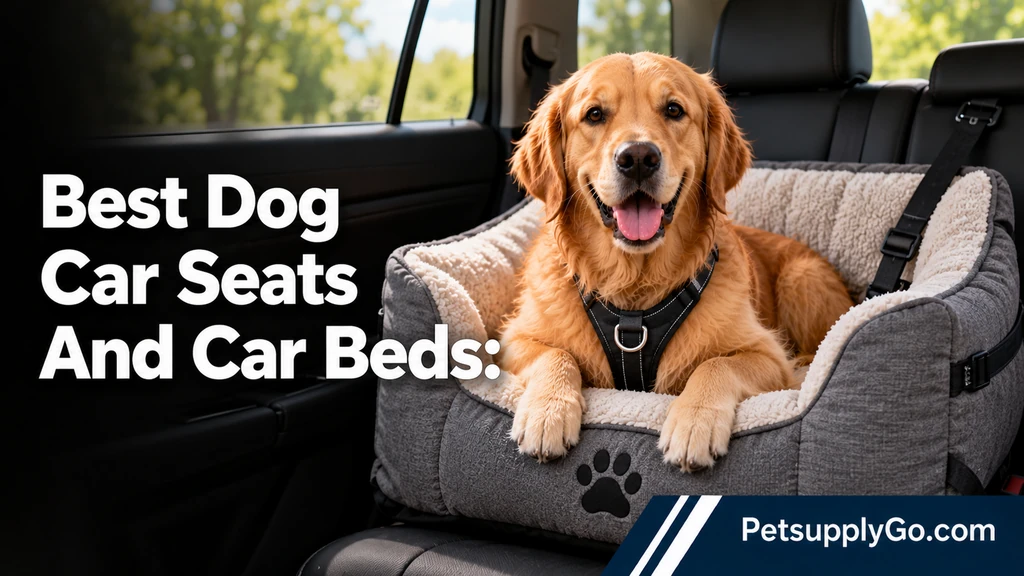
A padded seat that lifts a small dog so they can see out of the window. Most attach to the seat with straps and have a short tether that clips to your dog’s harness.
Best for: Small dogs who want a view, lap climbers, owners who want comfort and containment.
Watch out for: Don’t clip the tether to a collar. Boosters vary widely in strength. Most aren’t independently crash tested.
2. Bucket Seat
A deep, bowl-shaped seat with high walls that cradle a small dog. Bucket seats are popular with anxious dogs because the sides feel secure.
Best for: Small and toy breeds, nervous dogs, dogs who like to curl up.
Watch out for: Sides can block view for very small dogs unless the seat is elevated. Check the weight limit.
3. Console Seat
A small seat made to sit on the center console, so your small dog can sit beside you.
Best for: Small dogs who insist on sitting by the driver.
Watch out for: This puts your dog very close to the driver and front airbags in some cars. Many safety experts advise against it. If you use one, check your car’s manual and consider the back seat instead.
4. Crash-Tested Carrier Seat
A carrier-style seat or pet bed with a firm structure, designed to be secured with the seat belt and sometimes certified by an independent group.
Best for: Small dogs and cats, owners who put safety first.
Watch out for: More expensive. Check size limits and certification details.
5. Crash-Tested Harness With Seat Belt Attachment
A padded vest-style harness that connects to the car’s seat belt, either through the belt itself or a tether. Some have independent certification.
Best for: Medium and large dogs, also suitable for small dogs.
Watch out for: Fit matters a lot. A harness that’s too loose or too tight can fail or hurt your dog. Only certain products have independent testing.
6. Seat Belt Tether or Clip
A strap that clips into the seat belt buckle on one end and attaches to your dog’s harness on the other.
Best for: Basic restraint when used with a good harness.
Watch out for: Cheap tethers and harnesses can fail. Don’t attach to a collar, and adjust the tether length so your dog can sit or lie down but not move around freely.
7. Back Seat Hammock
A fabric sling that stretches across the back seat and attaches to the headrests. It creates a hammock-like barrier that protects the seats and keeps dogs from falling into the footwell.
Best for: Protecting upholstery, preventing dogs from falling between the seats, dogs who like space.
Watch out for: A hammock isn’t a restraint on its own. Combine it with a harness and tether.
8. Back Seat Cover or Bench Protector
A waterproof cover that protects your seats from mud, fur and scratches.
Best for: Messy dogs, shedders, wet dogs. Our guide to dog car seat covers goes into detail. [INTERNAL LINK: add your dog car seat covers guide here]
Watch out for: Covers don’t restrain dogs.
9. Dog Car Bed
A padded bed designed for cars, usually for the back seat or cargo area. Some are flat cushions, some are bolstered, some have non-slip bases and seat belt loops.
Best for: Comfort on long trips, older dogs, dogs with joint pain.
Watch out for: A bed alone doesn’t restrain a dog. Use it with a harness or crate. For a supportive bed at home, see our guide to dog beds for large dogs.
10. Crate or Kennel
A secured crate in the cargo area or back seat. A sturdy, crash-rated crate anchored to the car offers strong containment, and some brands have independent testing.
Best for: Large dogs, multiple dogs, SUVs and wagons, dogs already crate trained.
Watch out for: The crate must be secured. A loose crate can become a projectile.
11. Cargo Barrier
A metal or mesh barrier that separates the cargo area from the passenger area in an SUV or wagon.
Best for: Large dogs riding in the cargo space, keeping dogs out of the front.
Watch out for: A barrier keeps a dog from reaching the front, but it doesn’t protect the dog in a crash.
Matching a Car Seat or Bed to Your Dog
Toy and Small Dogs (Under About 20 Pounds)
Small dogs are the main users of booster seats and bucket seats. Choose a seat with firm sides, a strong attachment system and a short tether for a harness. Consider a crash-tested carrier-style option if safety is your main concern. Make sure the seat sits on the back seat if possible.
Small to Medium Dogs (About 20 to 40 Pounds)
These dogs may outgrow booster seats, so check the weight limit carefully. A crash-tested harness is often a better choice. A back seat bed or hammock adds comfort.
Medium to Large Dogs (About 40 to 75 Pounds)
A harness with a seat belt connection is the usual answer. Look for independently tested options with a wide, padded chest plate. A bed or cover makes the back seat comfortable and protects it.
Large and Giant Dogs (75 Pounds and Up)
Boosters are out. Use a heavy-duty harness rated for your dog’s weight, or a secured crate in the cargo area. Check the manufacturer’s weight limits, since many harnesses top out at a certain weight. Our guide to large dog harnesses covers sturdy options for everyday use.
Puppies
Puppies grow fast, so avoid buying a seat they’ll outgrow in weeks. A secured crate or a small harness that adjusts as they grow can work. Keep trips short at first, and bring cleanup supplies.
Senior Dogs
Older dogs may struggle to jump in and out of cars. Use a ramp or steps, and choose a bed with good support. Keep rides gentle and plan breaks.
Anxious Dogs
Choose a bucket seat or carrier-style seat that feels like a den, with a familiar blanket. A harness with a snug fit may feel secure to some dogs. Check with your vet about anxiety management.
Dogs Who Get Carsick
Look for a seat that lifts a small dog so they can see out, as a forward view helps some dogs with motion sickness. Keep the car cool and well ventilated, and ask your vet if your dog needs help.
Dogs Who Shed or Get Muddy
Use a waterproof cover or hammock, and a washable bed. A rubber-backed cover also keeps beds from sliding.
Dogs Who Chew
Avoid seats with loose, chewable parts. Use a sturdy harness and tether. A crate may be the safest choice for destructive chewers.
Multi-Dog Households
Each dog needs its own restraint. Don’t share a harness or tether. Use separate seats or a divider so dogs don’t tangle or fight.
Features That Matter When Choosing a Dog Car Seat or Bed
Independent safety testing. Check for certification from an independent group, such as CPS, and read what the testing covered. Be wary of vague claims.
Weight and size limits. Always follow the manufacturer’s limits. Don’t assume your dog fits because they are close.
Strong attachment system. Look for seat belt loops, anchor straps and sturdy buckles. The seat should stay put in a sudden stop.
Harness connection. The tether should attach to a harness, not a collar. Look for a short, adjustable tether with a strong clip.
Firm structure. A supportive base and walls help hold a small dog in place.
Comfort. Soft padding, breathable fabric and removable covers matter on long trips.
Visibility. Small dogs who want to see out need a seat high enough, but not so high that they can jump out.
Non-slip base. A grippy bottom keeps the seat from sliding.
Washable materials. Car trips mean drool, mud and accidents. Machine-washable covers are a big plus.
Storage pockets. Handy for treats, bags and toys.
Easy installation. A seat that’s hard to install may not be used correctly.
Fit for your car. Check compatibility with your back seat or cargo area.
Durability. Look for reinforced stitching and quality hardware.
Water resistance. Helpful for wet dogs and spills.
Price and return policy. Fit varies, so a good return policy is useful.
Top Dog Car Seat, Bed and Harness Picks
Prices are approximate and change often. Check the current listing, weight limits and any safety testing details before you buy. I’ve grouped these by use rather than ranking them, because the best option depends on your dog. Safety claims also differ by product and model, so verify them.
Best Crash-Tested Harness for Medium and Large Dogs: Sleepypod ClickIt Sport
This harness is often cited among the products that have undergone independent testing by the Center for Pet Safety, and it’s built to connect directly to the car’s seat belt system. It comes in several sizes for dogs up to a stated weight limit.
Good for: Medium to large dogs, owners who prioritize crash performance.
Pros: Independent testing history, padded chest plate, sturdy build.
Cons: Costs significantly more than basic harnesses. Fit matters, so measure carefully and follow the sizing chart.
Best Harness From a Car Safety Brand: Kurgo Tru-Fit Smart Harness
A widely available car harness from a brand known for pet travel gear. It’s designed to work with seat belts and comes in sizes for small to large dogs.
Good for: Everyday car travel, owners who want a recognized brand at a mid-range price.
Pros: Several sizes, widely available, comfortable for many dogs.
Cons: Check which specific models have independent certification, since marketing claims and certifications vary. Not every dog finds it a perfect fit.
Best Crash-Tested Carrier Style for Small Dogs: Sleepypod Mobile Pet Bed
A dome-style carrier and car seat in one, designed for small dogs and cats. It has been reported as certified crash tested by the Center for Pet Safety, and it works as a cozy bed outside the car.
Good for: Small dogs, anxious dogs, owners who want a safer option for tiny pets.
Pros: Independent testing history, den-like feel, multi-use.
Cons: Expensive. Weight and size limits are modest, so check your dog’s measurements.
Best Bucket Booster for Small Dogs: K&H Pet Products Bucket Booster Seat
One of the best-selling dog car seats in the US. It’s a padded bucket seat with a raised bolster, designed to lift small dogs for a better view and keep them secure and comfortable.
Good for: Small dogs, lap climbers, motion-sick dogs who benefit from a view.
Pros: Popular, comfortable, easy to find, reasonable price.
Cons: It’s a comfort and containment product, not a crash-certified restraint. Check weight limits, and use the tether with a harness.
Best Value Booster: PetSafe Happy Ride Booster Seat
A budget-friendly booster seat with a harness tether and straps that secure it to the seat. It’s popular with owners who want a simple, affordable option.
Good for: Small dogs, budget buyers, short trips.
Pros: Low cost, simple design, widely available.
Cons: Not independently crash certified. Smaller weight capacity, so check your dog’s size.
Best Console Seat for Small Dogs: Snoozer Lookout Car Seat
A seat designed to sit on the center console or the seat, popular with small dogs who like to be close to their people.
Good for: Tiny dogs, owners who want their dog nearby.
Pros: Comfortable, familiar brand, easy to use.
Cons: A console location may not be the safest, especially near front airbags. Many experts prefer the back seat.
Best Back Seat Bed or Hammock: Any Waterproof Back Seat Hammock With Seat Belt Openings
Back seat hammocks protect seats and stop dogs from falling into the footwell. Look for sturdy straps, a waterproof, non-slip surface and openings for seat belts.
Good for: Medium and large dogs, messy dogs, long trips.
Pros: Protects upholstery, adds comfort, reduces falls.
Cons: Doesn’t restrain a dog in a crash. Pair it with a harness.
A Note on Reviews and Brands
Dog travel gear is crowded with lookalike products. Read reviews from owners with a dog of a similar size, and look for comments about stitching, buckles, odor and fit. Check manufacturer details about testing. If a brand claims “crash tested” without naming who tested it or how, treat it as a marketing claim.
How to Install and Use a Dog Car Seat Step by Step
Always follow the manufacturer’s instructions first. These steps are general.
Step 1: Choose the back seat. In most cars, this is safer than the front passenger seat, which has airbags.
Step 2: Place the seat or bed. Put it flat on the seat or cargo area. Make sure the base is stable.
Step 3: Secure it. Use the seat belt, anchor straps or headrest straps as instructed. Pull tight, and check that the seat doesn’t slide or rotate.
Step 4: Check the tether. The tether should be short enough that your dog can sit or lie down but can’t jump off the seat or move around freely. It should attach to a harness, never a collar.
Step 5: Fit the harness. The harness should be snug but comfortable, with room for you to slip two fingers under the straps. Check the chest plate, shoulders and belly.
Step 6: Add a familiar blanket. A familiar scent helps your dog settle.
Step 7: Introduce the seat before the trip. Let your dog explore it in the driveway with treats.
Step 8: Load your dog calmly. Place your dog in the seat, clip the tether, and reward them.
Step 9: Start with short drives. Reward calm behavior.
Step 10: Check often. Make sure the straps stay tight and the harness fits.
Step 11: Take breaks. On long trips, stop every couple of hours for water, a bathroom break and a stretch.
Step 12: Clean the seat. Wash covers and wipe surfaces after each trip.
How to Train Your Dog to Ride Calmly in the Car
A seat only works if your dog tolerates it. Many dogs need some practice.
Step 1: Make the Car a Happy Place
Sit with your dog in the parked car, give treats and play with a toy. Keep the engine off.
Step 2: Introduce the Seat or Harness Slowly
Let your dog sniff the seat, then sit in it. Reward calm behavior. Put the harness on at home first.
Step 3: Add Short, Calm Drives
Start with a minute or two around the block. Return home and reward. Gradually extend trips.
Step 4: Vary Destinations
If every trip ends at the vet, your dog may learn to dread the car. Take fun trips to parks, trails and pet stores.
Step 5: Keep Your Own Behavior Calm
Dogs read your mood. Speak softly and avoid rushing or stressing.
Step 6: Provide Enrichment
A stuffed toy or lick mat can help some dogs settle on short drives, but use only items that are safe and don’t distract you. Never feed your dog while driving.
Step 7: Use Positive Reinforcement
Reward your dog for staying in the seat, for calm behavior and for entering the car.
Step 8: Manage Anxiety
If your dog shakes, pants, drools or whines heavily, talk to your vet. Anxiety and motion sickness are treatable.
Step 9: Practice Consistency
Use the same restraint every time. Dogs learn routines.
Helping Dogs Who Get Carsick
Motion sickness is common, especially in puppies.
Signs: Drooling, lip licking, yawning, whining, restlessness, vomiting or diarrhea.
What can help:
- Face forward and see out. For small dogs, an elevated seat can help.
- Keep the car cool and ventilated. Crack a window slightly, or use air conditioning.
- Drive smoothly. Avoid sudden starts, stops and sharp turns.
- Don’t feed a large meal right before. Ask your vet about timing.
- Take breaks. Fresh air and a short walk help.
- Build positive associations. Practice short trips.
- Ask your vet. Medication or other options may help if your dog struggles. Never give human motion sickness medication without veterinary guidance.
When to see a vet: If your dog vomits often in the car, seems very distressed or has other health symptoms, schedule an exam.
Road Trip Checklist for Dogs
Before you go:
- Visit your vet if your dog has health issues, and ask about travel concerns
- Update ID tags and microchip information
- Pack a recent photo of your dog, in case you need to find them
- Bring your dog’s regular food, treats and a feeding bowl
- Pack fresh water and a travel bowl
- Bring a leash, harness and spare
- Pack waste bags and cleaning supplies
- Include a first-aid kit and any medications
- Bring a familiar blanket or bed
- Pack vaccination records
- Check pet policies for hotels and rest stops
- Plan breaks every couple of hours
- Don’t leave your dog alone in the car
During the trip:
- Keep your dog restrained at all times
- Avoid letting your dog hang their head out the window, since debris can injure eyes
- Offer water regularly
- Watch for signs of overheating or stress
- Never open a car door without a leash or harness on your dog
- Keep the car cool and shaded when parked, and don’t leave your dog behind
Heat Safety: Never Leave a Dog in a Parked Car
On a warm day, the temperature in a parked car can rise to dangerous levels in minutes, even with the windows cracked. Dogs can suffer heatstroke, organ damage or death. Never leave your dog alone in a parked car in warm weather. In cold weather, a parked car can become dangerously cold too. Many states have laws that allow bystanders or authorities to rescue animals from hot cars.
If you must stop, take your dog with you, use drive-throughs or bring someone to stay with your dog.
Car Seat vs Car Bed vs Seat Cover vs Harness: How They Differ
Car seat (booster or bucket): Lifts and contains a small dog. Mostly about comfort and view, with attached tether. Some crash-certified versions exist.
Car bed: A cushion or bed for the car. About comfort, not restraint.
Seat cover or hammock: Protects your upholstery and creates a barrier. About cleanup, not restraint.
Harness with seat belt connection: A restraint. Some have independent crash certification.
Crate: Containment. A secured, crash-rated crate can provide strong protection.
Which do you need? Many owners use a combination: a harness for restraint, a bed or hammock for comfort and a cover for cleanup. Small dog owners may use a booster or carrier-style seat. Large dog owners may prefer a harness and a bed, or a crate in the cargo area.
Common Mistakes to Avoid
Attaching the tether to a collar. A sudden stop can injure your dog’s neck.
Assuming a booster seat is crash tested. Most are not.
Letting dogs ride in the front seat. Airbags can injure them.
Using a seat or harness that doesn’t fit. Check size and weight limits.
Not securing the seat. A loose seat can slide or become a projectile.
Letting your dog ride in your lap. Dangerous for both of you.
Allowing dogs to ride in truck beds unrestrained. Very dangerous, and illegal in many places.
Leaving the tether too long. Your dog could jump out or get tangled.
Skipping breaks. Dogs need water, bathroom stops and exercise.
Letting dogs hang their heads out of the window. Debris can injure eyes, ears and faces.
Leaving dogs in a hot car. Fatal.
Buying based only on looks. Safety and fit matter most.
Ignoring wear and damage. Replace worn straps and harnesses.
Using the same harness for walking and driving without checking. Some walking harnesses aren’t strong enough for car use.
Skipping training. Dogs who panic in the car need gradual introduction.
Cleaning and Caring for Dog Car Seats and Beds
- Remove loose hair and dirt regularly. A vacuum or lint roller helps.
- Wash covers according to the label. Many are machine washable.
- Spot-clean spills quickly. Mild soap and water work for most fabrics.
- Dry fully. Damp seats can grow mildew and smell.
- Check straps and buckles. Look for fraying, cracks or rust.
- Rinse harnesses. Salt, mud and sweat degrade materials over time.
- Replace worn parts. Safety gear loses strength with age and wear.
- Store dry. Keep seats and beds in a dry place when not in use.
- Disinfect after illness. Wash and sanitize if your dog was sick or had an accident.
- Check after a crash. If your car is in an accident, replace the restraint even if it looks fine, as hidden damage may have occurred. Check the manufacturer’s guidance.
How Much Should You Spend?
Budget options (roughly $20 to $40): Basic boosters, simple seat covers and basic tethers. Fine for comfort and containment, but check quality and weight limits.
Mid-range options (roughly $40 to $90): Better bucket seats, sturdier harnesses, back seat hammocks and thicker beds. A good value for most owners.
Premium and certified options (roughly $90 to $250 and up): Crash-tested carrier-style seats and harnesses, heavy-duty crates and high-end beds. Worth the cost if you drive with your dog often and safety is a top priority.
Think about total cost: A cheap booster that doesn’t fit your dog or fails isn’t a bargain. A well-chosen harness, a bed and a cover cost less than a vet bill or a ruined back seat.
Final Thoughts: Make Every Ride Safer and Calmer
Dogs belong in cars, and most of them love it. The goal isn’t to make rides less fun. It’s to make them safer for everyone.
Start with a clear idea of what you need. For a small dog who wants a view and a snug place to sit, a well-secured bucket seat can be a good comfort and containment tool, and a crash-tested carrier is the stronger safety choice. For medium and large dogs, a properly fitted, independently tested harness clipped into the seat belt, plus a comfortable bed or hammock in the back seat, is the practical path. Whatever you choose, keep your dog off the front seat, never clip to a collar, check the fit and plan regular breaks.
Be a little skeptical of big safety claims, look for independent testing and follow the instructions. Then relax, roll the windows up to a safe level and enjoy the road with your best co-pilot.
Browse more helpful guides in our Dog Care section.
Frequently Asked Questions (30 FAQs)
1. What is the best dog car seat?
It depends on your dog’s size and your priorities. For small dogs, a secured bucket or booster seat gives comfort and containment, and a crash-tested carrier-style seat offers stronger safety. For medium and large dogs, a crash-tested harness with a seat belt connection is usually better.
2. Are dog car seats safe?
They can help contain and calm dogs, but most booster seats haven’t been independently crash tested, and some have failed in testing. For crash protection, look for products with independent certification, such as from the Center for Pet Safety, and use them exactly as instructed.
3. What does crash tested mean for dog car seats?
There’s no mandatory federal standard for dog car seats, so “crash tested” can mean different things. Some brands use their own tests, while independent groups such as the Center for Pet Safety test and certify certain products. Check who tested the product and how.
4. Are dog booster seats safe?
Booster seats help small dogs see out and stay out of your lap, but they’re mainly comfort and containment products. Independent testing of some booster seats found failures. If crash safety is your top priority, consider an independently certified carrier-style seat or harness.
5. Where should my dog sit in the car?
In most cases, the back seat is safer than the front, because front airbags can injure dogs. Secure your dog with a harness and seat belt connection, a secured seat or a crate. Don’t let your dog ride in your lap.
6. Should I clip a dog’s seat belt to the collar?
No. A sudden stop can injure your dog’s neck and throat. Attach tethers or seat belt connections to a well-fitted harness designed for car use.
7. What is the best car harness for large dogs?
Look for a padded, adjustable harness with a strong seat belt connection, a weight rating that fits your dog and, ideally, independent crash-test certification. Products such as the Sleepypod ClickIt Sport are commonly mentioned for medium and large dogs. Check the current sizing chart.
8. What is the best car seat for small dogs?
A secured bucket seat with firm sides, a short harness tether and a stable base works well for comfort and containment. For maximum safety, consider a carrier-style seat with independent crash-test certification, and always follow weight limits.
9. What is a dog car bed?
It’s a bed designed for use in a vehicle, usually on the back seat or in a cargo area. It adds comfort for long trips and often has a non-slip base. A bed alone doesn’t restrain a dog, so use it with a harness or crate.
10. Do I need a dog seat cover or a car bed?
A seat cover protects upholstery from fur, mud and scratches, and a bed adds comfort and support. Neither restrains your dog. Many owners use a cover or hammock together with a bed and a harness.
11. Is a back seat hammock safe for dogs?
A hammock keeps dogs from falling into the footwell and protects seats, but it doesn’t restrain dogs in a crash. Pair it with a harness clipped to a seat belt connection.
12. Can large dogs use booster seats?
No. Booster seats are designed for small dogs and have weight limits. Large dogs need a crash-tested harness with a seat belt connection or a secured crate.
13. Is a crate safer than a harness for dogs in cars?
A strong, properly secured crate can offer good protection, especially in an SUV cargo area, and some crates have independent testing. A good harness can also protect well. The best choice depends on your dog, your vehicle and the product’s testing.
14. How do I keep my dog from sliding around in the car?
Use a non-slip bed or hammock, a harness with a seat belt connection or a secured seat. Keep your dog on the back seat, and drive smoothly. A snug, familiar spot helps dogs settle.
15. How do I stop my dog from climbing into my lap?
Use a secured seat or harness that keeps your dog in the back seat, and reward your dog for staying in place. Practice short trips with treats. Never allow a dog to ride on the driver’s lap.
16. How can I help my dog with car anxiety?
Make the car a positive place with treats and play while parked, introduce the seat or harness slowly, start with short trips and keep your own behavior calm. If your dog shows severe fear, talk to your vet or a trainer.
17. What can I do if my dog gets carsick?
Keep the car cool, drive smoothly, let small dogs see out from an elevated seat, avoid large meals right before travel and take breaks. If problems continue, ask your vet about safe medications or other options.
18. Can I use a regular walking harness in the car?
Some walking harnesses aren’t strong enough for crash forces. Use a harness designed for car travel, and check the manufacturer’s weight limit and instructions. Look for independent testing if crash performance matters.
19. How tight should a car harness be?
Snug but comfortable. You should be able to fit about two fingers between the harness and your dog’s body. A loose harness can fail, and a tight harness can restrict breathing or movement.
20. Are dog seat belts safe?
A seat belt tether connected to a collar is unsafe. A seat belt connection attached to a well-fitted, strong harness is safer. Quality varies, so choose products with good construction and, ideally, independent testing.
21. Can my dog ride in the front seat?
It’s generally safer for dogs to ride in the back seat. Front airbags are designed for adult humans and can injure dogs. If your dog must ride in the front, check your vehicle manual about airbags.
22. Can my dog ride in a truck bed?
It’s very dangerous, and illegal in many places unless the dog is properly secured. Dogs can fall, jump out or be injured by debris and weather. Keep dogs inside the cab, restrained.
23. Is it legal to drive with a dog in my lap?
Laws vary by state. Some states restrict driving with an animal in your lap or require restraints, and others address it under distracted driving or animal protection laws. Check your state’s rules, and avoid it either way for safety.
24. How long can I drive with my dog before stopping?
Plan breaks about every two hours, or sooner for puppies, senior dogs and dogs with health issues. Offer water, a bathroom break and a short walk. Keep your dog on a leash.
25. Should I leave my dog in the car for a quick stop?
No, especially in warm weather. Car interiors heat up quickly, even with windows cracked, and heatstroke can be fatal. In cold weather, cars can also become dangerously cold. Take your dog with you or use drive-throughs.
26. How do I clean a dog car seat or bed?
Remove hair and dirt, wash covers according to the label, spot-clean spills with mild soap and water and dry completely. Check straps and buckles for wear, and replace damaged parts.
27. How often should I replace dog car restraints?
Replace them if straps fray, buckles crack, the harness no longer fits or the product has been in a crash. Also follow the manufacturer’s guidance. Safety gear loses strength with wear.
28. Can puppies use car seats and harnesses?
Yes, with the right size and supervision. Puppies grow fast, so check fit often. A secured crate or an adjustable harness can work. Keep trips short and positive, and bring cleaning supplies.
29. Can two dogs share one car seat?
It’s best to use one restraint per dog. Sharing can lead to tangles, fights and unsafe weight loads. Use separate seats, harnesses or crates, or a divider.
30. When should I talk to my vet about car travel?
Talk to your vet if your dog gets severe motion sickness, panics in the car, has health issues, has mobility problems or you’re planning a long trip. Your vet can advise on safe medications, comfort and any travel documents you need.
Disclaimer: This guide is for general information and isn’t veterinary or safety engineering advice. No pet restraint guarantees protection in a crash. Always follow the manufacturer’s instructions and weight limits, and talk to your veterinarian if your dog has health or anxiety concerns related to car travel.
Add a Comment