
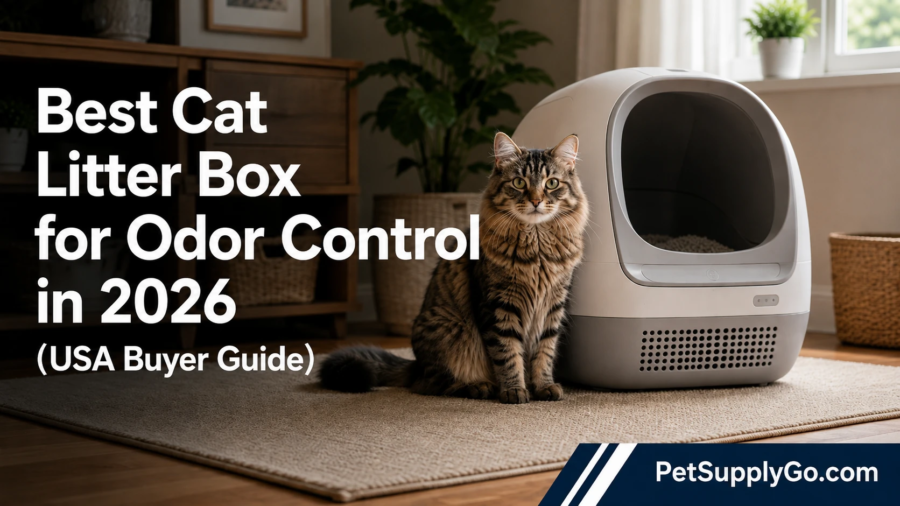
Best Cat Litter Box for Odor Control in 2026 (USA Buyer Guide)
Published on PetSupplyGo.com | Affiliate Disclosure: As an Amazon Associate we earn from qualifying purchases. This does not affect our recommendations.
Why the Right Litter Box Matters More Than Most Cat Owners Think
Litter box odor is the single most common complaint among indoor cat owners, and it is also one of the most frequently mismanaged problems in multi-pet households. Most cat owners assume that the brand of litter they scoop into the box is the primary factor controlling smell, when in reality the design and construction of the litter box itself often plays a larger role in whether a home smells clean or noticeably like a cat lives there. A poorly designed litter box allows ammonia and other odorous compounds to escape freely into the surrounding room, regardless of how expensive or heavily fragranced the litter inside it happens to be.
The reason for this comes down to basic physics. Ammonia gas, which is the primary source of that sharp, unmistakable litter box smell, disperses quickly in open air. A litter box with low sides, no cover, and poor construction essentially creates an open container of waste sitting in the middle of a room, with nothing to slow or redirect the release of odorous gases. Covered boxes and high-sided designs work by creating a physical barrier between the waste and the rest of the room, trapping odors inside the enclosure long enough for carbon filters, litter absorption, or ventilation systems to manage them before they reach your nose.
This distinction matters more than most new cat owners expect. Two identical cats using the same brand of litter can produce noticeably different odor levels simply because one is using a basic open pan and the other is using a well-designed enclosed box. The cat itself is not the variable. The container holding the waste is.
This guide breaks down the seven best cat litter boxes available in 2026 specifically for odor control, covering covered boxes, self-cleaning units, high-sided pans, and top-entry designs. Each pick was evaluated based on real owner feedback, construction quality, and how effectively the design manages odor in everyday household use, not just on paper or in a manufacturer’s marketing copy.
Quick Answer: Best Cat Litter Boxes at a Glance
If you are short on time, here are the top picks before we go into the full breakdown, based on the same comparison factors used throughout this guide:
|
Pick |
Product |
Best For |
Price Range |
Our Rating |
|
Best Overall |
Nature’s Miracle Just For Cats High-Sided Litter Box |
All-around odor control and value |
$25 to $35 |
9.2/10 |
|
Best Self-Cleaning |
Litter-Robot 4 |
Hands-free automatic cleaning |
$500 to $600 |
9.4/10 |
|
Best Budget |
IRIS USA Top Entry Litter Box |
Affordable odor reduction |
$20 to $30 |
8.7/10 |
|
Best Covered |
Petmate Jumbo Litter Pan with Hood |
Enclosed odor containment |
$35 to $50 |
8.9/10 |
|
Best for Multiple Cats |
CatGenie Self-Washing Litter Box |
Multi-cat households wanting automation |
$300 to $400 |
8.8/10 |
|
Best High-Sided |
Frisco High Sided Cat Litter Box |
Cats that kick litter out |
$25 to $40 |
9.0/10 |
|
Best for Large Cats |
Modkat XL Litter Box |
Big cats needing extra space |
$90 to $120 |
9.1/10 |
Keep reading for the full breakdown of each pick, what actually makes a litter box effective at controlling odor, and how to choose the right one for your home and your cat’s habits.
What Actually Makes a Litter Box Effective for Odor Control
Most litter box listings on Amazon highlight capacity, color options, and whether the box comes with a scoop. Odor control capability is often mentioned in passing or implied through terms like “odor-resistant” without any real explanation of what design features actually reduce smell. Understanding what works, and why, makes it significantly easier to choose a box that genuinely solves the problem rather than one that simply claims to.
Enclosure Design
The single biggest factor in litter box odor control is whether the box has a cover or enclosure. An open pan exposes waste directly to the room air, which means every time a cat uses the box, odor disperses immediately and freely. A covered box, hooded pan, or top-entry design creates a physical barrier that slows this dispersal. The difference is not subtle. In side-by-side comparisons using the same litter and the same cat, a covered box consistently produces noticeably less ambient room odor than an open pan, even before accounting for filters or special materials. The tradeoff is that some cats dislike enclosed spaces and may resist using a covered box, particularly if they have had negative experiences with confinement in the past. This is worth knowing before purchasing, since no amount of odor control helps if your cat refuses to use the box.
Ventilation vs. Sealed Design
Not all enclosures work the same way. Some covered boxes include passive ventilation slots or active carbon filters that allow controlled airflow through the box while trapping odor particles. Others are nearly sealed, relying on the cover itself to contain smells until you manually scoop and clean. Sealed designs can trap odor effectively in the short term but may actually concentrate smell inside the box to the point that the cat avoids entering. Ventilated designs with carbon filters tend to strike a better balance for most owners, since they allow some air exchange without letting odor escape freely into the room. Self-cleaning units like the Litter-Robot 4 take a different approach entirely by removing waste from the enclosure shortly after the cat exits, which eliminates the source of odor rather than trying to contain it.
Material and Coating
Plastic litter boxes are the standard for good reason. They are lightweight, affordable, and easy to clean. However, not all plastic is equal when it comes to odor. Lower quality plastics develop microscopic scratches over time that trap urine residue and bacteria, creating a persistent smell that no amount of scooping or washing fully eliminates. Higher quality boxes use smoother, more scratch-resistant plastics or antimicrobial coatings that resist this buildup. Nature’s Miracle boxes, for example, use a treated plastic surface designed to resist odor absorption, which is one of the reasons they perform well even after months of daily use. Stainless steel litter boxes exist as an alternative and are inherently more resistant to odor absorption, but they are heavier, more expensive, and less widely available.
Size and Depth
A box that is too small forces a cat to stand partially outside, which means urine often lands on the floor or the edge of the box rather than in the litter. This creates secondary odor sources outside the box itself that no design feature can address. A box that is too large, particularly one with excessive empty space around the litter area, can actually make odor management harder by increasing the total surface area exposed to air. The generally recommended approach is to choose a box that allows your cat to turn around comfortably and dig without contacting the walls, with sides high enough to contain kicking and spraying but not so tall that entering and exiting becomes difficult, particularly for kittens, older cats, or cats with mobility issues. High-sided boxes typically range from 10 to 14 inches in wall height, compared to 5 to 7 inches for standard open pans.
Ease of Cleaning
This factor affects odor indirectly but significantly. A litter box that is difficult or unpleasant to clean gets cleaned less often, and a box that gets cleaned less often smells worse regardless of its design. Features that make cleaning easier include smooth interior surfaces, removable lids or doors, non-stick coatings, and designs that allow easy access to all corners when scooping. Self-cleaning boxes eliminate manual scooping entirely, which removes the human procrastination factor from the equation. If you know you are someone who tends to skip daily scooping, a self-cleaning unit may do more for your home’s odor situation than any manual box, no matter how well designed.
The 7 Best Cat Litter Boxes in 2026
1. Nature’s Miracle Just For Cats High-Sided Litter Box, Best Overall
Nature’s Miracle is well known in the pet care space for their odor-eliminating cleaning products, and their high-sided litter box applies similar thinking to the box itself. The plastic is treated with an antimicrobial coating designed to resist odor absorption, and the 10.5-inch high sides do a solid job of containing litter scatter and spray. It includes a built-in carbon filter door flap that helps trap odors inside while still allowing the cat to enter and exit freely. The non-stick interior surface makes scooping quicker and more thorough, which encourages more frequent cleaning and, by extension, better odor control over time.
Pros:
- Antimicrobial plastic coating resists long-term odor absorption better than standard untreated plastic
- High sides (10.5 inches) effectively contain litter scatter and reduce spray reaching the floor
- Built-in carbon filter flap on the entrance helps trap odors inside the box
Cons:
- No cover or hood, so some odor still disperses more freely than with fully enclosed designs
- The carbon filter flap can deter some cats initially until they get used to pushing through it
Best for: cat owners wanting strong odor control from a simple, affordable manual box without the cost or complexity of a self-cleaning unit.
2. Litter-Robot 4, Best Self-Cleaning
The Litter-Robot 4 is the latest iteration of Whisker’s well-established automatic litter box, and it remains the most effective self-cleaning option for odor control available in 2026. The unit rotates seven minutes after the cat exits, sifting clumped waste into a sealed drawer lined with a standard kitchen garbage bag. Because waste is removed from the litter bed and sealed away shortly after each use, the primary source of odor is physically eliminated rather than merely contained. The drawer seals tightly enough that you typically cannot smell anything even when the drawer is full and ready to be emptied, which is a meaningful improvement over the previous generation. The unit connects to WiFi and sends notifications to your phone when the drawer needs attention, removing the guesswork from maintenance.
Pros:
- Automatically removes and seals away waste after each use, eliminating the primary odor source rather than just containing it
- Sealed waste drawer contains smell effectively even when full, a noticeable improvement over earlier models
- WiFi connectivity and app notifications make maintenance tracking effortless
Cons:
- Premium price point of $500 to $600 puts it out of reach for many cat owners, particularly those with multiple cats needing multiple units
- Large footprint requires significant floor space and may not fit well in small bathrooms or apartments
Best for: cat owners who want the most effective odor control available and are willing to invest in a premium automated solution.
3. IRIS USA Top Entry Litter Box, Best Budget
The IRIS USA Top Entry Litter Box takes a different approach to odor control by making the cat enter from the top rather than the side. This design serves a dual purpose. The lid acts as a tracking mat that catches litter stuck to the cat’s paws as they exit, reducing scatter. More importantly for odor purposes, the top-entry design creates a nearly enclosed space that limits the escape of odorous air. Since the only opening is on top, ammonia and other gases rise and dissipate upward rather than spreading outward into the room at floor level where human noses are. The box is made from simple, durable BPA-free plastic with a textured lid surface for traction.
Pros:
- Top-entry design naturally contains odor by limiting open airflow to the top of the box
- Built-in tracking lid catches litter from paws, reducing scatter around the box
- Very affordable at $20 to $30, making it one of the most cost-effective odor control options available
Cons:
- Not suitable for kittens, older cats, or cats with arthritis or mobility limitations that make jumping difficult
- Smaller interior space may feel cramped for larger cats over 12 pounds
Best for: budget-conscious owners with healthy adult cats who want meaningful odor reduction without spending more than $30.
4. Petmate Jumbo Litter Pan with Hood, Best Covered
The Petmate Jumbo Litter Pan with Hood is a straightforward, well-built covered litter box that has been a reliable choice for years. The hood snaps securely onto the base, creating an enclosed space that contains both odor and litter scatter effectively. A carbon filter is built into the hood to help manage odors passing through the ventilation areas. The jumbo size provides ample interior room for larger cats or multi-cat households where a standard-size box feels too cramped. The door flap can be removed if your cat prefers an open entry, though keeping it in place does improve odor containment.
Pros:
- Full hood enclosure provides strong odor containment at a moderate price point
- Jumbo sizing accommodates larger cats and multi-cat use more comfortably than standard covered boxes
- Removable door flap lets you adjust the level of enclosure based on your cat’s preference
Cons:
- Some cats resist the enclosed space, particularly if introduced without a gradual adjustment period
- The hood can trap moisture inside in humid environments, which may increase odor if not cleaned frequently
Best for: owners of larger cats or multi-cat households who want a traditional covered box with proven odor containment.
5. CatGenie Self-Washing Litter Box, Best for Multiple Cats
The CatGenie takes a fundamentally different approach to litter box management by washing and sanitizing the granules rather than scooping clumps. The unit connects to a water line (like a washing machine or dishwasher) and uses a proprietary washable granule medium instead of traditional clumping litter. After each use, or on a scheduled timer, the unit rinses the granules with water and a sanitizing solution, then uses hot air to dry them. This process eliminates waste entirely rather than storing it in a drawer or bag, which means there is essentially no lingering odor from accumulated waste. For multi-cat households where a single manual box can become overwhelming between cleaning sessions, the CatGenie’s automatic washing cycle significantly reduces the hands-on maintenance burden.
Pros:
- Self-washing system eliminates waste entirely rather than storing it, preventing the accumulated odor problem that affects all scoop-based boxes
- Handles multiple cats well since the box cleans itself on a timer rather than waiting for manual scooping
- Eliminates the need to buy, carry, and store clumping litter, which is a meaningful convenience factor
Cons:
- Requires a water line connection and a nearby electrical outlet, which limits placement options
- Higher ongoing cost for the proprietary sanitizing solution and replacement granules over time
Best for: multi-cat households willing to invest in a plumbing-connected system that eliminates manual scooping and waste storage entirely.
6. Frisco High Sided Cat Litter Box, Best High-Sided
The Frisco High Sided Cat Litter Box is a no-frills open pan that focuses on doing the basics well at a reasonable price. The 11-inch high sides provide noticeably better containment than standard 6-inch pans, reducing both litter scatter and the amount of urine that reaches the floor during normal use. The smooth interior is easy to scoop and wipe down, and the box is wide enough to accommodate most adult cats comfortably. It does not include a cover, filter, or any antimicrobial treatment, which keeps the price low but means odor control relies entirely on the litter itself and how frequently you scoop.
Pros:
- Tall 11-inch sides contain litter scatter and spray significantly better than standard low-sided pans
- Wide, open design is immediately accepted by virtually all cats, including those that resist enclosed boxes
- Very affordable and widely available, making it an easy recommendation for owners who want better containment without spending much
Cons:
- No cover, filter, or antimicrobial coating means odor control depends heavily on scooping frequency and litter quality
- Open design means some odor will always disperse more freely than with covered or top-entry alternatives
Best for: owners whose primary concern is containing litter scatter rather than eliminating odor, or who prefer an open box their cat will use without hesitation.
7. Modkat XL Litter Box, Best for Large Cats
The Modkat XL is a premium top-entry litter box designed specifically for larger cats who need more interior space than standard top-entry boxes provide. The design features a clean, modern aesthetic that looks more like a piece of home decor than a litter box, which matters to owners who keep the box in a visible living area. The top-entry lid functions as a tracking mat, and the enclosed design contains odor effectively. A reusable liner sits inside the box, making full litter changes cleaner and faster. The Modkat XL holds significantly more litter than most top-entry competitors, which means less frequent full changes for large cats that produce more waste.
Pros:
- Generous XL interior space accommodates cats up to 25 pounds comfortably, a significant advantage over smaller top-entry designs
- Sleek, modern appearance blends into home decor better than most litter boxes on the market
- Reusable liner system makes full litter changes cleaner and reduces ongoing supply costs
Cons:
- Premium price at $90 to $120, significantly more than basic high-sided or covered alternatives
- Top-entry design is not suitable for kittens, elderly cats, or cats with joint or mobility issues
Best for: owners of large cats who want a top-entry design that provides both odor control and enough interior space for a big cat to use comfortably.
How to Choose the Right Litter Box for Your Situation
Choosing the right litter box starts with honestly assessing your specific situation rather than defaulting to whatever has the most reviews or the lowest price. The best litter box for a single cat in a studio apartment is different from the best option for three cats in a large house, and both are different from the best choice for a 16-pound Maine Coon who needs extra room to turn around.
For a single cat in a smaller space where the litter box will be visible, a top-entry design like the Modkat XL or the budget-friendly IRIS USA offers strong odor containment while keeping the box visually unobtrusive. If your cat is older or has any mobility limitations, skip the top-entry options entirely and focus on a high-sided open pan like the Frisco or a covered box like the Petmate Jumbo with the door flap removed for easy access.
Multi-cat households benefit most from either multiple boxes or an automated solution. The general rule is one box per cat plus one extra, which means a two-cat household should ideally have three boxes. Self-cleaning options like the Litter-Robot 4 or the CatGenie can reduce the maintenance burden significantly in multi-cat homes, since a single self-cleaning box can handle more use between manual interventions than a standard manual box. However, most cats still prefer having multiple elimination options available, so even with a self-cleaning unit, adding a second manual box in a different location often improves overall satisfaction and reduces territorial disputes.
Budget is a real factor, and it is worth being honest about it upfront. A $25 high-sided box paired with quality clumping litter and consistent daily scooping will outperform a $200 covered box used with cheap non-clumping litter and irregular cleaning. Spending more on the box does not compensate for poor litter choice or inconsistent maintenance. If your budget is limited, put more of it toward a good litter and a simple but well-designed box like the Nature’s Miracle High-Sided or the Frisco, and commit to a regular scooping schedule.
Common Mistakes When Choosing a Litter Box for Odor
- Buying a litter box that is too small for your cat. A cat that cannot turn around comfortably will often position itself partially outside the box, which leads to urine on the floor or walls around the box, creating secondary odor sources that no litter box design can address. Measure your cat from nose to tail base and add at least 50 percent to get a reasonable minimum box length.
- Assuming a covered box eliminates the need for frequent scooping. A cover slows odor release but does not stop it. Waste still accumulates inside, and in some cases the enclosed space can actually concentrate odor to the point that the cat begins avoiding the box entirely. Scoop at least once daily regardless of whether the box is covered or open.
- Placing the litter box in a small, poorly ventilated space like a closet or tiny bathroom. Enclosed spaces without airflow trap odor in the room rather than in the box. A well-ventilated area with some air circulation allows odor to dissipate more effectively, even with an open pan.
- Using a covered box without ever removing or cleaning the lid. Lids accumulate urine splash, dust, and bacteria over time, and if the lid is never removed and wiped down, it becomes its own odor source. Remove the lid completely during your weekly deep clean and wash both pieces separately.
- Choosing a litter box based solely on aesthetics. A box that looks great in your living room but is too small, too difficult to clean, or rejected by your cat solves nothing. Function should always take priority over appearance, though options like the Modkat XL prove you can have both if you are willing to pay for it.
Litter Box Placement Tips That Actually Reduce Odor
Where you put the litter box in your home has a surprisingly large impact on how noticeable the odor is, even with the same box and the same litter. A well-placed box in a properly ventilated area can be nearly undetectable, while the same box tucked into a stuffy closet can make an entire room unpleasant within hours.
The most effective placement is in a room with consistent, gentle airflow. A bathroom with an exhaust fan, a laundry room, or a hallway near a return air vent all work well because air movement carries odors away from the box and distributes them throughout a larger space where they become too diluted to notice. Avoid placing the box directly next to or opposite an air supply vent, since this can create focused air currents that actually push litter box odor directly into the living space.
Avoid placing the box near your cat’s food and water stations. Cats naturally prefer to eliminate away from where they eat, and placing the box too close to food can cause some cats to hold their waste longer than is healthy, or to start eliminating in other areas of the home. Keep at least several feet of separation between the litter box and feeding areas.
If you have multiple floors in your home, place at least one box on each floor your cat has access to. Cats are less likely to hold it and more likely to use the box consistently when one is readily available on the same floor they are currently on. This also distributes waste across multiple boxes, which reduces the odor load on any single box and makes each individual box easier to keep clean.
For homes where the litter box must be in a visible living area, consider a litter box enclosure or furniture-style cover. These are essentially cabinets or benches designed to hold a standard litter box inside, with an entrance hole for the cat and a hinged top or front panel for human access during cleaning. They do not eliminate odor on their own, but when paired with a good covered box and quality litter, they can make the litter box area completely invisible and significantly reduce noticeable smell in shared living spaces.
Self-Cleaning vs. Manual Litter Boxes: Which Is Worth the Investment
Self-cleaning litter boxes have improved significantly over the past several years, and the gap between what they cost and what they actually deliver has narrowed enough that they are worth a serious look for many cat owners, not just the tech enthusiasts who bought early generations. The question is not really whether self-cleaning boxes work. They do. The question is whether the convenience and odor control improvement justifies the price difference for your specific situation.
For a single cat owner who scoops daily and has no objection to the task, a high-quality manual box like the Nature’s Miracle or the Petmate Jumbo paired with good clumping litter will manage odor effectively at a fraction of the cost. The total investment is typically under $50, and with consistent scooping, odor control is genuinely good. The main risk with manual boxes is human inconsistency. If work schedules, travel, or simple forgetfulness cause you to skip scooping for a day or two, odor builds up quickly.
Self-cleaning units like the Litter-Robot 4 and the CatGenie eliminate this inconsistency. The Litter-Robot sifts waste into a sealed drawer after each use, which means the litter bed stays clean whether you are home, at work, or asleep. The CatGenie goes further by washing and sanitizing the granules, which removes waste from the home entirely rather than storing it in a drawer. Both approaches produce noticeably better odor control than any manual box can achieve, because they address the root cause, accumulated waste, rather than just trying to contain the smell it produces.
The math works out differently depending on how many cats you have and how much you value your time. A single cat owner who does not mind scooping and is home regularly can get excellent results with a $30 manual box. A household with two or three cats, busy work schedules, or a strong sensitivity to litter box odor will often find that the $500 investment in a Litter-Robot pays for itself in convenience and odor reduction within a few months. The CatGenie adds plumbing installation as a requirement but eliminates litter purchasing entirely, which offsets some of the higher upfront cost over time for households going through multiple boxes of clumping litter per month.
How We Evaluated These Products
Each litter box in this guide was assessed against four core criteria, based on a combination of verified owner feedback across major retailers, manufacturer specifications, and general guidance from veterinarians and cat behavior consultants who work with odor-related complaints regularly.
Odor control effectiveness was the primary criterion, evaluated based on how well each design manages smell in real household use rather than in idealized testing conditions. This means accounting for the reality that most owners do not scoop immediately after every use, and that litter boxes perform differently after weeks of daily use than they do on day one.
Cat acceptance was the second criterion, since a litter box that controls odor perfectly but that your cat refuses to use is useless. Products with frequent, verified reports of cats refusing to enter or use the box were penalized, even when their odor control design was theoretically strong.
Build quality and durability were assessed based on material specifications and long-term owner feedback regarding scratching, cracking, warping, and general wear after months of daily use. A litter box that develops odor-trapping scratches after three months is not a good long-term value, regardless of how affordable it was at purchase.
Value relative to price was the final criterion, since the best litter box is not necessarily the most expensive one. Products were evaluated on whether their price is justified by their performance, durability, and the specific problems they solve. A $25 box that effectively controls odor for a single cat represents better value than a $200 box that provides only marginally better performance for the same use case.
Frequently Asked Questions
Do covered litter boxes actually reduce odor better than open ones?
Yes, in most household situations. A covered or enclosed litter box creates a physical barrier that slows the release of odorous gases into the room, which gives litter and any built-in filters more time to manage odor before it reaches your nose. The difference is most noticeable in smaller rooms or apartments where there is less air volume to dilute the smell. The exception is if the covered box is not cleaned frequently enough, in which case odor can concentrate inside the enclosure and actually become more intense when the lid is opened for cleaning.
How often should I completely replace the litter in a manual box?
For clumping litter, a full replacement every two to four weeks is typical for a single cat, with scooping done daily. Non-clumping litter needs full replacement more frequently, usually every one to two weeks. If you notice persistent odor that does not improve after scooping, even with fresh litter, the box itself may have absorbed odors into the plastic and may need to be replaced entirely, particularly if it is a lower quality plastic without antimicrobial treatment.
Are self-cleaning litter boxes worth the money for one cat?
For a single cat with an owner who scoops daily and does not mind the task, a quality manual box in the $25 to $50 range will handle odor effectively at a much lower cost. Self-cleaning boxes become more worth the investment as the number of cats increases, as your schedule gets busier, or as your sensitivity to litter box odor increases. The convenience benefit is real, but the odor improvement over a well-maintained manual box is incremental rather than dramatic for a single cat.
What type of litter works best for odor control in any litter box?
Clumping clay litter with activated carbon or baking soda added for odor control generally performs best for most owners. The clumping action allows you to remove urine along with solid waste during daily scooping, which removes the primary odor sources rather than leaving them in the box. Natural litters like pine, walnut, or corn can work well too, but they tend to control odor differently and may require more frequent full changes. The litter box itself matters, but the litter choice and scooping frequency together have a larger combined impact on odor than the box design alone.
Can two cats share one litter box?
They can, but it is not recommended for odor control or cat behavior reasons. The widely accepted guideline from veterinarians and cat behaviorists is one box per cat plus one extra. So a two-cat household should have three boxes. When two cats share a single box, waste accumulates faster than a single box can manage, odor builds up quickly, and territorial behavior around the box can lead to one or both cats starting to eliminate outside the box. Adding a second or third box is one of the most effective things you can do for both odor and behavioral reasons in a multi-cat home.
How do I get my cat to use a top-entry litter box?
Start by placing the top-entry box next to your cat’s current box with the lid removed, so the cat can step into it from the top edge as if it were an open pan. Once your cat is comfortably using it without the lid, place the lid on top but leave the current box available as well. Most cats will begin jumping onto the lid and entering through the top within a few days to a couple of weeks. Placing a treat or a small amount of catnip on the lid can encourage initial exploration. Never force a cat into a new box, since this can create a lasting negative association.
Will a litter box enclosure help with odor?
A litter box enclosure, which is essentially a piece of furniture designed to conceal a standard litter box inside, can help by adding an extra layer of containment around the box. However, the enclosure itself does not eliminate odor. It works best when paired with a covered litter box and quality litter inside the enclosure. The main benefit is aesthetic, since it hides the box from view, but the secondary benefit is that the enclosure creates an additional physical barrier that slows odor release into the room. Without good ventilation or a lid on the actual box inside, an enclosure can sometimes trap and concentrate odor.
Final Thoughts
The right litter box for odor control depends on a combination of your cat’s size and preferences, the number of cats in your home, your budget, and how consistently you are willing to scoop. For most single-cat owners, a high-sided or covered manual box in the $25 to $50 range paired with quality clumping litter and daily scooping will manage odor effectively without a major investment. For multi-cat households, busy owners, or anyone with a low tolerance for litter box smell, self-cleaning units like the Litter-Robot 4 and the CatGenie offer genuine, meaningful improvements that justify their higher price for the right situation.
At PetSupplyGo, this guide will continue to be updated throughout 2026 as new litter box designs enter the market. Check back for updated comparisons as we continue testing new releases for USA cat owners looking for litter boxes that genuinely control odor in real household conditions, not just in manufacturer marketing materials.

RELATED ARTICLES

Puppy Training Schedule: A Week-by-Week Guide to Raising a Well-Behaved Dog
Buy on Amazon → Recommended by PetSupplyGo.com Bringing home a puppy is one of the happiest days of y ...
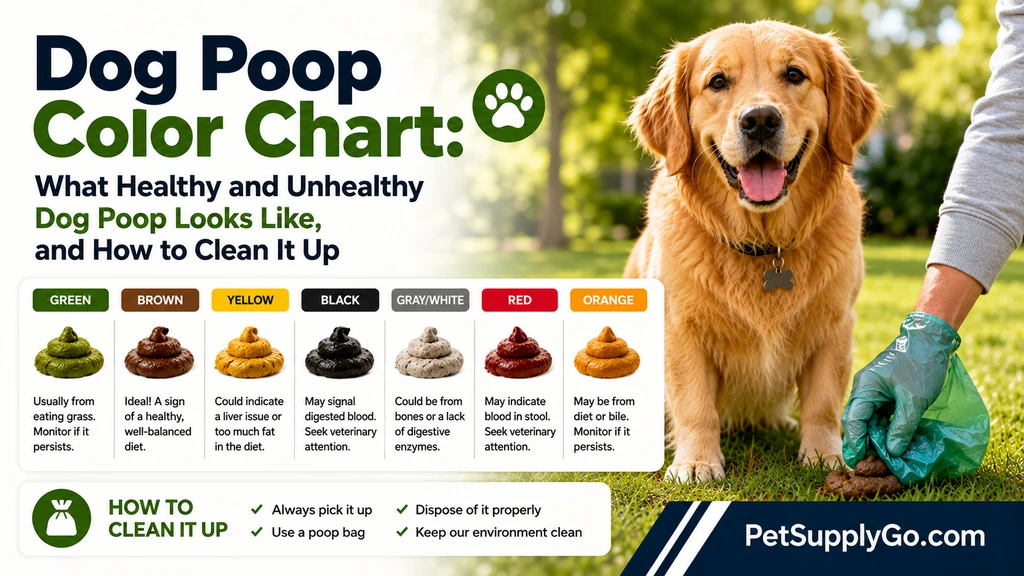
Dog Poop Color Chart: What Healthy and Unhealthy Dog Poop Looks Like, and How to Clean It Up
Buy on Amazon → Recommended by PetSupplyGo.com It is not glamorous, but every dog owner does it. Your d ...