It is not glamorous, but every dog owner does it. Your dog finishes their business on the grass, and you glance down and think, “Is that normal?” Maybe it is greener than usual. Maybe it is soft, or oddly orange, or has something in it you cannot identify. Maybe it is the third time today, and you are starting to worry.
You are right to look. Your dog’s stool is one of the quickest, cheapest health reports you will ever get. It reflects diet, hydration, digestion, parasites, stress, and sometimes serious illness. Vets ask about it at almost every visit for a good reason.
This guide is built to answer the question you are actually asking in the yard: is this poop normal, and what do I do? It covers a full color chart, a consistency scale, what is hiding inside the stool, diarrhea and constipation, food and treat effects, parasites, puppies and seniors, poop eating, what to do at home, when to call the vet, how to collect a sample, and the cleanup side: bags, scoopers, disposal, and yard care.
The short answer: Healthy dog poop is chocolate brown, firm but slightly squishy, shaped like a log, and easy to pick up without leaving a smear. Most adult dogs go one to three times a day. A one-off change in color or texture is usually harmless and often tied to something your dog ate. Call your vet if abnormal stool lasts more than a day or two, or comes with vomiting, lethargy, loss of appetite, or pain. Black, tarry stool, large amounts of red blood, jelly-like bloody stool, white or gray greasy stool, and any bloody diarrhea in a puppy need prompt veterinary care.
There is also a seven-day poop journal plan and a shopping checklist near the end. Use the contents list to jump to the section you need.
Key Takeaways
- Healthy dog poop is chocolate brown, firm, log-shaped, and easy to pick up. Glance at it daily. It takes two seconds.
- Color tells part of the story and consistency tells the rest. Look at both.
- One odd stool is rarely an emergency. Changes that last more than a day or two, or come with other symptoms, deserve a vet call.
- Black tarry stool, large amounts of red blood, jelly-like bloody stool, or pale greasy stool should be checked promptly. Bloody diarrhea in a puppy is an emergency.
- Diet changes, new treats, table scraps, grass, stress, and fast eating are the most common everyday causes of loose stool.
- Parasites are common and treatable. A yearly fecal test and regular prevention catch most of them.
- Never give human anti-diarrhea medicine or laxatives without your vet’s guidance.
- Take a photo and bring a fresh sample if you call the vet. It helps more than a description.
- Pick up poop every time. It protects your family, your neighbors, your lawn, and local waterways.
- A good bag dispenser, a quality scooper, and a simple yard routine make cleanup quick instead of dreaded.
Contents
- Why Your Dog’s Poop Matters
- What Healthy Dog Poop Looks Like
- How Often Should a Dog Poop?
- The Dog Poop Color Chart
- The Consistency Scale
- Brown Poop: Shades and What They Mean
- Green Poop
- Yellow and Orange Poop
- Red Poop and Blood
- Black and Tarry Poop
- White, Gray, and Clay-Colored Poop
- Poop With Mucus
- What Is in the Poop?
- Smell: When Is It Too Much?
- Diarrhea in Dogs
- Constipation and Straining
- Soft Stool
- Food, Treats, and Stool
- Fast Eaters and Gulpers
- Stress, Travel, and Boarding
- Parasites and Poop
- Puppies
- Senior Dogs
- Why Do Dogs Eat Poop?
- Emergency Signs
- How to Collect a Stool Sample
- What You Can Do at Home
- What Not to Do at Home
- Why Picking Up Poop Matters
- Pooper Scoopers and Tools
- Dog Poop Bags
- How to Dispose of Dog Poop
- Cleaning Dog Poop From Your Yard
- Cleaning Poop Accidents Indoors
- Walking in Rain, Snow, and Winter
- Poop Etiquette and Local Rules
- Potty Training and Poop Schedules
- Common Mistakes
- Troubleshooting Common Problems
- When to Call a Vet
- A 7-Day Poop Journal Plan
- Shopping Checklist
- Final Thoughts
- 30 Frequently Asked Questions
Why Your Dog’s Poop Matters
Dogs cannot tell you their stomach hurts. Their stool can.
It Is a Daily Health Check
Stool reflects what is happening in the stomach, intestines, liver, pancreas, and colon. A change in color, shape, frequency, or smell can be an early clue to food intolerance, parasites, infections, stress, or organ problems.
It Helps Your Vet
Vets use stool descriptions, photos, and samples to decide on tests and treatment. Being able to say “soft for three days, with mucus, twice a day” is far more useful than “his poop is weird.”
It Catches Things Early
Many problems start with a subtle stool change before other signs appear. Noticing early often means simpler, cheaper treatment.
It Protects Your Household
Some parasites and bacteria in dog stool can affect people, especially children, older adults, and anyone with a weakened immune system. Prompt pickup and handwashing matter.
Make It a Habit
Glance at every stool for color, shape, and anything unusual. You do not need to inspect it closely every time. You are simply learning what is normal for your dog so changes stand out.
What Healthy Dog Poop Looks Like
Vets often describe good stool with five simple traits.
- Color: Chocolate brown
- Shape: Log-shaped, in one firm segment or a few
- Texture: Firm but slightly moist, not hard or crumbly, not mushy
- Pick-up: Holds its shape and leaves little or no residue
- Smell: Noticeable, but not shockingly foul
Normal Variation
Normal is a range, not a single picture.
- Slightly lighter or darker brown depending on diet
- A little softer after a big meal or a new treat
- A thin, clear coating of mucus now and then
- Occasional grass pieces if your dog nibbles grass
- Slightly different color after certain foods
Know Your Dog’s Baseline
A dog on a high-fiber diet may produce larger, bulkier stool. A dog on a highly digestible diet may produce smaller, darker stool. What matters is your own dog’s usual pattern and any change from it.
Things That Can Change Color Without Illness
- Food dyes in treats and chews
- Beets, carrots, sweet potato, and pumpkin
- Grass and green plant material
- Bones or calcium-rich treats (lighter or chalky stool)
- Some supplements
- Certain medications, such as stomach remedies, which can darken stool (always ask your vet)
When you see an odd color, think back over the last 24 to 48 hours of food, treats, and chews.
How Often Should a Dog Poop?
Frequency varies, but there are general ranges.
Adult Dogs
Most healthy adult dogs poop one to three times a day. Some go a little less, some a little more. Regularity matters more than the exact number.
Puppies
Puppies often poop four or five times a day, or more, usually after meals, naps, and play. Frequent small stools are normal as their digestive systems mature and they eat several meals a day.
Senior Dogs
Older dogs may go less often, and constipation is more common. Reduced activity, less fiber, dehydration, and medical conditions can all play a role.
What Affects Frequency
- Number of meals per day
- Diet type and fiber content
- Exercise
- Age
- Hydration
- Stress and routine
- Health conditions
When Frequency Is a Concern
- Suddenly going far more often than usual
- Many trips with only small amounts, or straining
- No stool at all for a day or two, especially with straining or discomfort
- Frequent, urgent trips with watery stool
Tracking your dog’s usual pattern for a week or two makes changes easy to spot. A simple note on your phone is enough.
The Dog Poop Color Chart
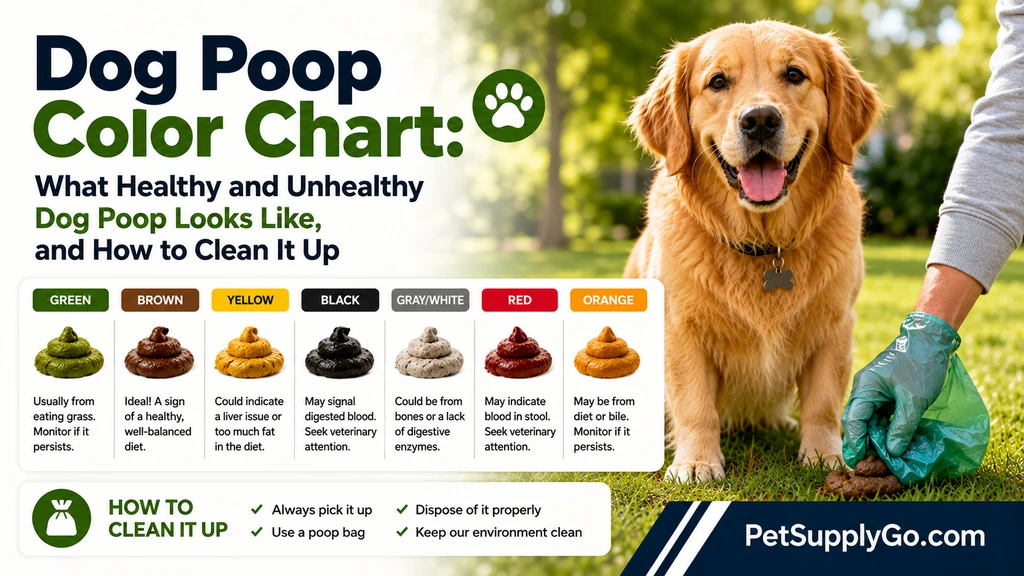
Here is a quick-reference chart. Use it as a guide, not a diagnosis. Details for each color follow below.
| Color | Common causes | What to do |
| Chocolate brown | Normal, healthy stool | Nothing. This is the goal. |
| Light brown or tan | Diet, fiber, dyes, sometimes fast transit | Watch. Check diet and treats. |
| Dark brown | Diet, more meat, supplements | Usually fine. Watch for black. |
| Green | Grass, plants, fast transit, bile | Watch for a day. Call the vet if lasting or with symptoms. Treat as an emergency if poison is possible. |
| Yellow or orange | Diet, fast transit, bile, dyes; sometimes liver, gallbladder, or pancreas problems | Watch a day or two. Call the vet if lasting or with other signs. |
| Red streaks | Irritated lower colon, anal gland issues, small tears, colitis | Call the vet if repeated or with other signs. |
| Large amounts of red blood or jelly-like bloody stool | Hemorrhagic gastroenteritis, parvovirus (puppies), serious GI disease | Emergency. See a vet immediately. |
| Black and tarry | Digested blood from the upper GI tract; sometimes iron or certain medications | Call the vet promptly. Possibly urgent. |
| White spots or rice-like bits | Tapeworm segments or undigested food | Call the vet for deworming advice. |
| White or chalky | Too much bone or calcium; sometimes digestive issues | Review diet. Call the vet if repeated. |
| Gray, greasy, or clay-colored | Fat malabsorption, pancreas, liver, or gallbladder issues | Call the vet. |
| Mucus coating | Colitis, stress, diet change, parasites | Watch. Call the vet if repeated or with diarrhea. |
How to Use This Chart
- Check consistency as well as color.
- Think about what your dog ate.
- Note other signs: appetite, energy, vomiting, belly discomfort, drinking.
- Decide whether to watch, adjust diet gently, or call the vet.
A Quick Rule of Thumb
One strange stool with a happy, eating, playing dog is often okay to monitor. Strange stool plus a dog who is tired, vomiting, not eating, or in pain is a reason to call.
The Consistency Scale
Vets often use a seven-point scale to describe stool. Here is a simple home version.
Score 1: Very Hard and Dry
Hard pellets or lumps that are difficult to pass. Often a sign of dehydration or constipation.
Score 2: Firm and Dry, Segmented
Firm, dry segments that may be slightly crumbly. Usually fine, but can lean toward constipation.
Score 3: Log-Shaped, Moist, With Surface Cracks
Solid, log-shaped, and moist on the surface. Many vets consider this ideal.
Score 4: Log-Shaped, Soft, and Moist
Holds its shape and is easy to pick up. Also considered healthy.
Score 5: Very Moist, Soft Piles
Soft but still has shape. Leaves some residue. Often a sign of mild upset or a diet change.
Score 6: Mushy, No Defined Shape
Soft-serve consistency with no clear form. This is loose stool.
Score 7: Watery, No Solid Pieces
Liquid diarrhea. If it continues, dehydration is a concern.
What to Aim For
Scores 3 and 4 are the goal. Occasional 2s or 5s are common. Repeated 1s, 6s, or 7s deserve attention.
Using the Scale
Rate each stool for a week. If most are 3s and 4s, digestion is likely doing well. If they drift toward 5, 6, or 7, or toward 1 and 2, think about diet, water, stress, and health, and talk to your vet if it persists.
Brown Poop: Shades and What They Mean
Brown is the normal color, but shades vary.
Chocolate Brown
The classic healthy color. Bile from the liver gives stool its brown color as it moves through the intestines.
Light Brown or Tan
Often diet-related. Food with more fiber or grains can produce lighter stool. If it is also soft or greasy, mention it to your vet.
Dark Brown
Common with meat-rich diets and some supplements. Usually normal. If it turns very dark or black, see the black poop section.
Orange-Brown
Can come from carrots, sweet potato, pumpkin, or certain dyes. If it looks more orange or yellow than brown, see the yellow section.
Brown With Texture Changes
If the color is fine but the stool is soft, hard, or coated in mucus, focus on consistency.
When to Mention It
If your dog’s stool has been lighter or darker than usual for more than a few days with no diet explanation, mention it at your next vet visit.
Green Poop
Green stool is common and often harmless, but it is worth understanding.
Common Causes
- Eating grass or green plants. The most common and least worrying cause.
- Fast intestinal transit. When food moves through too quickly, bile does not have time to break down, and stool can look green.
- Diet changes or new foods. Some foods and treats contain green coloring.
- Stomach upset or mild gastroenteritis.
- Parasites or infections, which can sometimes show up as green, loose stool.
- Eating something toxic. Certain rodent poisons are dyed green or blue, and a dog who ate poison may pass colored stool. If there is any chance your dog ate rat or mouse bait, call your vet or a pet poison hotline right away, even if your dog seems fine.
What to Do
- Think about whether your dog ate grass or a new treat.
- If your dog is acting normally, monitor for 24 to 48 hours.
- If green stool continues, is loose, or comes with vomiting, lethargy, or loss of appetite, call your vet.
- If poison is possible, treat it as an emergency.
Green Poop in Puppies
Green stool in a young puppy, especially if loose, smelly, or bloody, can signal infection or parasites. Call your vet the same day.
Yellow and Orange Poop
Yellow or orange stool can be harmless or a clue to something more.
Possible Causes
- Diet: Carrots, pumpkin, sweet potato, chicken and rice, certain treats, or food dyes.
- Fast transit: Food moving through the gut too quickly.
- A bland diet: A short bland diet can produce paler yellow stool.
- Food intolerance or sensitivity.
- Liver, gallbladder, or pancreas issues. Bile pigments give stool its color, and a problem with bile flow can change it.
- Intestinal infections or parasites.
- Mucus mixed with stool, which can make it look yellow-orange.
What to Do
- Review the last day or two of food and treats.
- Monitor your dog’s energy, appetite, and thirst.
- If stool is yellow or orange for more than a day or two, is watery, or comes with vomiting, a swollen belly, yellow gums or eyes, or low energy, call your vet.
Yellow Eyes or Gums
A yellow tinge in the whites of the eyes, gums, or skin (jaundice) needs prompt veterinary care.
Red Poop and Blood
Seeing red is alarming. Context matters.
Fresh Red Blood
Bright red blood usually comes from the lower digestive tract: the colon, rectum, or anus.
Possible causes:
- Colitis (an inflamed colon)
- Straining from constipation
- Small tears around the anus
- Anal gland problems
- Parasites
- Dietary indiscretion
- Foreign material
- Infections
- Polyps or tumors (less common)
Streaks vs. Large Amounts
Small streaks of red on otherwise normal stool: Often minor, but if it happens more than once or twice, call your vet.
Large amounts of blood, or bloody diarrhea: Needs prompt veterinary attention.
Jelly-Like, Raspberry-Colored Stool
Dark red, jelly-like bloody diarrhea, especially with vomiting and weakness, can signal hemorrhagic gastroenteritis and is an emergency. Go to a vet immediately.
Bloody Diarrhea in Puppies
In an unvaccinated or partly vaccinated puppy, bloody, foul-smelling diarrhea can be a sign of parvovirus, a serious and potentially deadly disease. This is an emergency. Call your vet or an emergency clinic right away. Tell the clinic ahead of time so they can prepare, and avoid contact with other dogs on the way.
Red Poop That Is Not Blood
Red or pink stool can come from red food dye, beets, tomatoes, or red treats. Think about what your dog ate. If you are not sure, treat it as blood and call your vet.
What to Do
- Take a photo.
- Note the amount and how often.
- Check for other symptoms.
- Call your vet the same day for repeated or significant blood.
- Go to the emergency vet for large amounts, jelly-like stool, collapse, pale gums, or a very sick puppy.
Black and Tarry Poop
Black stool needs special attention.
Melena: Digested Blood
Black, tarry, sticky, and very foul-smelling stool is called melena. It usually means blood from the upper digestive tract, such as the stomach or small intestine, which turns black as it is digested.
Possible causes:
- Stomach or intestinal ulcers
- Medications that irritate the stomach, such as certain pain relievers
- Foreign objects
- Tumors
- Clotting problems
- Swallowed blood from a nose or mouth injury
- Serious illness
Black Stool That Is Not Melena
- Some supplements, such as iron
- Certain medications, such as products containing bismuth, which can turn stool dark
- Dark foods, like blueberries
- Eating dirt or charcoal
How to Tell the Difference
Melena is typically tarry, sticky, and has a distinct strong odor. Dark brown normal stool is firm and less sticky. If you are unsure, call your vet.
What to Do
Call your vet promptly. If your dog also has vomiting, weakness, pale gums, or a swollen belly, go to an emergency vet. Do not give pain medications or other human drugs unless your vet tells you to.
White, Gray, and Clay-Colored Poop
White Spots or Rice-Like Bits
Small white, rice-shaped pieces moving in or on the stool can be tapeworm segments. They signal an intestinal parasite and need treatment from your vet. Tapeworms are often linked to fleas, so flea control matters.
Chalky White Poop
Often caused by too much bone or calcium in the diet. If your dog eats raw bones or bone-based treats, this is a common cause. It is not usually dangerous, but hard, chalky stool can lead to constipation. Talk to your vet about the diet.
Gray, Greasy, or Clay-Colored Stool
Pale gray or clay-colored, greasy, smelly, bulky stool can signal that fats and bile are not being digested or released properly. Possible causes include pancreatic problems, liver or gallbladder disease, and malabsorption.
What to do: Call your vet. Do not wait for it to resolve on its own, especially if your dog is losing weight, vomiting, or has a poor appetite.
Why Color Matters
Bile gives stool its brown color. If bile is not reaching the intestines, stool loses color. That is why very pale stool is a medical clue.
Poop With Mucus
A little mucus is normal. A lot is a signal.
Normal Mucus
The colon produces mucus to help stool slide out. A thin, clear coating now and then is not unusual.
Excess Mucus
A noticeable, slimy, jelly-like coating, or mucus mixed throughout stool, often points to colon irritation (colitis).
Possible causes:
- Stress
- Diet changes
- Food intolerance
- Parasites such as whipworms or Giardia
- Bacterial infections
- Inflammatory bowel disease
- Eating something unusual
Clues That Help
- Mucus with frequent, small, urgent stools and straining often suggests colitis.
- Mucus with blood suggests more irritation.
- Mucus with vomiting and lethargy suggests illness.
What to Do
- Review diet and stress.
- Monitor for a day or two.
- Call your vet if it continues, increases, or comes with blood, diarrhea, or other signs.
- Bring a stool sample, since parasites are a common cause.
What Is in the Poop?
Beyond color and texture, look at what is in the stool.
Worms
- Roundworms: Long, white or tan, spaghetti-like strands. More common in puppies.
- Tapeworm segments: Small, flat, rice-like pieces, sometimes moving.
- Hookworms and whipworms: Usually too small to see. They are found with fecal tests.
Seeing worms means a vet visit for the right deworming plan. Do not guess at over-the-counter products.
Grass and Plant Material
Occasional grass in stool is common. Large amounts of undigested plant material can be a diet issue or a sign your dog is eating a lot of grass.
Hair
Hair in stool is common in dogs who groom or lick a lot, and in dogs who eat fur from other animals. Large amounts can signal skin problems or compulsive licking.
Bone Fragments
Small bits may pass, but sharp fragments can injure the digestive tract. Straining and blood after bones are a red flag.
Fabric, Plastic, Toy Pieces, and Other Objects
If you see pieces of toys, socks, rubber, or plastic in stool, your dog has swallowed things that should not be eaten. Swallowed objects can cause blockages. Signs of a blockage include vomiting, no stool, straining, belly pain, and lethargy, and they need urgent veterinary care. See our guide to indestructible dog toys for aggressive chewers to find tougher toys that are less likely to be torn apart and swallowed.
Corn, Seeds, and Undigested Food
Whole corn kernels, seeds, and some vegetables often pass undigested. That is usually normal. Large amounts of undigested kibble can signal a digestion issue or eating too fast.
Rocks, Dirt, and Other Non-Food Items
Chewing and swallowing non-food items (called pica) deserves a vet visit.
Glitter, Dye, and Craft Items
Craft items, crayons, and colored treats can all show up in stool. If your dog ate something unusual, call your vet or a poison hotline.
Smell: When Is It Too Much?
All dog poop smells. Some smells are warning signs.
Normal Smell
Noticeable but not shocking. Diet affects odor. Higher-fat, higher-protein, or fish-based diets can smell stronger.
Very Strong, Rotten, or Metallic Smell
- Metallic or tarry smell: Possible digested blood.
- Very foul, rotten smell with diarrhea: Possible infection or digestive upset.
- Greasy, bulky, pale, and strong: Possible fat malabsorption.
Gas Plus Smell
Frequent loud gas along with smelly stool may point to diet issues, fast eating, or intolerance.
What to Do
- Review diet and treats.
- Switch foods gradually, not abruptly.
- Call your vet if the odor is new, extreme, and persistent, or comes with other signs.
Diarrhea in Dogs
Diarrhea is one of the most common reasons owners call the vet.
What Counts as Diarrhea
Loose, watery, or unformed stool, often more frequent or urgent than normal. Scores 6 and 7 on the consistency scale are diarrhea.
Acute vs. Chronic
- Acute: Starts suddenly and lasts a day or a few days.
- Chronic: Lasts more than about two to three weeks, or keeps coming back.
Common Causes
- Dietary indiscretion (garbage, table scraps, spoiled food)
- Sudden food changes
- Food intolerance or allergy
- Parasites (roundworms, hookworms, whipworms, Giardia, coccidia)
- Viral infections (including parvovirus)
- Bacterial infections
- Stress or anxiety
- Medications
- Toxins and poisons
- Foreign objects
- Inflammatory bowel disease
- Pancreatitis
- Liver or kidney disease
- Cancer (less common)
Mild Diarrhea in a Healthy Adult Dog
If your dog is bright, eating, drinking, and has mild loose stool, many vets are comfortable with a short period of monitoring at home. Call your vet for advice on whether a short bland diet is appropriate and for how long, especially if your dog has a medical condition.
Call the Vet If
- Diarrhea lasts more than a day or two
- Your dog is a puppy, a senior, or a small or toy breed
- There is blood, black stool, or lots of mucus
- Your dog is vomiting, lethargic, or not eating or drinking
- There is belly pain or a swollen belly
- You suspect your dog ate something toxic or foreign
- Your dog has a chronic condition such as diabetes or kidney disease
- Your dog is not fully vaccinated
Dehydration Risk
Diarrhea can cause dehydration quickly, especially in small dogs and puppies. Signs include dry or sticky gums, sunken eyes, low energy, and skin that is slow to return when gently pinched. Dehydration needs veterinary care.
Home Care Basics
- Provide fresh, clean water at all times.
- Ask your vet before offering a bland diet, and how long to use it.
- Do not give human anti-diarrheal medications unless your vet specifically tells you to.
- Avoid treats, table scraps, and rich foods until stool normalizes.
- Reintroduce regular food gradually.
Probiotics
Some vets recommend probiotics made for dogs to support gut health during and after diarrhea. Ask your vet which product and dose to use.
Constipation and Straining
At the other end of the scale, constipation is also common.
Signs
- Straining with little or no stool
- Hard, dry, small, or pellet-like stool
- Fewer bowel movements than usual
- Discomfort, whining, or crouching without passing stool
- Reduced appetite
- Occasional small amounts of liquid or mucus around hard stool
Common Causes
- Dehydration
- Not enough fiber, or too much of the wrong kind
- Too many bones or chalky material
- Swallowed hair, fabric, or foreign objects
- Lack of exercise
- Age-related changes
- Enlarged prostate in male dogs
- Anal or perineal problems
- Pain, such as arthritis, which makes squatting hard
- Certain medications
- Neurological or metabolic conditions
- Blockages
What You Can Do
- Make sure fresh water is always available.
- Increase gentle exercise.
- Ask your vet about adding fiber. Plain canned pumpkin (not pie filling) is often suggested in small amounts, but the right amount depends on your dog’s size and health.
- Do not give laxatives, enemas, or human remedies without vet advice. Some can be dangerous.
When to See the Vet
- No stool for 48 hours or more
- Repeated straining with nothing coming out
- Vomiting, belly pain, or a swollen belly
- Blood or severe discomfort
- A senior dog with sudden changes
- Any chance of a swallowed foreign object
A blockage is an emergency.
Soft Stool
Not quite diarrhea, but not ideal either.
Why It Happens
- Diet changes or new foods
- Too many treats or rich foods
- Overfeeding
- Food intolerance
- Stress
- Mild parasites
- Eating grass or garbage
- Low-fiber diet
- Antibiotics or other medications
- Excess supplements
What You Can Try
- Keep the diet consistent and avoid frequent switching.
- Cut back on treats and table scraps.
- Measure portions.
- Avoid very fatty foods.
- Add fiber if your vet suggests it.
- Make diet changes gradually over seven to ten days.
- Keep a poop journal to spot patterns.
When It Is a Problem
If soft stool lasts more than a week or two, keeps coming back, or comes with weight loss, vomiting, or low energy, talk to your vet. Chronic soft stool can signal food sensitivity, parasites, or other digestive conditions.
Food, Treats, and Stool
Diet is the biggest everyday driver of stool quality.
Complete and Balanced Diet
Choose a high-quality, complete and balanced food suited to your dog’s life stage, size, and health needs. Look for an AAFCO “complete and balanced” statement on the label.
Change Foods Slowly
Mix new food into the old over seven to ten days. Sudden changes are a top cause of loose stool.
| Days | Old food | New food |
| 1 to 2 | 75% | 25% |
| 3 to 4 | 50% | 50% |
| 5 to 6 | 25% | 75% |
| 7 to 10 | 0% | 100% |
If stool gets loose, slow down or go back a step.
Treats Count
Treats and chews can upset stool, especially rich or new ones. Limit treats to about ten percent of daily calories, and introduce new treats one at a time. For dogs with sensitive stomachs, simple, single-ingredient options are often easier to tolerate. Our guide to freeze-dried dog treats for sensitive stomachs covers what to look for.
Table Scraps and Human Food
Fatty scraps can trigger vomiting, diarrhea, and pancreatitis. Some human foods are toxic to dogs, including chocolate, grapes, raisins, onions, garlic, and anything with xylitol.
Fiber
Fiber helps firm up stool and supports healthy bowel movements. Too little can cause soft stool or constipation, and too much can cause gas or loose stool. Your vet can recommend the right balance.
Fat
High-fat diets and sudden fatty meals can cause loose, greasy stool.
Raw Diets and Bones
Raw diets can change stool color and consistency, and often produce smaller, firmer, lighter stool. They also carry bacterial risks for dogs and people, and bones can cause constipation or injury. Talk with your vet before choosing one.
Food Allergies and Intolerances
Chronic soft stool, gas, itching, or ear infections can point to a food sensitivity. Your vet can guide an elimination diet.
Water
Fresh water supports healthy stool. Dehydration can lead to hard, dry stool.
Supplements and Probiotics
Some dogs benefit from probiotics or digestive enzymes, but quality varies. Ask your vet before starting any.
Check Treat Labels
Look for colors, additives, and rich ingredients if stool changes after a new treat.
Fast Eaters and Gulpers
How your dog eats affects what comes out.
Why Fast Eating Matters
Dogs who gulp swallow a lot of air and barely chew. That can lead to gas, vomiting, loose stool, and undigested kibble in stool. It can also raise the risk of choking and, in some breeds, bloat.
Signs of a Fast Eater
- Empties the bowl in under a minute
- Gags, coughs, or vomits shortly after eating
- Burps or passes gas often
- Whole kibble pieces in stool
Solutions
- Slow feeder bowls: Ridges and obstacles make your dog work for each bite. Our guide to slow feeder bowls for fast-eating dogs compares options.
- Lick mats and snuffle mats: Spreading or scattering food slows things down and adds calm enrichment. See our guide to lick mats for dogs.
- Smaller, more frequent meals.
- Separate feeding spaces in multi-dog homes to reduce competition.
- Puzzle feeders.
Large, Deep-Chested Dogs
Bloat (gastric dilatation-volvulus) is a life-threatening emergency in large, deep-chested breeds. Signs include a swollen, hard belly, unproductive retching, restlessness, and drooling. Go to an emergency vet immediately.
Stress, Travel, and Boarding
The gut and the brain are closely linked.
Stress Colitis
Stress can cause sudden soft stool or diarrhea, sometimes with mucus or a little blood. It often shows up after:
- Boarding or daycare
- Travel
- Moving
- New family members or pets
- Thunderstorms or fireworks
- Vet visits
- Changes in routine
What Helps
- Keep routines steady.
- Provide a calm, quiet space.
- Use familiar items, like a favorite blanket.
- Avoid changing foods during stressful events.
- Offer enrichment and calming activities.
- Ask your vet about probiotics or calming support if stress diarrhea happens repeatedly.
Travel Tips
- Bring your dog’s regular food.
- Pack extra poop bags, wipes, and towels.
- Keep a waterproof cover on car seats in case of accidents. Our guide to dog car seat covers is a good place to start.
- Take frequent potty breaks.
- Do not let your dog drink from unknown puddles or lakes.
When to Call the Vet
If stress-related diarrhea lasts more than a day or two, includes blood, or comes with vomiting or lethargy, call your vet.
Parasites and Poop
Intestinal parasites are very common, and many show no obvious signs.
Common Intestinal Parasites
- Roundworms: Common in puppies. Passed from the mother or through contaminated soil.
- Hookworms: Can cause anemia, especially in puppies, and sometimes dark, tarry stool.
- Whipworms: Cause chronic, mucus-heavy, sometimes bloody diarrhea.
- Tapeworms: Linked to fleas, with rice-like segments around the tail or in stool.
- Giardia: A microscopic parasite that causes soft, smelly, sometimes greasy stool.
- Coccidia: A microscopic parasite, especially in puppies, causing diarrhea.
Why They Matter
Parasites can cause diarrhea, weight loss, poor coat, vomiting, anemia, and, in young puppies, serious illness. Some, like roundworms and hookworms, can also infect people, especially children.
How They Are Found
Many parasites are invisible to the eye. Vets use a fecal test to look for eggs and organisms. A yearly test is common, and more often for puppies or dogs with symptoms.
Prevention
- Use a year-round, vet-recommended parasite preventive.
- Control fleas.
- Pick up stool promptly.
- Avoid communal standing water.
- Do not let your dog eat feces, dead animals, or garbage.
- Follow your vet’s puppy deworming schedule.
- Wash your hands after handling stool.
Do Not Self-Treat
Over-the-counter dewormers do not cover every parasite, and wrong dosing can be harmful. Always ask your vet.
Puppies
Puppies have sensitive digestive systems and need extra attention.
What Is Normal
- Frequent poops, often after meals and naps
- Softer stool than adult dogs
- Occasional loose stool with food changes or excitement
Puppy Red Flags
- Bloody diarrhea
- Watery diarrhea lasting more than a few hours
- Vomiting along with diarrhea
- Lethargy or weakness
- Loss of appetite
- Pale gums
- A swollen belly
- Refusing to drink
Puppies dehydrate fast. Diarrhea in a puppy is not something to wait out for days. Call your vet the same day.
Parvovirus
This serious virus affects unvaccinated and partly vaccinated puppies. Signs include severe, often bloody, foul-smelling diarrhea, vomiting, lethargy, and fever. It needs immediate veterinary care. Prevention comes from timely vaccinations and avoiding high-risk areas until your vet says it is safe.
Deworming and Vet Visits
Follow your vet’s schedule for deworming and fecal tests. Many puppies carry roundworms from birth.
Diet
Feed a complete and balanced puppy food. Make food changes gradually, and avoid lots of treats and table scraps.
Potty Training and Poop
Predictable poop times help with training. Many puppies poop within 15 to 30 minutes after eating. Our puppy crate training guide explains how a good routine and a properly sized crate support potty training, and our puppy starter kit guide lists the basics to have on hand, including cleanup supplies.
Collect a Sample
Bring a fresh stool sample to early vet visits, since fecal tests are part of routine puppy care.
Senior Dogs
Older dogs have their own digestive concerns.
Common Changes
- More constipation, or less frequent stool
- Loose stool from sensitive digestion
- Accidents in the house
- Trouble squatting because of arthritis
- Changes in appetite
Possible Causes
- Arthritis and pain
- Reduced activity
- Cognitive changes
- Kidney, liver, or thyroid disease
- Diabetes
- Dental problems affecting eating
- Medication side effects
- Tumors
What to Do
- Schedule regular senior checkups, often twice a year.
- Report stool changes to your vet.
- Keep walks gentle and regular.
- Provide easy access to potty areas.
- Be patient and avoid scolding for accidents.
- Ask your vet about diet and joint support.
Warning Signs
Sudden changes in stool, weight loss, blood, straining, or accidents in a previously reliable dog deserve a vet visit.
Why Do Dogs Eat Poop?
Eating stool, called coprophagia, is gross but common.
Why It Happens
- Natural behavior: Mother dogs lick and clean puppies. Some puppies copy this.
- Curiosity: Puppies explore with their mouths.
- Boredom or lack of exercise.
- Attention-seeking.
- Anxiety or stress.
- Fear of punishment: Dogs who were scolded for accidents may eat stool to hide the evidence.
- Nutritional issues: Poor digestion or a diet lacking something may play a role.
- Parasites or malabsorption.
- Cat or other animal feces: Often tastes good to dogs.
- Habit.
Is It Dangerous?
It can be. Eating stool can spread parasites and bacteria. Eating the feces of other animals can carry additional risks.
What to Do
- Pick up poop right away. The best prevention is removing the opportunity.
- Supervise potty breaks. Use a leash if needed.
- Teach “leave it” and “come.” Reward your dog for coming to you instead of the stool.
- Increase exercise and enrichment.
- Keep litter boxes out of reach.
- Check diet and parasites with your vet.
- Avoid punishment. It can make the behavior worse.
- Ask a trainer or vet for help if it is persistent.
Be careful with “stop eating poop” supplements. Evidence is weak, so ask your vet first.
Emergency Signs
Go to a vet or emergency clinic right away if you see any of these.
- Large amounts of blood in stool or vomit
- Black, tarry stool along with weakness or vomiting
- Jelly-like, raspberry-colored bloody diarrhea
- Bloody diarrhea in a puppy
- Repeated vomiting with diarrhea
- A swollen, hard, or painful belly
- Unproductive retching, restlessness, and drooling (possible bloat)
- Pale, white, gray, or yellow gums
- Collapse, extreme weakness, or unresponsiveness
- Signs of severe dehydration
- Straining with no stool, vomiting, and belly pain (possible blockage)
- Suspected ingestion of poison, such as rodent bait, xylitol, grapes, or medications
- Seizures or tremors with diarrhea
- Diarrhea in a puppy, senior, or chronically ill dog who is acting sick
When in doubt, call. Vets would always rather hear from you early.
How to Collect a Stool Sample
Vets often ask for a stool sample. Here is how to do it well.
What You Need
- A clean disposable glove, or a clean bag turned inside out
- A clean, sealable container or zip bag
- A marker for labeling
Steps
- Collect a fresh sample, ideally within a few hours of passing.
- Scoop about a tablespoon (or a golf-ball-sized amount for large dogs), avoiding grass and dirt.
- Seal it in a clean container or bag.
- Label it with your dog’s name and the date and time.
- Keep it cool, ideally in the refrigerator, until your appointment. Do not freeze unless your vet says so.
- Bring it to the vet as soon as possible.
Take a Photo
Take a picture of abnormal stool, ideally on a neutral surface. It shows color and consistency even if the sample changes.
Ask Your Vet
Clinics may have specific instructions. Call ahead to ask.
Wash Up
Wash your hands thoroughly after handling any stool.
What You Can Do at Home
For mild, short-lived stool changes in an otherwise healthy, bright adult dog, these steps are common. Check with your vet if you are unsure.
Watch and Record
- Note frequency, color, consistency, and any blood or mucus.
- Watch appetite, energy, thirst, and vomiting.
- Take photos.
Keep Water Available
Hydration is crucial. Offer fresh water often.
Keep Things Calm
Rest and a quiet routine can help.
Review Recent Changes
- New food, treats, or chews
- Table scraps or garbage
- Stress or travel
- New medications or supplements
- Access to toxins or new plants
Ask About a Bland Diet
Many vets suggest a short bland diet for mild cases, but the right plan depends on your dog. Ask your vet what to feed and for how long, especially for puppies, seniors, small dogs, and dogs with health conditions.
Return to Normal Gradually
Once stool improves, reintroduce your dog’s regular food slowly over a few days.
Keep Up Prevention
- Stay current on flea, tick, and worm prevention.
- Do not stop prescribed medications without asking.
Wash Hands and Clean Up
Pick up all stool promptly and wash your hands.
What Not to Do at Home
Some well-meaning actions cause harm.
- Do not give human medications such as anti-diarrheals, laxatives, or pain relievers without veterinary guidance. Some are dangerous to dogs.
- Do not force-feed or withhold water.
- Do not make sudden diet changes during an upset.
- Do not ignore blood, black stool, or lethargy.
- Do not assume it is the food and keep switching foods.
- Do not punish accidents. Your dog cannot help it.
- Do not wait days with a puppy, senior, or small dog.
- Do not use home remedies from the internet without checking with your vet.
- Do not skip fecal tests.
- Do not leave poop in the yard. It spreads parasites and bacteria.
Why Picking Up Poop Matters
Cleanup is not just about neatness.
Health
Dog stool can carry parasites and bacteria such as roundworms, hookworms, Giardia, Salmonella, and E. coli. Some can infect people, particularly children who play in yards and parks.
Disease Spread
Parvovirus and some parasite eggs can survive in soil for a long time. Leaving stool around lets them build up.
Environment
Rain washes stool into storm drains, which often lead straight to streams, lakes, and rivers, without treatment. Waste adds bacteria and nutrients to waterways.
Lawn and Garden
Dog stool is not fertilizer. It can burn grass and contaminate soil, and should never be used on vegetable gardens.
Neighbors and Community
Nobody likes stepping in it. Cleaning up is basic courtesy, and many cities and homeowner associations require it, with fines for leaving waste.
Your Own Yard
A clean yard means fewer flies, fewer odors, less stool tracked into the house, and less chance your dog eats it.
Pooper Scoopers and Tools
The right tool makes cleanup fast and clean.
Jaw-Style Scoopers
Two hinged sides clamp around stool. Good for grass and dirt, easy to use with one hand.
Pros: Quick, hygienic, good for grass.
Cons: Can be awkward on gravel or hard surfaces.
Rake and Tray Scoopers
A rake pushes stool onto a tray. Good for hard surfaces and large yards.
Pros: Easy to use, no bending, good for hard-packed surfaces.
Cons: Less effective on thick grass.
Spade-Style Scoopers
A flat shovel for scooping stool from grass and gravel.
Pros: Simple and sturdy, good for large dogs.
Cons: Needs a bag or bin for transfer.
Hand-Held Scoopers With a Bag Attachment
Compact scoopers that hold a bag open. Great for walks.
Pros: Portable and convenient.
Cons: Less sturdy for heavy-duty yard use.
Long-Handled Scoopers
No bending, good for people with back problems.
Waste Stations
A stationary bin and scoop station for yards, helpful for multiple dogs.
Snow Scoopers
Wide scoops with slotted trays for snowy yards.
What to Look For
- Durable materials (steel or heavy-duty plastic)
- Comfortable handle and length
- Easy to clean
- Works on your type of yard
- A sturdy mechanism
- Compatible with the bags you plan to use
Cleaning Your Scooper
Rinse after each use with a hose. Disinfect occasionally with a pet-safe cleaner, especially after a sick dog or a parasite problem.
Other Handy Tools
- Disposable gloves
- A dedicated trash can with a lid
- A hose or spray bottle for cleaning
- Pet-safe odor neutralizer
Dog Poop Bags
Bags are the walk-time essential.
Types of Bags
- Standard plastic bags: Inexpensive and strong. Look for thick, leak-proof options.
- Scented bags: Add fragrance. Fine if you like it, but not necessary.
- Compostable and biodegradable bags: Marketed as eco-friendly. Check claims carefully.
- Large bags: Helpful for big dogs.
- Rolls and dispensers: Convenient for leashes and pockets.
About Biodegradable and Compostable
Terms are not always meaningful. “Biodegradable” can mean very little, and many “compostable” bags only break down in industrial composting facilities, not in landfills or home compost. Check for certified compostable labels, and know what your local waste system accepts.
What to Look For
- Thickness and leak-proof seams
- Easy-to-open design (a pain point for many owners)
- Right size for your dog
- Plenty of bags per roll
- A dispenser that clips securely to your leash
Bag Tips
- Carry extra. It is better to have too many than too few.
- Keep a spare roll in the car and by the door.
- Double-bag for runny stool.
- Tie bags securely.
- Never leave filled bags on the trail to pick up later. They get forgotten.
How to Dispose of Dog Poop
Where it goes matters.
The Trash
For most people, the best option is a sealed bag in the household trash. It is simple, sanitary, and accepted nearly everywhere.
Public Waste Bins
Use designated pet waste bins or regular trash cans when allowed.
Flushing
Flushing plain, unbagged stool is sometimes allowed, but rules vary. Never flush bags or litter. Check with your local sewer authority before flushing, since not every system handles pet waste and some areas prohibit it.
Pet Waste Digesters and Composters
Some yard-based systems break down dog waste underground. They require proper setup and maintenance, and must be kept away from vegetable gardens, wells, and water.
What Not to Do
- Do not put dog waste in compost used for edible plants. Parasites and bacteria can survive.
- Do not bury it near gardens, wells, or water.
- Do not toss it into storm drains, woods, or bushes.
- Do not leave bags on the ground, on trails, or hanging from trees.
- Do not leave it in your yard for days or weeks.
Odor Control
- Use a lidded can.
- Tie bags tightly.
- Empty the trash regularly.
- Rinse and deodorize the can.
- Consider a dedicated outdoor bin.
Local Rules
Cities and municipalities often have rules about pet waste. Check yours for requirements and fines.
Cleaning Dog Poop From Your Yard
A clean yard is a safe yard.
How Often
Ideally, pick up daily. At the very least, once or twice a week. More dogs, more frequent cleanup.
Step by Step
- Walk the yard in a grid or spiral pattern so you do not miss spots.
- Scoop each pile into a bag or bin.
- Check under bushes and corners, where dogs often go.
- Seal and dispose of waste properly.
- Rinse your scooper.
- Wash your hands.
Cleaning Residue
- Rinse the area with water.
- Use a pet-safe enzymatic cleaner for stubborn spots or odors.
- Avoid strong chemicals, bleach, or ammonia, which can harm your dog and your lawn.
Hard Surfaces
For patios and concrete, sweep or scoop, rinse with a hose, and apply a pet-safe enzymatic cleaner for odor.
Mud and Grass
Wait until very soft stool firms up, or use a bag to pick up cleanly. Rake gently to avoid smearing.
Preventing Odor
- Pick up promptly.
- Rinse the yard occasionally.
- Use pet-safe odor neutralizers.
- Keep grass trimmed.
- Designate a potty area.
Create a Potty Zone
Train your dog to use a particular area. It makes cleanup faster and protects the rest of the yard.
Parasite and Disease Concerns
If your dog has had parvovirus, Giardia, or another infection, ask your vet about cleaning the yard. Some organisms survive for months.
Lawn Care
Remove stool before mowing. Mowing spreads parasite eggs and bacteria across the lawn.
Cleaning Poop Accidents Indoors
Accidents happen, especially with puppies, seniors, and sick dogs.
Hard Floors
- Wear gloves.
- Pick up solids with paper towels or a bag.
- Wipe with a damp cloth.
- Clean with a pet-safe enzymatic cleaner.
- Rinse and dry.
Carpet and Upholstery
- Lift off solids.
- Blot (do not rub) with paper towels.
- Apply an enzymatic cleaner following the directions.
- Blot again and let dry.
- Repeat if odor remains.
Liquid Diarrhea
Absorb as much as possible with towels. Then use an enzymatic cleaner. A wet-dry vacuum can help on carpets.
Why Enzymatic Cleaners
Enzymes break down the organic material that causes odor, which helps prevent your dog from returning to the same spot. Regular cleaners can mask the scent without removing it.
What to Avoid
- Ammonia-based cleaners (they smell like urine to dogs)
- Strong chemicals not safe for pets
- Scrubbing hard, which pushes stool into fibers
Washing Bedding
Wash bedding in hot water with pet-safe detergent. Run an extra rinse. Dry completely.
After a Sick Dog
After a parasite infection or illness, ask your vet about the best disinfecting approach.
Stay Calm
Never scold your dog after the fact. They will not connect it, and it can make things worse.
Walking in Rain, Snow, and Winter
Weather makes cleanup harder, but it does not excuse skipping it.
Rain
- Carry extra bags and a small towel.
- A raincoat keeps your dog dry. See our guide to dog winter coats for waterproof options.
- Wipe paws when you come home. Our guide to cleaning dog paws walks through fast methods.
Snow
- Mark where your dog goes so you can find it. Brightly colored flags or tools help.
- Use a scooper made for snow, or a bag with a rigid scoop.
- Pick up stool before it freezes into the ground when possible.
- Spring cleanup of a snowy yard can reveal a lot. Do not skip it.
Cold Weather and Short Walks
Small, thin-coated dogs may rush through potty breaks in the cold. Protect them with a warm layer. Our guide on whether dogs need sweaters helps you decide, so your dog can take their time.
Dark Mornings and Evenings
- Use a headlamp or clip-on light.
- Wear reflective gear.
- Keep your dog on a short leash.
Ice and Salt
Check your dog’s paws for salt irritation after winter walks, and rinse them.
Hot Weather
Pick up stool quickly in the heat, since it smells and attracts flies faster. Keep walks to cooler times of day.
Poop Etiquette and Local Rules
A few simple habits keep everyone happy.
The Golden Rule
Always pick it up. Always. Even on trails, in fields, in the woods, and in your own neighborhood.
Carry Bags Every Time
Keep a roll on your leash, in your jacket, and in the car.
Do Not Leave Bags Behind
Carry them until you find a bin. Bags left on trails are litter.
Be Considerate in Shared Spaces
- Parks, trails, and sidewalks
- Apartment complexes
- Neighbors’ lawns
- Beaches and campgrounds
Know the Laws
Many cities, parks, and homeowner associations require cleanup and enforce fines.
Teach Kids
Show children how to carry bags and wash hands afterward.
Apartment Living
- Take your dog to designated pet areas.
- Use the building’s pet waste stations.
- Keep bags sealed and dispose of them promptly.
- Clean up elevator or hallway accidents immediately.
Boarding and Daycare
Check what the facility requires, and make sure your dog’s parasite prevention and vaccinations are up to date.
Potty Training and Poop Schedules
A predictable routine makes poop easier to manage and monitor.
Regular Feeding Equals Regular Poop
Feed at consistent times, and most dogs fall into a regular bathroom rhythm.
Typical Timing
Many dogs poop within 15 to 45 minutes after meals, and after waking, play, or exercise.
Take Them Out
- First thing in the morning
- After meals
- After naps
- After play
- Before bed
Reward Success
Give a treat right after your dog finishes pooping outside. Do it immediately.
Use the Same Spot
A consistent potty area builds a habit and simplifies cleanup.
Watch the Signs
Sniffing, circling, whining, or heading to the door can mean “I need to go.”
Crate Training Helps
Dogs avoid soiling where they sleep, so a properly sized crate supports bowel control. See our crate training guide for the full method.
Accidents Are Information
Frequent accidents or changes in stool can be a clue to health or diet. Do not just clean them up. Think about why.
Adult and Senior Dogs
Keep the schedule steady, and watch for sudden changes in routine.
Common Mistakes
- Ignoring stool changes. Early notice means early help.
- Switching foods suddenly. A top cause of diarrhea.
- Giving too many treats and scraps.
- Giving human medications. Can be dangerous.
- Waiting too long with puppies and seniors.
- Skipping fecal tests and parasite prevention.
- Leaving poop in the yard. It spreads disease and attracts flies.
- Using bleach or ammonia on accident spots.
- Scolding for accidents.
- Assuming green or yellow always means illness. Context matters.
- Assuming it is always the food. Parasites, stress, and illness count too.
- Not washing hands.
- Flushing bags or litter.
- Composting dog waste for edible gardens.
- Not carrying enough bags.
- Not tracking patterns. A journal makes them visible.
- Using flimsy scoopers and thin bags. They fail when you need them.
- Letting dogs eat other animals’ stool.
- Overlooking dehydration.
- Assuming a one-time bad stool means a crisis. Stay calm, observe, and act on the full picture.
Troubleshooting Common Problems
My dog’s poop is soft but my dog seems fine.
Check recent treats, food changes, and stress. Keep the diet consistent and watch for a few days. If it lasts more than a week, call your vet.
My dog has diarrhea but is acting normal.
Mild, short-lived diarrhea in a healthy adult dog can sometimes be monitored, but call your vet for advice, especially if it lasts more than a day or two.
My dog’s poop is green.
Likely grass or a mild upset. Watch for a day or two. Call your vet if it persists, is loose, or comes with other signs, or immediately if poison is possible.
My dog has orange poop.
Check recent foods and treats. If it persists or comes with other symptoms, call your vet.
I see blood in my dog’s stool.
A small streak once may be minor, but call your vet. Large amounts, black stool, or bloody diarrhea need prompt care.
My dog’s poop has white things in it.
Could be tapeworm segments or undigested food. Call your vet for testing and treatment.
My dog is straining to poop.
Could be constipation, an obstruction, or an anal or prostate issue. Call your vet if it lasts, or go to an emergency vet if your dog is in pain or vomiting.
My dog’s poop is hard and dry.
Check water intake, diet, and fiber. Ask your vet before adding anything or giving a laxative.
My dog poops too often.
Could be diet, parasites, stress, or digestive issues. Track it, and call your vet if it is new or comes with other signs.
My dog poops in the house.
Rule out medical issues first, then review training and routine. Clean thoroughly with an enzymatic cleaner.
My dog’s poop smells terrible.
Check diet, treats, and parasites. Persistent, extreme odor needs a vet check.
My dog eats poop.
Pick it up promptly, supervise, increase enrichment, and talk to your vet.
My dog’s poop has a lot of mucus.
Possible colitis, stress, or parasites. Call your vet if it is repeated or comes with blood or diarrhea.
My puppy has diarrhea.
Call your vet the same day, especially if there is blood, vomiting, or lethargy.
My senior dog started having accidents.
Schedule a vet visit. It can signal pain, illness, or cognitive changes.
My yard smells like poop.
Clean daily, rinse, and use a pet-safe enzymatic cleaner. Create a designated potty spot.
My scooper is awkward and messy.
Try a different type, like a jaw-style for grass or a rake-and-tray for hard surfaces.
When to Call a Vet
Call the Same Day If
- Diarrhea or abnormal stool lasts more than a day or two
- There is blood or mucus, repeated
- Your dog has black stool
- Your dog is a puppy, senior, or small breed with diarrhea
- Your dog is vomiting along with diarrhea
- Your dog is lethargic or has a poor appetite
- Your dog is straining or cannot poop
- You see worms in stool or around the tail
- Stool is white, gray, or very pale and greasy
- Your dog is losing weight
- Your dog eats non-food items
- Stool changes follow a new medication
Go to Emergency Care If
- Large amounts of blood, or jelly-like bloody stool
- Bloody diarrhea in a puppy
- Black stool with weakness
- A swollen, painful belly
- Unproductive retching
- Collapse or pale gums
- Suspected poisoning or a foreign object
Questions to Ask Your Vet
- Is this stool normal for my dog’s diet and age?
- Should we run a fecal test or bloodwork?
- Is my dog’s food a good match?
- What parasite prevention do you recommend?
- Would a probiotic help, and which one?
- What should I do at home, and when should I come back?
Bring
- Photos of stool
- A fresh sample, if requested
- A list of foods, treats, and medications
- Notes on frequency and other symptoms
A 7-Day Poop Journal Plan
A simple journal turns guesswork into information.
What to Track
- Date and time
- Color
- Consistency score (1 to 7)
- Amount and frequency
- Blood, mucus, or objects
- Smell (normal or unusual)
- Appetite and energy
- Food, treats, and chews
- Stress, travel, or changes
Day 1: Set Up
- Write down your dog’s normal routine.
- Take a baseline photo of a normal stool, if you can.
- Choose how you will track (notes app, notebook, or spreadsheet).
Days 2 to 5: Observe
- Log every poop.
- Note anything unusual.
- Keep diet and treats consistent.
- Make sure fresh water is always available.
Day 6: Review
- Look for patterns: time of day, foods, stress.
- Notice what is normal for your dog.
Day 7: Decide
- If all looks normal, great. You have a baseline.
- If you see repeated soft stool, blood, mucus, or other changes, share your journal and photos with your vet.
Keep It Going
Even a quick note when something changes is helpful. Over time, you will spot problems early.
Shopping Checklist
Walk Essentials
- Poop bags (thick, leak-proof, large enough)
- Leash-clip bag dispenser
- Spare bag rolls (car, jacket, door)
- Hand sanitizer or wipes
- Small towel for wet or muddy days
Yard Cleanup
- Pooper scooper (jaw-style, rake-and-tray, or spade-style)
- Lidded outdoor trash can
- Disposable gloves
- Hose or spray bottle
- Pet-safe enzymatic cleaner
- Snow-friendly scoop (for winter)
Indoor Cleanup
- Paper towels
- Enzymatic pet stain remover
- Washable rugs and bedding
- Wet-dry vacuum (optional)
Health Support
- Vet-recommended parasite preventive
- Complete and balanced dog food
- Slow feeder bowl for fast eaters
- Lick mat or snuffle mat for calm eating
- Single-ingredient treats for sensitive stomachs
- Fresh water bowl or pet fountain
Safety and Comfort
- Dog raincoat or winter coat for bad weather
- Reflective gear or clip-on light
- Waterproof car seat cover
Records
- Notes app or notebook for a poop journal
- A clean sealable container for stool samples
Shop poop bags, scoopers, slow feeders, lick mats, and cleanup supplies at Pet Supply Go.
Final Thoughts
Poop is not exactly dinner conversation, but it is one of the best everyday windows into your dog’s health. A quick glance each day teaches you what normal looks like, so you notice the changes that matter and stay calm about the ones that do not.
Remember the basics. Healthy stool is brown, firm, and easy to pick up. A single odd stool is usually not an emergency. Changes that last, or come with other symptoms, deserve a call to your vet. Black, bloody, jelly-like, or pale greasy stool, and any bad diarrhea in a puppy, should be taken seriously.
Then do the other half of the job. Pick it up, every time. Use bags that do not tear, a scooper that suits your yard, and a routine you can stick to. It protects your family, your neighbors, and the environment.
Your dog will never know how much attention you pay to this. But they will feel the difference: fewer upset stomachs, earlier help when something is wrong, and a cleaner, safer place to play.
30 Frequently Asked Questions About Dog Poop
1. What does healthy dog poop look like?
Healthy dog poop is chocolate brown, firm but slightly moist, log-shaped, and easy to pick up without leaving much residue. It has a noticeable but not extreme smell. Slight variations in shade or softness are common with diet changes.
2. How often should a dog poop?
Most adult dogs poop one to three times a day. Puppies often go four or more times daily. What matters most is your dog’s own normal pattern, and any sudden change from it.
3. What do different dog poop colors mean?
Brown is normal. Green can mean grass or fast digestion. Yellow or orange can mean diet changes or digestive or bile issues. Red suggests blood from the lower gut. Black and tarry suggests digested blood. White or gray, greasy stool can signal digestion problems. See the color chart above, and call your vet if a color change lasts.
4. Why is my dog’s poop green?
Common causes are eating grass or plants, fast intestinal transit, diet changes, or a mild stomach upset. Rarely, it can signal parasites, infection, or poison exposure. Call your vet if it lasts, is loose, or comes with other signs, and immediately if poison is possible.
5. Why is my dog’s poop yellow or orange?
Often diet-related, such as carrots, pumpkin, sweet potato, or food dyes, or food moving through too quickly. Persistent yellow or orange stool, especially with vomiting, low energy, or yellow gums or eyes, can signal liver, gallbladder, or pancreas issues. Call your vet if it lasts more than a day or two.
6. What does blood in dog poop mean?
Bright red blood usually comes from the lower digestive tract and can be caused by colitis, straining, parasites, or irritation. Black, tarry stool suggests digested blood from higher up. Call your vet for any repeated blood, and go to an emergency clinic for large amounts, jelly-like stool, or bloody diarrhea in a puppy.
7. Why is my dog’s poop black?
Black, sticky, tarry stool can be digested blood from the stomach or small intestine and needs prompt veterinary attention. Some supplements, medications, and dark foods can also darken stool. If you are not sure, call your vet.
8. Why is my dog’s poop white or gray?
White, chalky stool often comes from too much bone or calcium in the diet. Pale gray or clay-colored, greasy stool can signal problems with fat digestion or bile flow and needs a vet visit. White rice-like bits can be tapeworm segments.
9. What does mucus in dog poop mean?
A thin, clear coating is normal. Excess mucus often points to colon irritation from stress, diet changes, parasites, or infection. Call your vet if it is frequent, increasing, or comes with blood, diarrhea, or other signs.
10. Why does my dog have diarrhea?
Common causes include diet changes, eating something unusual, treats and table scraps, parasites, infections, stress, medications, and underlying disease. Mild cases in healthy adults may settle quickly, but call your vet if it lasts more than a day or two, or if your dog is a puppy, senior, or small breed.
11. How long should I wait before calling the vet about diarrhea?
For a healthy, bright adult dog with mild diarrhea, many vets are fine with a day or two of monitoring. Call sooner for puppies, seniors, small dogs, dogs with health problems, or any blood, vomiting, lethargy, or loss of appetite.
12. Can I give my dog human anti-diarrhea medicine?
Not without your vet’s guidance. Some human medications are dangerous or toxic to dogs, and doses differ. Your vet can recommend a safe option for your dog.
13. What should I feed a dog with diarrhea?
Ask your vet first. Many vets suggest a short bland diet for mild cases, but the right plan depends on your dog’s age, size, and health. Always provide fresh water, and reintroduce regular food gradually.
14. Why is my dog constipated?
Common causes include dehydration, low fiber, too much bone, lack of exercise, swallowed hair or objects, pain, medications, and medical conditions. Call your vet if there is no stool for 48 hours, repeated straining, vomiting, or belly pain.
15. Is pumpkin good for dog poop?
Plain canned pumpkin (not pie filling) is often suggested in small amounts for mild constipation or soft stool, but it is not right for every dog. Ask your vet about the right amount and whether it suits your dog.
16. Why is my dog’s poop soft?
Soft stool can come from diet changes, rich treats, overfeeding, stress, mild parasites, or food sensitivity. Keep the diet consistent, track patterns, and call your vet if it lasts more than a week or comes with other symptoms.
17. Why does my dog’s poop smell so bad?
Diet, fat content, gas, parasites, and infections all affect odor. A sudden, extreme, or metallic smell, especially with diarrhea or blood, needs a vet check.
18. What are the white things in my dog’s poop?
Small, flat, rice-like pieces may be tapeworm segments. Long, spaghetti-like strands may be roundworms. Chalky bits can be bone fragments. Call your vet for diagnosis and treatment of any suspected worms.
19. Can stress cause diarrhea in dogs?
Yes. Boarding, travel, moving, loud noises, and routine changes can cause stress colitis, with soft stool, mucus, or sometimes a little blood. Keep routines steady, and call your vet if it lasts more than a day or two.
20. Why does my puppy have diarrhea?
Puppies get diarrhea from diet changes, parasites, infections, stress, and eating things they should not. Puppies dehydrate quickly, and bloody or severe diarrhea can signal parvovirus, so call your vet the same day.
21. Why does my dog eat poop?
Reasons include natural behavior, curiosity, boredom, anxiety, fear of punishment, nutritional or digestive issues, and habit. Pick up stool promptly, supervise potty breaks, increase enrichment, teach “leave it,” and talk to your vet.
22. How do I collect a stool sample for the vet?
Use a clean glove or bag to collect a fresh sample about the size of a tablespoon, seal it in a clean container, label it, and keep it cool until your appointment. Take a photo, too. Ask your vet for any specific instructions.
23. How often should my dog have a fecal test?
Many vets recommend at least once a year, and more often for puppies, dogs with symptoms, and dogs at higher risk. Ask your vet what schedule is right for your dog.
24. Do dogs need deworming?
Most puppies need a deworming schedule, and adult dogs need parasite prevention and testing as recommended by a vet. Do not self-treat, because products differ in what they cover.
25. What is the best way to pick up dog poop?
Use a bag turned inside out over your hand, or a pooper scooper suited to your surface, then seal and dispose of it in the trash. For yards, scoop daily or at least weekly, and rinse tools afterward.
26. What is the best pooper scooper?
It depends on your yard. Jaw-style scoopers work well on grass, rake-and-tray types suit hard surfaces and large yards, and spade-style scoopers are sturdy for big dogs. Look for durable materials, a comfortable handle, and easy cleaning.
27. Are biodegradable dog poop bags better?
Not always. Many labels are vague, and some “compostable” bags only break down in industrial facilities. Look for certified compostable options and know what your local waste system accepts. A strong, leak-proof bag in the trash is still a reliable choice.
28. Can I flush dog poop down the toilet?
Sometimes, but rules vary. Never flush bags or litter, and check with your local sewer authority first, since some systems do not accept pet waste.
29. Can I compost dog poop?
Dog waste should not go into regular compost, especially if used on edible plants, because parasites and bacteria can survive. Some dedicated pet waste digesters exist, but they need proper setup and should be kept away from gardens and water.
30. When should I take my dog to the vet for poop problems?
Call your vet for diarrhea or abnormal stool lasting more than a day or two, repeated blood or mucus, black or pale greasy stool, straining, worms, weight loss, or any stool changes with vomiting, lethargy, or poor appetite. Go to an emergency clinic for large amounts of blood, bloody diarrhea in a puppy, a swollen painful belly, or suspected poisoning.
This article is for general information and is not a substitute for professional veterinary advice. If your dog has bloody, black, jelly-like, or persistent abnormal stool, repeated vomiting or diarrhea, a swollen belly, signs of dehydration, or may have eaten something toxic, contact a licensed veterinarian or an emergency clinic right away.
AFFILIATE DISCLOSURE
Petsupplygo.com is a participant in the Amazon Services LLC As an Amazon associate program, I earn from qualifying purchases.This costs you nothing extra and help us keep our guide free.
Add a Comment