
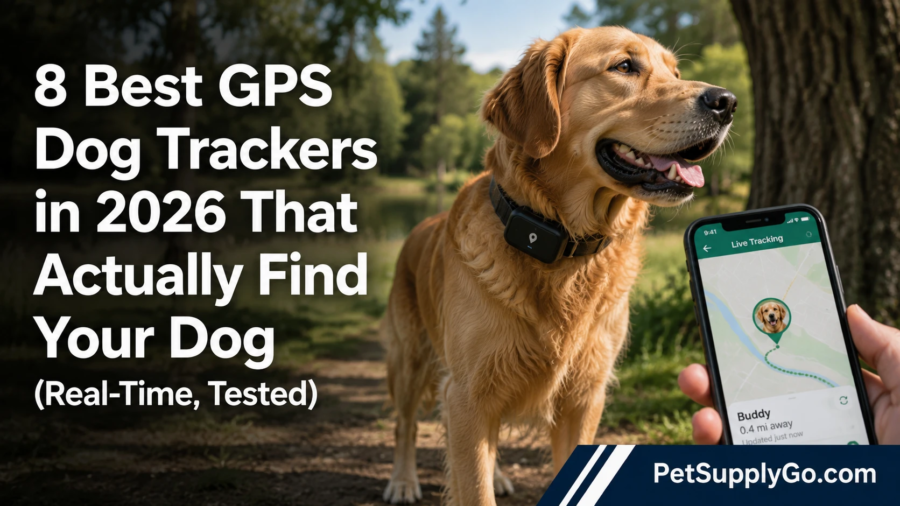
8 Best GPS Dog Trackers in 2026 That Actually Find Your Dog (Real-Time, Tested)
My aunt called me on a Thursday afternoon, voice tight and trying not to sound as scared as she was. Her two-year-old Beagle, Chester, had bolted through an open gate forty minutes earlier and had not come back. She had walked every street in her neighborhood twice. She had knocked on doors. She had called his name until her voice was raw. Chester had no GPS tracker, just a collar tag with her phone number.
She found him four hours later, three neighborhoods away, sitting outside a stranger’s front door who had been kind enough to wait with him after calling the number on the tag. Chester was fine. My aunt was not fine. She was shaking when I saw her that evening, and the first thing she said when she sat down was: I need one of those tracker things. What should I get?
That question sent me down a two-week research path that covered every major GPS tracker on the market. There are more options than you might expect, the quality differences between them are significant, and the subscription fee structures are genuinely confusing if you do not know what to look for. This guide is everything I found, organized so you can make the right decision for your dog without spending two weeks doing what I did.
These are the eight best GPS dog trackers in 2026, chosen based on GPS accuracy, real-time tracking capability, battery life, subscription cost transparency, durability, and coverage in the United States. These are real devices tested by real dog owners, not marketing descriptions copied from product listings.
Quick Picks: Best GPS Dog Trackers 2026 at a Glance
|
Our Pick |
Product |
Technology |
Monthly Fee |
Battery Life |
Best For |
Price |
|
Best Overall |
Fi Series 3 Smart Dog Collar |
LTE-M plus GPS plus WiFi |
$8 to $15/mo |
Up to 3 months |
Most dog owners wanting reliable real-time tracking |
$149 to $179 |
|
Best No Monthly Fee |
Apple AirTag with dog attachment |
Bluetooth plus crowd network |
None |
1 year (battery replace) |
Supplemental tracking in populated areas |
$29 per tag |
|
Best Real-Time Accuracy |
Tractive GPS DOG 4 |
GPS plus LTE cellular |
$5 to $13/mo |
2 to 7 days |
Real-time location in rural and suburban areas |
$49 to $69 |
|
Best for Small Dogs |
Whistle Go Explore |
GPS plus LTE plus WiFi |
$9.95 to $15.95/mo |
Up to 20 days |
Small and medium breeds needing lightweight tracker |
$79 to $99 |
|
Best Activity Tracker |
Fi Series 3 (Activity Mode) |
LTE-M plus GPS |
$8 to $15/mo |
Up to 3 months |
Owners wanting GPS plus health monitoring combined |
$149 to $179 |
|
Best Budget |
Tractive GPS DOG 4 (Basic Plan) |
GPS plus LTE |
$5/mo |
2 to 5 days |
Cost-conscious buyers who want real GPS tracking |
$49 to $69 |
|
Best Rugged Option |
Garmin TT 15 Mini |
GPS plus VHF radio |
None (no subscription) |
40 hours |
Rural owners, hunters, off-grid areas with no cell service |
$249 to $299 |
|
Best Premium |
Link AKC Smart Collar Plus |
GPS plus LTE plus WiFi |
$9.99/mo |
Up to 3 days |
Owners wanting premium collar design with built-in GPS |
$79 to $119 |
The full reviews below explain exactly how each device works, what the subscription fees actually include at each tier, which technology performs better in rural versus urban environments, and the critical questions to ask before you buy any GPS tracker for your dog.
How GPS Dog Trackers Actually Work: The Technology Behind the Tracking
Understanding how tracking technology works helps you choose the right device for your specific environment and lifestyle. There are three main technologies used in dog trackers, and they behave very differently in the real world.
GPS: The Core Location Technology
GPS (Global Positioning System) uses signals from a network of satellites orbiting Earth to calculate a precise location. Every device in this guide uses GPS as its primary location source. The accuracy of GPS in open conditions is typically 3 to 10 meters. In dense urban environments with tall buildings, or under heavy tree cover in forests, GPS accuracy can degrade to 15 to 30 meters because the satellite signals are partially blocked.
GPS alone cannot transmit that location to your phone. It only knows where it is. A separate communication technology is needed to send that location data to you.
LTE Cellular: The Communication Layer
Most modern GPS dog trackers use LTE or LTE-M (a low-power version of LTE designed for IoT devices) to transmit the GPS location to the manufacturer’s servers and then to your smartphone app. This means the tracker needs to be in a location with cell service to report its location. In a cellular dead zone, the tracker knows where it is via GPS but cannot tell you.
LTE coverage in the United States is extensive but not universal. Rural areas, mountain regions, and some coastal wilderness areas have limited or no LTE coverage. If you live or hike in areas with poor cell service, a Garmin VHF radio-based tracker becomes significantly more relevant.
WiFi Assist and Safe Zones
Several trackers including the Fi Series 3 and Whistle Go Explore use WiFi in addition to GPS and LTE. WiFi serves two purposes: it can assist GPS in determining indoor location more accurately than GPS alone, and it allows trackers to create home safe zones where the device recognizes it is on the home network and extends battery life by reducing GPS polling frequency. When the dog leaves the safe zone WiFi network, the tracker switches to active GPS plus LTE reporting immediately and sends an escape alert to your phone.
Bluetooth Plus Crowd Network: The Apple AirTag Approach
The Apple AirTag does not use GPS or LTE. It uses Bluetooth Low Energy to communicate with nearby Apple devices. When your AirTag is in Bluetooth range of any Apple device (iPhone, iPad, Mac) the location of that Apple device is silently and anonymously reported to Apple’s Find My network and then relayed to you. In a city with millions of iPhones, AirTag can locate a lost dog within minutes even without GPS. In a rural area with few Apple devices, the AirTag may not update for hours or days. This is why AirTag is included here as a supplemental tracker, not a primary one.
What to Look For When Buying a GPS Dog Tracker: The 7 Critical Criteria
1. Real-Time vs Periodic Update Intervals
The difference between a tracker that updates every 2 to 3 seconds and one that updates every 2 to 3 minutes is enormous when your dog is running at full speed. A Beagle running at 20 mph covers about 600 feet per minute. A tracker updating every 3 minutes means your dog could be 1,800 feet from the last location point, which is a very wide search area. Look for update intervals of 30 seconds or faster on standard mode. Many trackers offer a live tracking mode with 2 to 3 second updates that drains battery faster but provides chase-worthy accuracy during an active escape.
2. Monthly Subscription Cost and Contract Terms
Almost every cellular GPS tracker requires a monthly subscription to function. The subscription pays for the cellular data plan and the manufacturer’s server infrastructure. Subscription pricing ranges from $5 to $16 per month, and many plans offer annual billing discounts. Some trackers lock you into a 12-month contract. Others are month-to-month with no commitment. Read the subscription terms before buying any tracker hardware.
The device cost without understanding the total 3-year ownership cost is incomplete math. A $50 tracker with a $15 per month plan costs $590 over 3 years. A $150 tracker with an $8 per month plan costs $438 over 3 years. The seemingly cheaper device often costs more in total.
3. Coverage Network
LTE-M trackers in the United States typically operate on AT&T or T-Mobile networks. Coverage maps vary, and if your area or regular hiking trails have coverage gaps on one network but not the other, the network your tracker uses matters. Check the manufacturer’s coverage map for your specific region before buying. Fi Series 3 uses AT&T’s LTE-M network. Tractive uses T-Mobile in most US regions.
4. Battery Life Under Real Conditions
Manufacturer battery life claims are measured under optimal conditions: good GPS signal, infrequent position updates, moderate temperatures. Real-world battery life is typically 40 to 60 percent of the stated maximum. A tracker claiming 7-day battery life may deliver 3 to 4 days in active use. Plan for real-world performance and charge accordingly. For dogs who go on daily long hikes or camping trips, battery life and charging time become primary decision factors.
5. Size and Weight for Your Dog
A GPS tracker heavy enough to cause neck discomfort or posture problems is not appropriate for small dogs. Most GPS trackers for dogs weigh between 1 and 3 ounces. For dogs under 25 pounds, prioritize the lightest options (Whistle Go Explore at 1 ounce, AirTag at 0.39 ounces). For dogs over 50 pounds, the extra weight of a robust tracker like the Garmin TT 15 Mini is negligible relative to body size and the trade-off for rugged performance is worth it.
6. Waterproofing Rating
Dogs encounter water constantly: rain, puddles, streams, swimming. Your GPS tracker needs a waterproofing rating appropriate for your dog’s lifestyle. The IP (Ingress Protection) rating system defines waterproofing levels. IP67 means dustproof and withstands temporary immersion up to 1 meter for 30 minutes. IP68 means continuous submersion beyond 1 meter. IPX8 means waterproof to a specific depth without full dust protection. For most dogs, IP67 is sufficient. For dogs who swim regularly, IP68 is preferable.
7. App Usability and Alert System
The hardware is only as useful as the app that controls it. An app that crashes, shows delayed location data, or requires ten taps to initiate live tracking is a problem in an emergency. Before buying, read user reviews specifically about app reliability. Look for apps that offer customizable geofence alerts, push notifications when the dog leaves a safe zone, and easy-access live tracking mode from the app home screen. An escape alert that requires you to navigate three menus to reach is not useful when your dog has been out of sight for ninety seconds already.
The 8 Best GPS Dog Trackers in 2026: Complete Reviews
1. Fi Series 3 Smart Dog Collar: Best Overall GPS Dog Tracker
|
Specification |
Detail |
|
Technology |
LTE-M cellular plus GPS plus WiFi triangulation |
|
Network |
AT&T LTE-M (extensive US coverage) |
|
Update Interval (standard) |
Every 30 seconds while outside safe zone |
|
Update Interval (live mode) |
Every 2 to 3 seconds during active tracking |
|
Battery Life (claimed) |
Up to 3 months in typical use |
|
Battery Life (real world) |
4 to 8 weeks depending on activity level and settings |
|
Waterproof Rating |
IP68 |
|
Weight |
1.8 oz |
|
Safe Zone Feature |
Yes, WiFi-based home geofence with instant escape alert |
|
Subscription Plans |
$8.25/mo (annual) or $15/mo (month-to-month) |
|
Device Price |
$149 to $179 depending on size |
|
Activity Tracking |
Yes, steps and sleep monitoring built in |
The Fi Series 3 is the GPS dog tracker I recommended to my aunt the day after Chester’s escape, and it is the tracker that represents the best overall combination of real-world performance, battery life, coverage, and total ownership cost currently available in the United States.
The defining advantage of the Fi over competing cellular trackers is its battery life. While most GPS dog trackers need charging every 2 to 7 days, the Fi Series 3 achieves 4 to 8 weeks of real-world battery life through intelligent power management. The device uses GPS and LTE actively only when the dog is outside the home WiFi geofence. When the dog is home, the tracker shifts to a low-power WiFi monitoring mode that consumes dramatically less battery. The moment the dog’s collar disconnects from the home WiFi, the device activates full GPS plus LTE tracking and pushes an escape alert to your phone within seconds.
That instant escape alert is operationally critical. The first five minutes after a dog escapes determine how far they get before you start looking. An alert that fires within 30 seconds of the dog leaving the safe zone means you are out the door and actively searching before most dogs have left the immediate neighborhood.
The AT&T LTE-M network provides among the best rural and suburban coverage of any carrier in the United States, which matters because many competing trackers use T-Mobile’s network, which has meaningful coverage gaps in certain midwest and rural southeastern states. If you live in a rural area, checking the AT&T LTE-M coverage map for your region is worth doing before buying any tracker.
The IP68 waterproof rating means the Fi can handle a dog who swims in ponds, plays in streams, or gets caught in heavy rain without any risk to the electronics. The collar is also built with a durable aluminum buckle rated for dogs who pull hard on leash or who rub and scratch their collar regularly.
The activity tracking feature tracks steps, sleep quality, and rest time, providing a health baseline for your dog that can reveal changes in behavior patterns that sometimes precede health issues. This is a secondary feature, but for owners who want a collar that does more than locate the dog, it adds meaningful value without adding complexity.
The subscription at $8.25 per month on the annual plan is competitive. Total three-year cost including the device is approximately $446, which is lower than many trackers with shorter battery life and worse coverage when the full cost is calculated correctly.
Check the current price on Amazon for the Fi Series 3 in your dog’s neck size. Fi sells collar sizes for dogs from small breeds up to large breeds with neck circumferences up to 34 inches. The tracker module detaches from the collar and can be moved to a new collar band if the original band wears out.
2. Apple AirTag with Dog Collar Attachment: Best No Monthly Fee Option
|
Specification |
Detail |
|
Technology |
Bluetooth Low Energy plus Apple Find My crowd network |
|
GPS Used |
No (uses crowd network location, not satellite GPS) |
|
Update Frequency |
Depends on proximity to Apple devices (seconds to hours) |
|
Battery Life |
About 1 year (CR2032 coin battery, user replaceable) |
|
Monthly Fee |
None |
|
Waterproof Rating |
IP67 |
|
Weight |
0.39 oz (lightest option on this list) |
|
Requires |
iPhone for setup and tracking (Android not supported) |
|
Device Price |
$29 per tag |
|
Collar Attachment |
Requires separate attachment accessory, many options on Amazon $5 to $20 |
The Apple AirTag is not a GPS tracker in the traditional sense and should not be your only tracking device if you live in a rural area or your dog regularly reaches areas with few Apple device users. Understanding what it is and what it is not prevents disappointment.
What the AirTag does exceptionally well: in any environment with a high density of iPhone users (cities, suburbs, parks, shopping areas), the AirTag updates location with remarkable speed because every nearby iPhone silently and anonymously pings the AirTag and reports the location through Apple’s encrypted Find My network. In a busy neighborhood, this means location updates every few minutes without any subscription cost. In a midtown Manhattan scenario, updates could come every 30 seconds or faster.
What the AirTag cannot do: it cannot report a location in real time in areas without nearby Apple devices. If your dog runs into a forest trail, a rural field, or any location where there are no iPhones nearby, the AirTag will not update until an Apple device comes within Bluetooth range. This is a fundamental technology limitation, not a product defect.
The practical recommendation: the AirTag is an excellent complementary tracker at $29 with no ongoing cost. Pair it with a primary cellular GPS tracker like the Fi or Tractive for rural reliability, and use the AirTag as a backup that works beautifully in urban and suburban environments where cellular GPS might take longer to initialize after an escape.
The 0.39-ounce weight makes the AirTag the lightest tracking option available by a significant margin. For dogs under 10 pounds who cannot comfortably carry heavier devices, an AirTag in a lightweight collar loop attachment is the most practical tracking option available right now.
No monthly fee for the life of the device (battery replacement runs about $2 per year for the CR2032 coin cell) makes the AirTag the lowest total cost tracking option at $29 to $49 including a collar attachment accessory over any ownership period.
Check the current price on Amazon for the Apple AirTag 4-pack, which is significantly better value than individual tags. Search “AirTag dog collar holder” separately for the collar attachment accessory. Leather, silicone, and stainless steel holders are all available.
3. Tractive GPS DOG 4: Best Real-Time Accuracy
|
Specification |
Detail |
|
Technology |
GPS plus LTE cellular |
|
Network |
T-Mobile plus roaming partners in US |
|
Update Interval (standard) |
Every 2 to 3 seconds in live tracking mode |
|
Update Interval (power save) |
Every 30 to 60 seconds in standard mode |
|
Battery Life (claimed) |
2 to 7 days |
|
Battery Life (real world) |
2 to 4 days in active use |
|
Waterproof Rating |
IP68 |
|
Weight |
1.4 oz |
|
Safe Zone Feature |
Yes, custom geofence with escape alerts |
|
Subscription Plans |
$5/mo (1-year plan) to $13/mo (month-to-month) |
|
Device Price |
$49 to $69 |
|
Coverage |
Over 175 countries internationally |
Tractive makes the most popular GPS dog tracker in Europe and has built strong US market share on the strength of its live tracking accuracy and competitive device pricing. The Tractive GPS DOG 4 refreshes location every 2 to 3 seconds in live mode, which is among the fastest update rates of any consumer dog GPS tracker. When you are actively chasing your dog through streets and parks, this update speed makes a visible, meaningful difference compared to trackers that update every 30 to 60 seconds.
The trade-off for that real-time accuracy is battery life. The Tractive’s 2 to 4 day real-world battery life is the shortest of the GPS trackers on this list. For most dog owners who charge devices regularly as part of a routine, this is manageable. For owners who frequently forget to charge devices or who take multi-day camping trips without power access, the Fi Series 3’s 4 to 8 week battery life is a more practical choice.
The $49 to $69 device price is the most accessible entry point for a real cellular GPS tracker on this list, and the $5 per month plan on the annual subscription makes the Tractive among the most affordable true GPS tracking solutions in terms of monthly operating cost. Total three-year ownership cost on the $5 plan runs approximately $249 to $269 including the device, which is significantly lower than the Fi Series 3.
International coverage in over 175 countries is relevant for owners who travel internationally with their dogs. If you take your dog to Europe, Canada, or other countries regularly, the Tractive’s global SIM is far more practical than a US-only device.
The Tractive app has a history mode that shows a playback of your dog’s movements throughout the day, which many owners find useful for understanding their dog’s behavior and activity patterns even when no escape is occurring. The wellness features include activity tracking that compares your dog’s movement to breed and age benchmarks.
See current pricing on Amazon for the Tractive GPS DOG 4. The device is sold without a subscription and the plan is set up through the Tractive app after purchase. Note that the tracker needs to be charged before first use and the LED status indicators take a few minutes to learn.
4. Whistle Go Explore: Best for Small and Medium Dogs
|
Specification |
Detail |
|
Technology |
GPS plus LTE cellular plus WiFi |
|
Network |
AT&T LTE in US |
|
Update Interval |
Every 15 seconds in live mode |
|
Battery Life (claimed) |
Up to 20 days |
|
Battery Life (real world) |
10 to 14 days in normal use |
|
Waterproof Rating |
IP67 |
|
Weight |
1.0 oz (lightest cellular GPS tracker on this list) |
|
Safe Zone Feature |
Yes, home base plus multiple custom geofences |
|
Health Monitoring |
Yes, nutrition, activity, and behavior tracking included |
|
Subscription Plans |
$9.95 to $15.95/mo depending on features selected |
|
Device Price |
$79 to $99 |
The Whistle Go Explore is the best cellular GPS tracker specifically designed with small dog usability in mind. At exactly 1.0 ounce, it is the lightest cellular GPS tracker available in the US market and the only one I would comfortably recommend for dogs under 15 pounds who might notice the added weight of heavier devices.
The 10 to 14 day real-world battery life puts the Whistle between the Tractive (2 to 4 days) and the Fi (4 to 8 weeks) on endurance, which is a practical middle ground for owners who remember to charge weekly but do not want the stress of daily charging. The AT&T network provides good nationwide coverage consistent with the Fi Series 3.
The Whistle’s health platform differentiates it from pure tracking devices. The app analyzes your dog’s daily activity, rest patterns, and behavior alongside location tracking. It uses an algorithm trained on veterinary health data to flag changes in behavior that statistically correlate with health issues, such as a sudden increase in nighttime restlessness (which can indicate pain) or decreased daily movement compared to their baseline (which can indicate illness). For small breed owners whose dogs often have subtle health changes, this proactive monitoring has genuine clinical value.
The multiple geofence feature allows you to set safe zones at multiple locations, which is useful for dogs who split time between homes (co-parenting households, dogs who visit grandparents regularly, dogs who go to a regular daycare). Each geofence sends its own alert if the dog leaves, allowing you to distinguish between a normal authorized trip and an unauthorized escape.
The subscription is the most expensive standard plan on this list at $9.95 to $15.95 per month. For the full health monitoring features, the higher tier is needed. If you want location tracking only, the lower tier provides that at the more competitive price.
Check the current price on Amazon for the Whistle Go Explore. Whistle sells a strap specifically sized for small breed collars that prevents the device from rotating and sitting sideways on the dog’s neck, which is worth adding to the cart alongside the tracker.
5. Garmin TT 15 Mini: Best for Rural Areas and Off-Grid Use
|
Specification |
Detail |
|
Technology |
GPS plus VHF radio (no cellular required) |
|
Range |
Up to 9 miles line of sight to compatible Garmin handheld |
|
Monthly Fee |
None (no subscription ever) |
|
Battery Life |
40 hours active, 80 hours in extended tracking mode |
|
Waterproof Rating |
IPX7 |
|
Weight |
3.5 oz |
|
Compatible Device Required |
Garmin Alpha 200i or Alpha 100 handheld (sold separately) |
|
Update Interval |
Every 2.5 seconds (with compatible Garmin handheld) |
|
Tracks Multiple Dogs |
Yes, up to 20 dogs simultaneously with one Garmin handheld |
|
Device Price |
$249 to $299 (plus $299 to $599 for compatible Garmin handheld) |
|
Best Environment |
Rural, wilderness, hunting areas without cell coverage |
The Garmin TT 15 Mini is a fundamentally different type of dog tracker from everything else on this list, and it belongs here specifically because it solves a problem that no cellular GPS tracker can: tracking a dog in an area with no cell service at all.
VHF (Very High Frequency) radio communication does not require any cellular infrastructure. The tracker on your dog communicates directly with a compatible Garmin handheld unit via radio signal. Line-of-sight range is up to 9 miles, which in open terrain means you can track a dog running at full speed across open farmland, mountain terrain, or wilderness areas where the nearest cell tower is nowhere near.
This technology is what professional hunting dog handlers, search and rescue teams, and wildlife researchers use for remote tracking applications. It is professional-grade equipment adapted for the serious recreational dog owner in environments where consumer cellular trackers simply do not function.
The total system cost is significant. The TT 15 Mini collar runs $249 to $299, and it requires a compatible Garmin handheld GPS unit (the Alpha 200i at approximately $599 or the Alpha 100 at approximately $299) to receive the signal. You are looking at $550 to $900 in total equipment cost. There is no monthly fee, ever, which means over a 5-year ownership period the total cost compares favorably to subscription-based trackers, but the upfront investment is substantial.
For suburban and urban dog owners with reliable cell coverage, this system is unnecessary and overpriced for your use case. For rural property owners with large acreage, hunting dog owners who work dogs in wilderness terrain, or owners in areas with known cell coverage gaps, the Garmin TT 15 Mini is the correct solution and no cellular tracker competes with it in its intended environment.
Check current availability on Amazon for the Garmin TT 15 Mini. Note that the handheld receiver is sold separately and is required for the system to function. The Garmin Alpha 200i is the recommended current-generation receiver if you are building this system from scratch.
6. Tractive GPS DOG 4 (Budget Plan): Best Budget GPS Tracker
The same Tractive GPS DOG 4 hardware reviewed above is worth highlighting separately as the best budget option because the $5 per month plan on annual billing genuinely provides real GPS tracking at a total cost that makes GPS tracking accessible to owners who previously felt priced out of the category.
The $49 device plus $5 per month on the annual plan means you are protecting your dog with real-time GPS tracking for $109 in the first year and $60 per year thereafter. Compared to the cost of a lost dog search (professional lost dog services, impound fees, veterinary checks after recovery, reward money), $109 is economical risk management.
The $5 plan provides all core tracking features: live GPS location, geofence alerts, location history, and the wellness activity tracking. The premium plans add features like heat mapping, expert vet advice access, and priority customer support. For the majority of dog owners who need location tracking and escape alerts, the $5 plan covers everything that matters.
See the current device price on Amazon and set up the subscription through the Tractive app. Annual billing versus monthly billing reduces the plan cost by roughly 40 percent and there is no long-term contract beyond the annual commitment.
7. Link AKC Smart Collar Plus: Best Premium Design
|
Specification |
Detail |
|
Technology |
GPS plus LTE cellular plus WiFi plus Bluetooth |
|
Network |
AT&T LTE |
|
Update Interval |
Real-time with live tracking mode |
|
Battery Life (claimed) |
Up to 3 days |
|
Battery Life (real world) |
1 to 2 days in active use |
|
Waterproof Rating |
Water resistant (not full waterproof rating published) |
|
Weight |
1.5 oz |
|
Unique Feature |
Built-in LED light, temperature alert, and physical collar design |
|
AKC Partnership |
Includes AKC Reunite enrollment for additional lost pet support |
|
Subscription Plans |
$9.99/mo |
|
Device Price |
$79 to $119 depending on collar size |
The Link AKC Smart Collar Plus distinguishes itself through design integration that other trackers do not attempt. While most GPS trackers are modules that clip onto or attach to an existing collar, the Link AKC is designed as a complete collar unit with the GPS and cellular technology built directly into the collar band. This integration produces a cleaner aesthetic that owners who care about how their dog’s gear looks tend to strongly prefer.
The built-in LED light is a practical safety feature separate from the tracking function. The light can be activated remotely through the app, which serves two purposes: it makes the dog visible in low-light conditions during evening walks or early morning outdoor time, and it can be used as a visual beacon when searching for a dog in darkness.
The temperature alert monitors ambient temperature around the collar and sends an alert if it detects environmental temperatures potentially dangerous for the dog, such as a dog left in a hot car or on a hot patio. This alert type has real potentially life-saving value for dogs in hot climates or for any dog left briefly in a vehicle during warm weather.
The AKC Reunite enrollment comes included with the collar and adds the device to the AKC’s lost pet recovery database and hotline. If someone finds your dog and calls the number on the collar tag, the AKC Reunite team can access your contact information and assist with reconnection even if you are not immediately reachable.
The honest limitation is battery life. At 1 to 2 days of real-world battery life, the Link AKC requires daily charging or every-other-day charging, which is the highest charging frequency of any tracker on this list. For owners who are consistent about nightly charging as a routine, this is manageable. For owners who forget, it is a recurring frustration.
Check the current price on Amazon for the Link AKC Smart Collar Plus in your dog’s neck size. The collar comes in three sizes and multiple colors. AKC Reunite enrollment activation is handled through the Link AKC app after the hardware is set up.
8. Whistle Health and Location: Best Combined Health Plus GPS Tracker
|
Specification |
Detail |
|
Technology |
GPS plus LTE plus WiFi plus Bluetooth |
|
Network |
AT&T LTE |
|
Battery Life |
Up to 20 days |
|
Waterproof Rating |
IP67 |
|
Health Features |
Licking, drinking, eating, scratching, sleeping, active monitoring |
|
Behavior Alerts |
Yes, flags unusual behavior patterns vs baseline |
|
Subscription |
$9.95 to $15.95/mo depending on tier |
|
Device Price |
$79 to $99 |
|
Veterinary Integration |
Health reports shareable with your veterinarian |
Whistle’s full product line deserves a separate note here because the Whistle Health and Location model (distinct from the Go Explore reviewed above) places maximum emphasis on the health monitoring side of the equation alongside location tracking. For owners whose primary motivation for a tracker includes monitoring a senior dog, a dog recovering from illness or surgery, or a dog with a chronic health condition, the Whistle Health’s behavior classification technology provides data that no other tracker on this list generates.
The device uses an accelerometer and gyroscope combination to classify your dog’s behaviors throughout the day: active walking, running, playing, resting, sleeping, scratching, licking, and drinking are all distinguished and logged. Over time this builds a behavioral baseline specific to your dog. When the algorithm detects a statistically significant deviation from that baseline, it generates a health alert suggesting you monitor the dog for signs of illness or consult your veterinarian.
This predictive health monitoring has documented value in catching early signs of conditions including ear infections (detected by increased scratching behavior), allergic reactions (increased licking and scratching), digestive issues (changes in eating and drinking behavior), and pain or joint problems (decreased activity against baseline). Early detection of these conditions reduces treatment costs and improves outcomes compared to detection at a later stage.
The veterinary shareable report feature allows you to export a summary of your dog’s activity and behavior data before a veterinary appointment. Showing your vet quantitative behavior data from the past 30 days provides objective information that subjective owner descriptions often cannot capture as precisely.
View the current price on Amazon for the Whistle Health and Location model. If health monitoring is your primary motivation and location tracking is secondary, this is the better Whistle model for your needs. If location tracking is primary, the Whistle Go Explore reviewed above is the better choice.
Full Comparison: All 8 Best GPS Dog Trackers in 2026
|
Product |
Technology |
Monthly Fee |
Battery Life |
Waterproof |
Best Environment |
Best For |
3-Year Cost |
|
Fi Series 3 |
GPS plus LTE-M plus WiFi |
$8.25/mo annual |
4 to 8 weeks |
IP68 |
Suburban and rural |
Best overall |
approx $446 |
|
Apple AirTag |
Bluetooth crowd network |
None |
1 year |
IP67 |
Urban and suburban |
No monthly fee |
approx $50 |
|
Tractive GPS DOG 4 |
GPS plus LTE |
$5/mo annual |
2 to 4 days |
IP68 |
All environments |
Real-time accuracy |
approx $249 |
|
Whistle Go Explore |
GPS plus LTE plus WiFi |
$9.95/mo |
10 to 14 days |
IP67 |
Suburban |
Small dogs |
approx $457 |
|
Garmin TT 15 Mini |
GPS plus VHF radio |
None (ever) |
40 hours |
IPX7 |
Wilderness, rural |
Off-grid |
approx $550 to $900 upfront |
|
Tractive Budget Plan |
GPS plus LTE |
$5/mo annual |
2 to 4 days |
IP68 |
All environments |
Budget buyers |
approx $249 |
|
Link AKC Smart Collar |
GPS plus LTE plus WiFi |
$9.99/mo |
1 to 2 days |
Water resistant |
Urban and suburban |
Premium design |
approx $479 |
|
Whistle Health |
GPS plus LTE plus WiFi |
$9.95 to $15.95/mo |
10 to 14 days |
IP67 |
Suburban |
Health monitoring |
approx $457 to $673 |
How to Choose the Right GPS Tracker for Your Specific Dog and Situation
Choose the Fi Series 3 if:
- You want the best overall balance of battery life, coverage, accuracy, and features
- Your dog escapes or roams occasionally and you want instant escape alerts without daily charging
- You are in a suburban or rural environment on AT&T coverage
- You want one device that handles both tracking and activity monitoring
Choose the Apple AirTag if:
- You want zero ongoing subscription cost and your dog primarily stays in urban or suburban areas
- Your dog is under 10 pounds and weight is a critical factor
- You want a backup tracker to pair with a primary cellular GPS device
- You are an iPhone user (AirTag does not support Android)
Choose the Tractive GPS DOG 4 if:
- Real-time location updates every 2 to 3 seconds are your top priority during an escape
- You want the lowest total cost cellular GPS tracker with real tracking capability
- You travel internationally with your dog and need global SIM coverage
- You are comfortable charging the device every 2 to 4 days
Choose the Whistle Go Explore if:
- Your dog is under 25 pounds and you need the lightest cellular GPS option available
- You want health behavior monitoring alongside location tracking
- You want multiple custom geofence zones at different locations
- A 10 to 14 day battery life fits your charging routine better than daily charging
Choose the Garmin TT 15 Mini if:
- You live on large rural property or hunt with your dog in wilderness areas
- Your primary use environment has little or no cell service
- You are willing to invest in a professional-grade system with no ongoing subscription
- You need to track multiple dogs simultaneously in the field
Choose the Link AKC Smart Collar if:
- Collar design aesthetics matter to you and you want the GPS integrated into the collar
- The built-in LED light and temperature alert add meaningful value for your lifestyle
- You want AKC Reunite enrollment included with the device
- You are committed to daily charging as part of your evening routine
5 GPS Dog Tracker Mistakes That Lead to Disappointment
Mistake 1: Not Checking Network Coverage Before Buying
The most frustrating GPS tracker experience is a device that shows no signal in your neighborhood because the carrier it uses has a coverage gap in your area. Before buying any cellular GPS tracker, visit the manufacturer’s website and check their specific coverage map for your address and your most common walking routes. AT&T LTE-M and T-Mobile coverage differ significantly in certain US regions. This takes three minutes and prevents a disappointing return.
Mistake 2: Calculating Device Cost Without Subscription
The full ownership cost of a cellular GPS tracker always includes the subscription. A tracker that appears cheaper at $40 with a $15 per month plan costs $580 over 3 years. A tracker at $150 with an $8 per month plan costs $438 over the same period. Always calculate at least a 2 to 3 year total cost before comparing price. The device cost alone is incomplete information for any subscription-based product.
Mistake 3: Using a Tracker Without Setting Up Geofence Alerts
Many owners buy a GPS tracker, set it up, and then use it reactively: they only check the app when they realize the dog is missing. The real value of a GPS tracker is the proactive escape alert. Setting up a geofence around your home that sends an immediate push notification when the dog leaves takes five minutes in any of these apps and is the single most important configuration step. Without the geofence alert, you might not realize the dog is gone until long after the escape occurred.
Mistake 4: Not Charging on a Schedule
A GPS tracker with a dead battery provides exactly as much tracking capability as having no tracker at all. Establish a charging routine that matches the device’s real-world battery life. For Tractive (2 to 4 days), charge every other night. For Whistle (10 to 14 days), charge weekly on a consistent day. For Fi Series 3 (4 to 8 weeks), check the battery level in the app monthly. Tie the charging routine to an existing habit like Sunday evening phone charging or a weekly calendar reminder.
Mistake 5: Buying a Tracker Too Large for a Small Dog
A heavy tracker on a small dog causes real physical issues: neck muscle strain, posture problems, collar rubbing from the weight pulling the collar forward, and behavioral resistance to wearing the collar. For any dog under 20 pounds, the tracker weight should not exceed 10 percent of the dog’s body weight. The AirTag at 0.39 oz and Whistle at 1.0 oz are the appropriate options for very small dogs. The Garmin TT 15 Mini at 3.5 oz is inappropriate for any dog under 35 pounds.
Related Guides on PetSupplyGo
Add these as in-text hyperlinks within the post body and as a related posts section below the article.
- [Internal Link: Best Dog Collar for Pulling: What Trainers and Vets Actually Recommend]
- [Internal Link: Reflective Dog Vest for Night Walks: Stay Visible and Stay Safe After Dark]
- [Internal Link: Best Dog Harness for Large Dogs: 8 Options Your Vet Will Approve]
- [Internal Link: Dog First Aid Kit: What Every Pet Owner Needs Before an Emergency]
Frequently Asked Questions: Best GPS Dog Tracker
Add each question using the Rank Math SEO FAQ block in WordPress to generate automatic FAQ schema markup and target People Also Ask boxes in Google search results.
Q1: What is the best GPS tracker for dogs with no monthly fee?
The Apple AirTag is the most practical no-monthly-fee tracking option for dogs in urban and suburban environments. At $29 per tag with no subscription cost, it uses the Apple Find My crowd network to report location updates whenever the tag comes within Bluetooth range of any iPhone. In populated areas this can provide location updates every few minutes. The limitation is that AirTag does not use satellite GPS and cannot report location in areas without nearby Apple devices. For a true GPS tracker with no monthly fee, the Garmin TT 15 Mini uses VHF radio to transmit GPS location without cellular infrastructure, but it requires a compatible Garmin handheld receiver (sold separately, $299 to $599) and is designed for rural and wilderness environments rather than everyday suburban use.
Q2: How accurate are GPS dog trackers?
Under open sky conditions with a clear view of satellites, GPS accuracy in consumer dog trackers is typically 3 to 10 meters (10 to 33 feet). In dense urban environments with tall buildings blocking satellite signal, or under heavy tree canopy in wooded areas, accuracy can degrade to 15 to 30 meters. Cellular GPS trackers that combine GPS with WiFi triangulation (like Fi Series 3 and Whistle) improve indoor and semi-covered accuracy by using WiFi network locations alongside satellite data. For practical dog recovery purposes, 3 to 15 meter accuracy is sufficient to identify the exact yard, car park, or street segment where a dog is located.
Q3: Can GPS dog trackers work without cell service?
Most consumer GPS dog trackers require cell service to transmit location to your smartphone. The GPS hardware in the device knows its location via satellite, but it needs cellular data to send that location to you. In a cellular dead zone, the device cannot report. The exception is the Garmin TT 15 Mini system, which uses VHF radio communication between the collar unit and a handheld Garmin receiver and requires no cell service whatsoever. It functions in complete wilderness with no cellular infrastructure within range. For any owner who frequently brings their dog into areas with no cell coverage, the Garmin VHF system is the only appropriate solution.
Q4: How long do batteries last in GPS dog trackers?
Battery life varies significantly between trackers and between manufacturer claims and real-world performance. The Fi Series 3 achieves 4 to 8 weeks of real-world battery life through intelligent power management that uses low-power WiFi monitoring when the dog is home and activates full GPS plus LTE only when the dog is outside the safe zone. The Tractive GPS DOG 4 lasts 2 to 4 days in active use. The Whistle Go Explore lasts 10 to 14 days. The Link AKC Smart Collar lasts 1 to 2 days. The Apple AirTag battery lasts approximately one year and is replaced by the user with a standard CR2032 coin cell battery. Real-world battery life is typically 40 to 60 percent of manufacturer claimed maximum in all cases.
Q5: Do GPS dog trackers work for cats too?
Yes, most GPS dog trackers also work for cats with appropriate sizing. The Apple AirTag is the most popular cat tracking solution because of its extremely light weight (0.39 oz) and no monthly fee. Cat-specific AirTag collar holders are widely available on Amazon. For cats who go outdoors regularly in suburban areas, the AirTag’s crowd network provides good coverage. The Tractive brand also sells a GPS CAT version of their tracker specifically sized and weighted for cats. The key consideration for any cat tracker is weight: the device should not exceed 5 percent of the cat’s body weight, and most GPS trackers over 1.5 ounces are not appropriate for average-sized cats.
Final Verdict: Which GPS Dog Tracker Should You Buy in 2026?
For the vast majority of US dog owners in suburban and urban environments, the Fi Series 3 Smart Dog Collar is the best GPS dog tracker available in 2026. The combination of 4 to 8 week real-world battery life, instant escape alerts via WiFi geofence, IP68 waterproofing, AT&T LTE-M coverage, and integrated activity tracking delivers the most complete solution at a competitive total ownership cost.
If budget is your primary constraint and you want real GPS capability, the Tractive GPS DOG 4 on the annual $5 plan gives you genuine real-time GPS tracking at the lowest possible total cost. It requires more frequent charging but delivers the core functionality that matters most when your dog escapes.
If you want zero ongoing cost and your dog stays in populated areas, add an Apple AirTag as either your primary tracker or as a supplement to a cellular tracker. The $29 no-subscription cost over any multi-year ownership period is unbeatable for the use case it serves well.
If you have a small dog under 15 pounds, the Whistle Go Explore at 1.0 ounce is the appropriate cellular GPS option. If you spend time in rural wilderness areas without cell coverage, the Garmin TT 15 Mini with a compatible handheld is the only technology that reliably solves your problem.
My aunt has been using the Fi Series 3 on Chester for eight months. He has had two escape attempts since then, both through the same gate latch he apparently considers a puzzle to solve. Both times, her phone buzzed within 45 seconds of him leaving the yard, and both times she found him within three houses of home within four minutes. She tells me she sleeps better knowing that.
Your dog is worth protecting. The right GPS tracker makes finding them when they escape a four-minute problem instead of a four-hour one.
Conclusion
GPS tracking technology for dogs has matured significantly and 2026 options are more accurate, more affordable, and more reliable than anything available even three years ago. The category now has clear tiers matching different budgets, environments, and dog sizes, which makes choosing the right device more straightforward than it was when GPS trackers first appeared in the consumer pet market.
The decision framework is simple: identify your environment (urban, suburban, rural, or wilderness), your budget including monthly subscription cost over 2 to 3 years, your dog’s size, and your charging routine. Those four factors point clearly to the right device in almost every case.
Chester now wears his Fi Series 3 every time he goes into the backyard. My aunt no longer dreads finding the gate open. That peace of mind, for a dog owner who loves their dog the way she loves Chester, is worth every dollar.
miniTV is currently available on Amazon’s Android app, and will arrive on the iOS counterpart and mobile web over the coming months, Amazon said.
Amazon’s move follows a similar step by Walmart’s Flipkart, the company’s marquee rival in India, which rolled out video streaming service within its app in 2019. In recent years, scores of firms in India including Zomato have explored adding a video streaming offering to their own apps.
Amazon has also aggressively pushed to expand its Prime Video offerings in India in recent quarters. The company — which partnered with Indian telecom network Airtel earlier this year to launch a new monthly mobile-only, single-user, standard definition (SD) tier (for $1.22) — has secured rights to stream some cricket matches in the country. Amazon also offers Prime Video as part of its Amazon Prime subscription in India.

RELATED ARTICLES

Puppy Training Schedule: A Week-by-Week Guide to Raising a Well-Behaved Dog
Buy on Amazon → Recommended by PetSupplyGo.com Bringing home a puppy is one of the happiest days of y ...
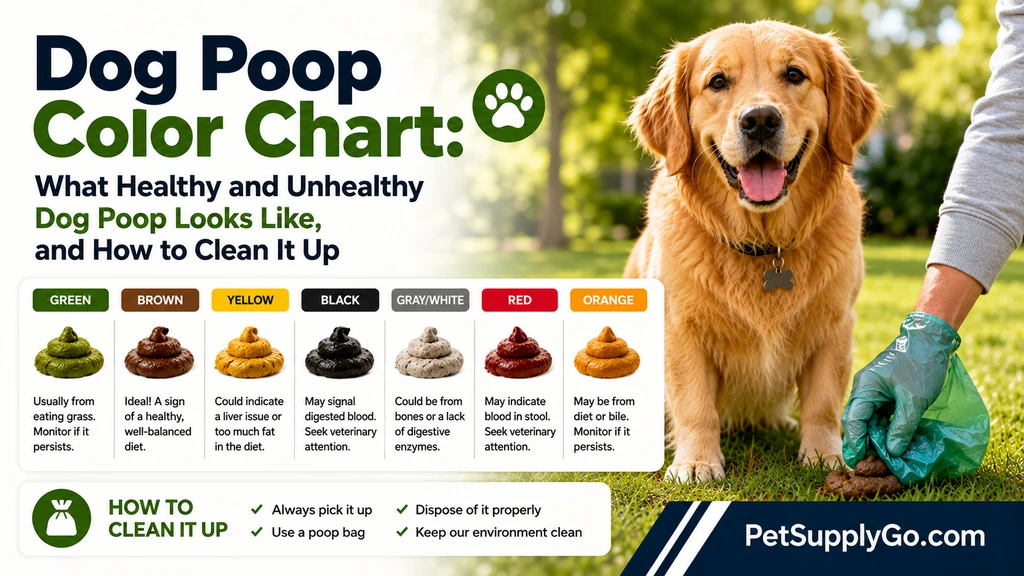
Dog Poop Color Chart: What Healthy and Unhealthy Dog Poop Looks Like, and How to Clean It Up
Buy on Amazon → Recommended by PetSupplyGo.com It is not glamorous, but every dog owner does it. Your d ...